
JIMBU Guide
Stainless Steel vs Copper Barware: Which Should You Choose
Choosing stainless steel vs copper barware? Compare durability, cleaning, heat and acidic ingredients, and see why lined copper offers style with less fuss.
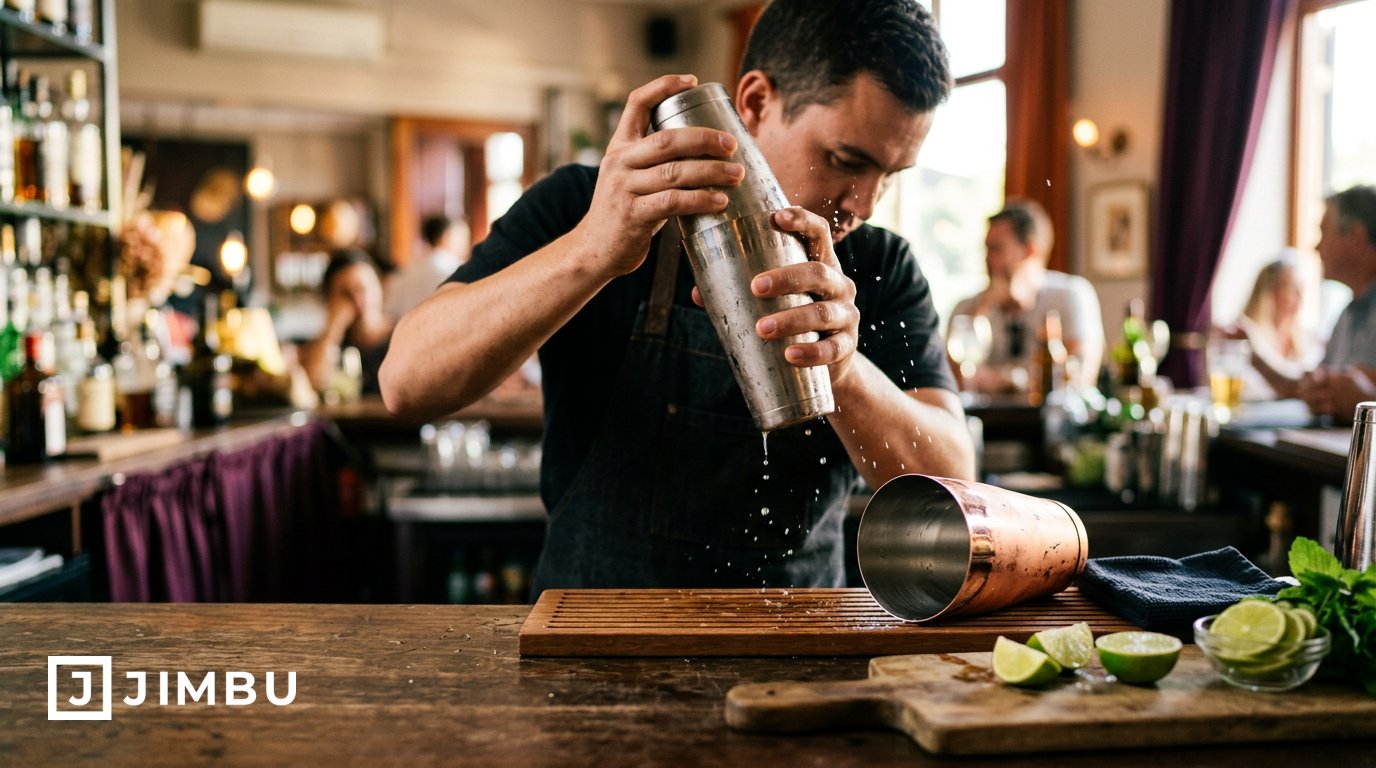
For everyday mixing, stainless steel is the dependable choice: it’s durable, easy to clean and doesn’t react with cocktail ingredients. Copper adds a distinctive shine and can help a drink feel cold, but acidic ingredients may react with exposed copper. If you like the look, choose copper barware with a stainless steel interior.
Copper certainly has style, but it needs more upkeep. Stainless steel handles regular use with little fuss, which matters when you’re making drinks for friends rather than polishing bar tools between rounds.
Here’s a practical guide to stainless steel vs copper barware. Compare how each material handles acidic ingredients, heat and cleaning, then see why a stainless steel lining can give you copper’s appearance without putting bare copper in contact with the drink.
Key Takeaways
- Match your bar tools to how often you’ll use them and how much care you’re happy to give them.
- Keep citrus and other acidic ingredients away from unlined copper surfaces to help protect flavour.
- Choose based on the job: copper responds quickly to heat, while stainless steel is a practical everyday workhorse.
- If copper’s look is your thing, a stainless steel lined interior offers a useful middle ground.
Ask a Bartender: Should I Use Stainless Steel or Copper Bar Tools?
Copper’s warm shine makes a Moscow Mule mug or mixing station stand out, but gentle care helps preserve its finish. Copper also conducts heat quickly. For regular mixing, stainless steel is the more practical, durable choice.
For cocktail shakers and jiggers, choose stainless steel for everyday use. It’s taste-neutral and easy to clean. Copper mugs can suit serving chilled drinks, while stainless steel bar spoons avoid the risk of copper plating wearing or flaking after repeated contact with ice.
Weight depends on each tool’s build, thickness and shape, so material alone doesn’t tell you which piece will feel heavier. For heat transfer, copper responds quickly to touch and temperature changes. A shaker is typically shaken for about 15 to 20 seconds, which isn’t enough time for meaningful heat transfer, according to the bartender’s guidance in the research. Copper’s visual appeal is immediate; stainless steel has a clean, understated finish.
| Material | Appearance | Heat response | Care | Best fit |
|---|---|---|---|---|
| Stainless steel | Clean, polished look | Slower heat transfer | Simple washing | Shakers, jiggers, spoons |
| Copper | Warm, eye-catching finish | Conducts heat quickly | Handwash and gentle polish | Serving mugs and display |
In South Africa, barware pricing depends on material, construction, finish and lining; the R price is given after a quote request. Stainless steel barware comes in different grades, so choose tools intended for food contact. Copper tools should have a stainless steel interior or food-grade lining.
After use, wash stainless steel with soap and water or put it in the dishwasher. Handwash copper and polish it gently to protect the finish. Choose stainless steel for frequent mixing, or copper when presentation matters and you’re prepared to care for it.
Acidic ingredients and copper leaching
A squeeze of lemon changes more than a cocktail’s flavour. Acidic ingredients can react with exposed copper, potentially removing copper from the surface and affecting the drink’s taste. Lime juice, lemon juice and vermouth are common bar ingredients to keep in mind.
The key factor is the surface that touches the drink. In an unlined copper cup or shaker, acidic liquid meets copper directly. A stainless steel interior separates the drink from the copper exterior, reducing that contact while leaving the copper visible. The lining matters more than the outside finish.
Consider a simple sour. Lemon juice joins the spirits and sweetener, so the mixing vessel’s inner material matters. The same principle applies to drinks made with vermouth. Stainless steel is non-reactive with drinks, so it won’t add a metallic note or alter the flavour through contact with copper.
Acidity isn’t the only consideration. Surface condition matters too. Scratches, worn plating or a damaged lining can expose copper where a protective layer once separated it from the drink. Check the inside before use. If the lining is visibly damaged, stop using the piece to mix acidic cocktails.
- For lemon or lime drinks: Use stainless steel or properly lined barware.
- For vermouth cocktails: Keep acidic ingredients away from bare copper.
- For copper plated tools: Watch for worn spots, especially where a spoon strikes ice.
Stainless steel resists corrosion and keeps the flavour profile clean. Copper can work well as an exterior or serving feature when the drink touches a suitable lining. Match the materials to the recipe, then inspect the contact surface during routine cleaning.
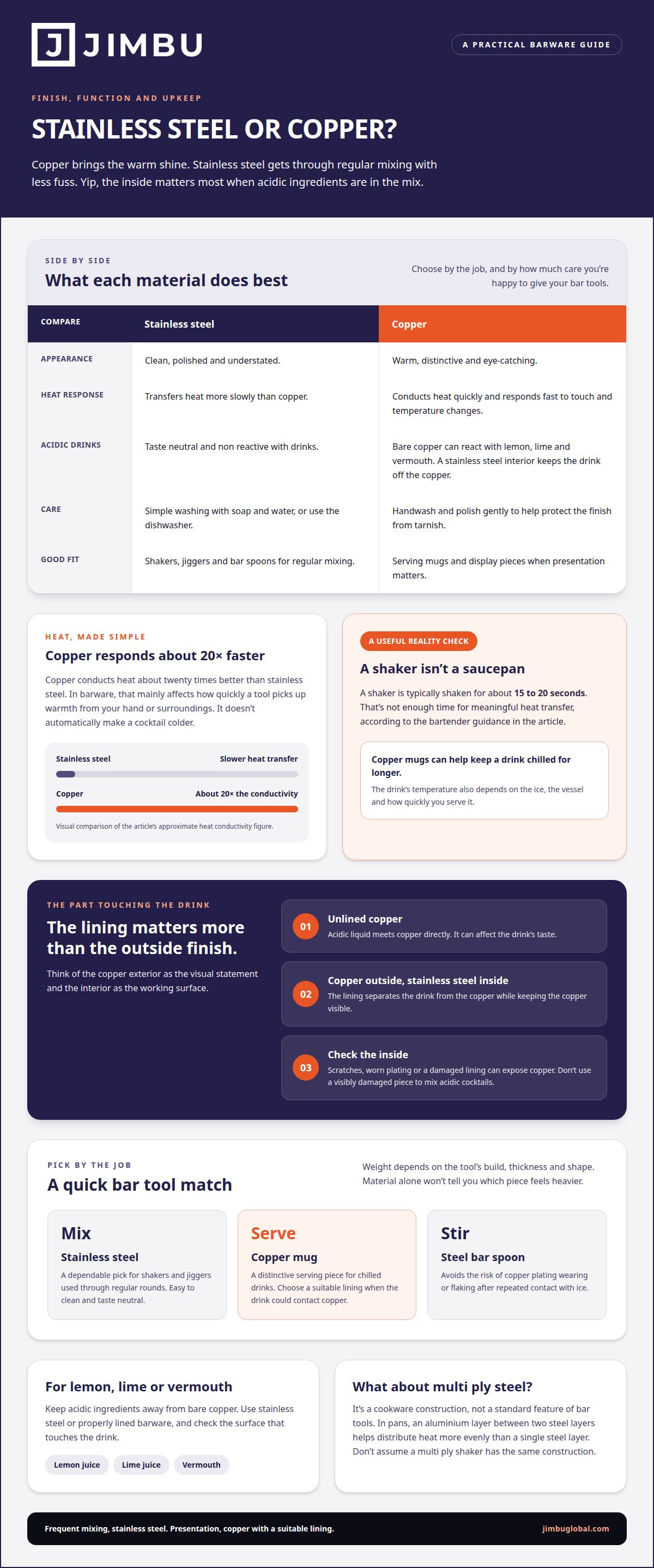
Heat conductivity of copper and multi-ply stainless steel
Copper conducts heat about twenty times better than stainless steel. This matters most in cooking, where copper responds quickly as stove heat rises or falls. In barware, it mainly affects how quickly a tool takes on warmth from your hand or surroundings. It doesn’t automatically make a cocktail colder.
A copper mug can help keep a cocktail chilled for longer, but the drink’s temperature also depends on the ice, the vessel and how quickly you serve it. Stainless steel transfers heat more slowly than copper and can hold heat longer than copper alone. A steel shaker won’t behave like a copper saucepan on a hot hob.
Multi-ply stainless steel is a cookware construction, not a standard feature of bar tools. It places an aluminium layer between two layers of steel, helping a pan distribute heat more evenly than a single steel layer. The comparison helps explain the materials, but don’t assume a multi-ply shaker has the same construction.
Choose barware by function. A copper mug suits chilled drinks when its quick temperature response and distinctive look are part of the experience. Stainless steel suits mixing tools used through repeated rounds. Copper can tarnish, so handwashing and gentle care help preserve its finish. Stainless steel is simpler to wash.
- Copper: Quick heat response, eye-catching finish, more attention to tarnish.
- Stainless steel: Slower heat transfer, practical mixing, straightforward upkeep.
- Multi-ply steel: A layered cookware design, useful for pans rather than a reason to choose a bar tool.
In short, conductivity affects how barware performs, but it isn’t the only deciding factor. Choose copper for a serving piece where appearance and chill matter. Choose stainless steel for dependable mixing and easier everyday cleaning.
Stainless-steel-lined copper barware
A lined piece lets you decide where copper belongs in the design. Think of the exterior as the visual statement and the interior as the working surface. Stainless steel vs copper barware is a choice about function and presentation, not just colour.
Start with the item’s role. A copper finish can stand out on a serving mug or display piece, while a shaker gets handled throughout drink preparation. For a set, decide whether every item should have the same exterior or whether copper works best as an accent. This keeps the look deliberate rather than mismatched.
Next, consider the setting. A home bar may call for one standout piece, while a hospitality space or event may need a consistent look across tools and serving items. Before choosing finishes, note which pieces are for mixing, serving or display. This helps align the design with how the bar will be used.
- Define the role: Separate tools used for preparation from pieces used for serving or display.
- Set the look: Choose whether copper is the main finish or an accent.
- Plan the set: Match finishes to the space and the way the barware will be presented.
For stainless steel vs copper barware, lined construction suits a brief that calls for copper on the outside and a different material inside. Decide the role and look first, then explore barware options for your team or event.
Some copper barware has a stainless steel lining, combining copper’s appearance with stainless steel’s non-reactive properties. High-quality stainless steel and properly lined copper bar tools do not affect the taste of drinks.
JIMBU: Branded Products
JIMBU offers Barware and Branded Products for businesses choosing bar tools for events, hospitality or client gifts. Start with how the pieces will be used: stainless steel suits regular mixing, while copper or stainless steel-lined copper can add a distinctive look to a serving setup.
Once you’ve chosen a material, consider how the barware fits with your other branded products. A consistent approach can make an event setup feel considered, from the bar counter to the items guests take away.
Visit jimbuglobal.com to explore JIMBU’s barware and branded products.
Make your barware choice part of the bigger picture
Bar tools can do more than sit behind the counter. They can help shape a launch, client event or team celebration. Before choosing, decide who’ll use them, where they’ll appear and whether they’ll stay on site or go home with guests.
That brief gives your material choice a clear purpose. Stainless steel vs copper barware can support the look you want while accounting for everyday use. If the bar is part of a wider brand experience, JIMBU also offers Branded Products, Company Uniforms & Apparel, and Brand Stores.
Keep the plan straightforward. Note the audience, occasion and preferred finish, then align the barware with the rest of the experience. Not every item needs to match. One considered detail can feel more thoughtful than a full matching set.
If you’re planning barware for a business or event, talk to JIMBU about barware. Sharp choice. Now you’ve got a clear starting point.
Got questions?
Frequently Asked Questions


Ready when you are
Let's build something worth talking about.
One partner. End-to-end execution. From the first sketch to the last shipped box.