
JIMBU Guide
Budget-Friendly Corporate Uniforms in South Africa
Choose corporate uniforms South Africa teams will actually wear. Get practical tips on fabrics, branding and affordable workwear for local conditions.
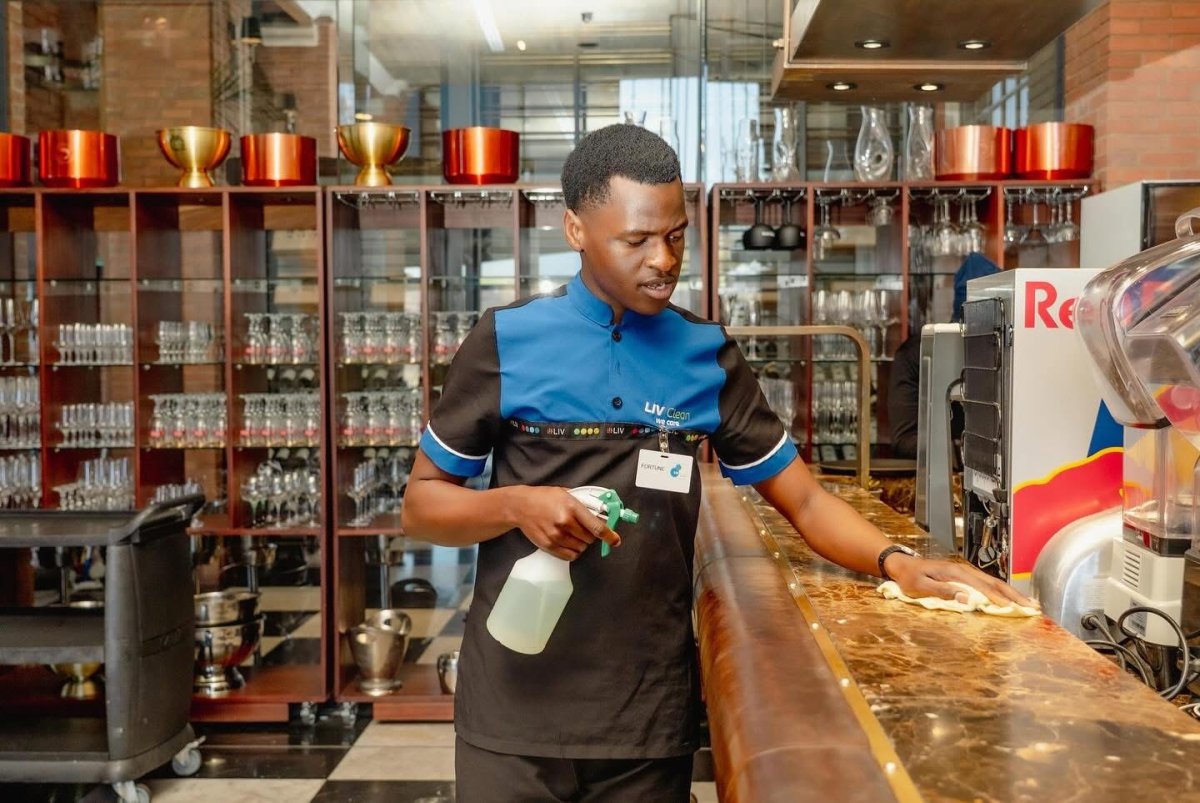
Ever ordered a stack of uniforms only to find your team won’t wear them? That’s money sitting in a cupboard. When you’re choosing corporate uniforms in South Africa, think about the job, the fabric and the branding, plus how your team will wear and care for each piece.
You don’t need to splash out on the fanciest outfit for every role. A few practical choices can keep costs sensible and give your team a consistent, professional look they’ll actually wear.
Here’s a handy guide to choosing budget-conscious uniforms, picking fabrics for South African conditions and bringing your branded teamwear together. We’ll look at everything from everyday shirts and golf shirts to workwear, aprons and outerwear.
Key Takeaways
- Pick fabric that suits the job, feels comfortable and can handle the wear, not just the lowest price.
- Stick to consistent colours and branding so your team looks like a team.
- Choose breathable, easy-care fabrics that work for the day-to-day and South African conditions.
- Give each role the right gear, whether that’s golf shirts, outerwear, aprons or workwear.
What fabrics are ideal for corporate wear?
Start with the job, then choose a fabric weight and feel that’ll suit the shift. The right fabric can help your team stay comfy while standing up to regular wear.
Fabric Quality and Comfort
Fabric quality isn’t just about how a shirt feels on the hanger. Check its weight and texture, and see how it moves when someone reaches, sits or works through a full shift. The 165G Crew Neck T-Shirt - Royal is listed as a 165 G product. That number tells you its weight, not what it’s made from, so compare the feel and construction too.
At the front desk, a smooth shirt might suit the look and let you move comfortably. For more physical work, think about how it feels through all that bending and reaching. Match the fabric to the job, then check how it feels against your skin and whether you can move freely. A good fit shouldn’t tug at your shoulders or pull across your back.
Workwear Durability
Workwear has a tougher gig than a shirt you wear to meetings. A warehouse or hospitality uniform might need to handle plenty of movement, spills and regular washing. Check the seams, hems and spots that take a knock, like pockets, cuffs and underarms. That’ll give you a better idea of whether the garment suits the daily grind, rather than just looking at fabric weight.
Before choosing, get clear on the job, the usual tasks and how the garment will be cared for. A garment for light office wear doesn’t need the same construction as protective workwear. The European Union notes that global value chains can make it tricky to get reliable information about overseas suppliers’ operations. Clear product details and consistent construction help you work out what you’re buying.
Keep it practical. Compare garments in the same category, check the stitching and fit, and think about how often each team member will wear the item. A lighter option might suit a light-duty role, while tougher work calls for a closer look at reinforcement and construction. Choose for the job first, and your uniform budget can go further without skimping on comfort or durability.
Your brand, all together
Your uniform gets your brand noticed before anyone says hello. Pick colours, logo spots and garment styles that feel like they belong together, from reception to the delivery team. A crisp golf shirt for client meetings and a practical apron for café staff can still feel like one team.
Start with your brand colours and decide how they’ll work on each garment. A small chest logo keeps a shirt understated, while a bigger back design might suit an event team. Keep the logo clear and easy to spot. Too many colours, slogans and design bits can make one uniform feel like several different brands.
Team unity comes from a shared look that still works for different jobs. Stick to a common colour palette, then pick garments that suit each role. A customer facing team might wear collared shirts, while a warehouse crew needs clothes that suit the work and let them move. Same brand, different practical fits.
Before production, pull the details into a simple visual guide. Note the approved colours, logo version, placement and garment style for each role. For example, keep the logo in the same spot on front desk shirts at every branch. That gives new starters and future orders a clear reference, instead of leaving it to someone’s memory.
Branded products can carry the same look beyond the uniform, too. A matching cap or event item can help your team look connected at a launch or staff day. Keep the main uniform consistent, then add extra pieces where they make sense. If your team could use one place to find its branded gear, have a look at brand store options.
Breathable, wrinkle-resistant fabrics
A heavy shirt can feel rough by lunchtime on a warm workday. If your team moves between reception, outdoor duties and a vehicle, think about how the fabric feels while they’re getting things done. Breathable fabric can help heat escape, and a comfortable fit gives you room to move. Try the garment with a few everyday movements, not just a quick look on a hanger.
Wrinkle resistance comes in handy when uniforms travel in a vehicle, sit in a locker or go from the wash straight to work. It doesn’t mean crease-proof, though. Fabric construction, garment care and storage all affect how it looks. Check the care label and pick a style that’ll stay presentable with the washing routine your team can manage.
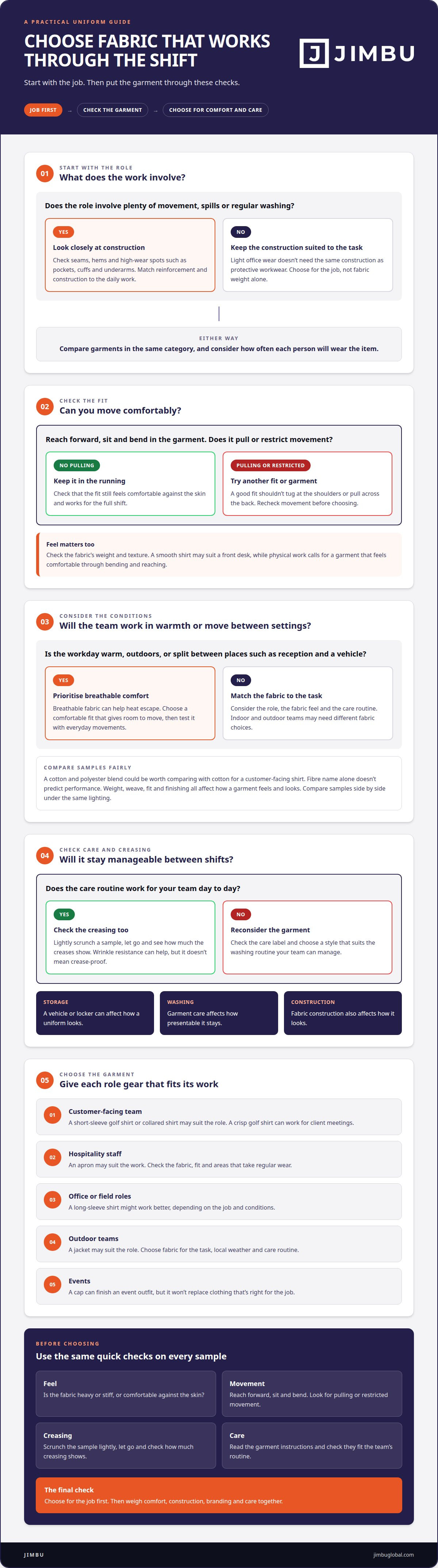
Here are a few handy checks when you’re comparing options:
- Feel: Give the fabric a feel. Is it heavy or stiff, or comfortable against the skin?
- Movement: Reach forward, sit and bend in the garment. You’ll soon spot any pulling or restricted movement.
- Creasing: Give a sample a light scrunch, let go and see how much the creases show.
- Care: Check the garment instructions and think about whether the routine works for your team day to day.
A cotton and polyester blend could be worth comparing with a cotton option for a customer-facing shirt. The fibre name alone won’t tell you how the garment will perform. Fabric weight, weave, fit and finishing all play a part in how it feels and looks. Compare samples side by side, under the same lighting, and give them the same movement test.
A team spending most of its shift outdoors needs a different feel from reception staff working indoors. Pick fabric to suit the task, local weather and care routine. It’s a practical way to keep uniforms looking fresh and feeling comfortable through a full shift.
Uniform and corporate wear for your team
Start with the work your team does. Golf shirts, collared shirts, aprons, jackets and caps each have their place. Pick the garment first, then think about fit, branding and how it’ll work with the rest of the uniform.
A short-sleeve golf shirt could suit your customer-facing team, while a long-sleeve shirt might work better for office or field roles. Hospitality staff may need aprons, and outdoor teams may need jackets. A cap can finish off an event outfit, but it won’t replace clothing that’s right for the job.
When you’re comparing South African uniform suppliers, look at the garments, branding options, product info, ordering process and help with repeat orders. You want to know what each option is made for, not just how it looks in a catalogue.
Think about the tasks and hazards involved in each role. Branded uniforms and protective clothing aren’t the same thing. Choose protective garments based on the hazards identified for the role and the safety requirements that apply.
There’s no one uniform rule for every job. Whether a business must provide clothing depends on the work, the role and the workplace obligations that apply. Ordinary branded clothing and protective clothing do different jobs, so don’t treat them as interchangeable.
South African suppliers include uniform manufacturers, branded apparel providers and importers. Compare what they offer and how they handle orders against what your team actually needs, not just the garment photos.
Minimum order quantities depend on the garment and how it’s customised. A stocked shirt with straightforward branding may need a different production setup from a made-to-order garment.
Timing depends on design approval, garment choice, branding method and whether items are made locally or imported. Allow time for each step, especially approvals and getting orders out to multiple teams.
Ordering branded uniforms is a fairly simple process: work out roles and quantities, pick garments, prepare the branding artwork, approve the design, then arrange production and distribution. Clear decisions along the way help keep the order consistent.
The European Union says overseas sourcing can make it harder to get reliable information about supplier operations. Longer supply chains can also mean more handoffs between production and delivery, so allow for those when you’re planning.
Ready to choose garments for your team? Explore uniform options and put together a range that suits the work.
JIMBU: Uniform programmes for large workforces (just-in-time, stockholding, 1-hour delivery)
Got a big team to kit out? JIMBU can help you manage uniform needs with just-in-time supply, stockholding and 1-hour delivery. Handy when you’re coordinating uniforms across a sizeable workforce and don’t want every order to become a scramble.
With Company Uniforms & Apparel, you can plan garments for different roles and keep the overall look consistent. Stockholding gives you planned access to uniform items, while just-in-time supply helps match orders to your workforce’s needs. The 1-hour delivery option is part of JIMBU’s uniform programmes for large workforces.
Bring us your garment requirements and team needs, and we can help shape a uniform programme around them. Get in touch if you’d like to chat about next steps.
Set your team up for what’s next
A uniform plan should keep working as your team grows, roles change and new staff come on board. For corporate uniforms in South Africa, think beyond the first order. A clear process for choosing garments and keeping your brand consistent can make future updates easier to manage.
JIMBU offers Company Uniforms & Apparel, Branded Products and Brand Stores. Bring these services together when you need uniforms alongside branded items or a central place for your team’s choices. Keep the plan practical, shaped around how your people work and what your business needs next.
Ready to talk through your uniform requirements? Contact JIMBU about corporate uniforms. We’ll be glad to hear what you have in mind. You’ve got a good place to start.
Got questions?
Frequently Asked Questions


Ready when you are
Let's build something worth talking about.
One partner. End-to-end execution. From the first sketch to the last shipped box.