
JIMBU Guide
Call Centre Uniforms: Guide to Comfort & Style
Choose call centre uniforms that keep your team comfortable and looking sharp. Get practical tips on fit, brand colours, dress codes and durability, too.

A uniform can look sharp at handover and feel like a punishment by lunch. Call centre uniforms need to work for the people wearing them through long shifts, while still giving your team a neat, recognisable look. Eish, comfort matters.
You’ll want clothing that suits the job, carries your brand colours well and holds up to regular wear and washing. The same thinking applies to CCTV teams, where the right look should feel practical as well as professional. We’ll cover how to choose garments for both teams, set a dress code that feels clear rather than fussy, and assess durability before you commit. Sharp, comfortable and consistent. That’s the sweet spot.
Key Takeaways
- Use the garment type, team role and daily working conditions to guide uniform choices for CCTV and call centre staff.
- Coordinate brand colours across garments so different teams still look like part of the same organisation.
- Set a dress code that’s clear, comfortable and suited to the professional image you want your team to present.
- Assess fabric, construction and care needs before choosing garments, and consider a uniform programme when you’re equipping a large workforce.
Ordering uniforms for CCTV and call centre staff
Planning staff uniforms means choosing garments, placing orders and deciding how each item will get to the right person. A clear plan helps CCTV and call centre teams start with fewer loose ends.
Ordering and Paying for Uniforms
Ordering uniforms means deciding what to buy, who’ll supply it and how each item will get to staff. It matters because everyone needs to know what they’re expected to wear and who’ll cover the cost. George Municipality identifies its quotation for CCTV and call centre staff uniforms as GMQ016/26-27. In South Africa, who provides or pays for uniforms depends on the employment terms and workplace policy. Set that out plainly before handing out the first uniforms.
Sizing and Fit Across Employees
A good fit lets each employee work comfortably throughout the day. Since one cut won’t suit everyone, build a practical sizing process into your order. Give employees a private way to share their sizing needs, and record each garment and size clearly. Check shoulder seams, sleeve length and waist comfort. For CCTV operators, consider how the garment feels while seated at a workstation. Call centre staff should also be able to sit and reach comfortably.
Bring Staff Into the Change
Ask staff for feedback before settling on a new uniform. They can flag issues with fit, fabric feel or practical details that might be missed during selection. Explain what’s changing and when the new clothing will be handed out. A shared uniform can help CCTV and call centre colleagues feel part of one team, even when their roles differ. Keep the overall look consistent while choosing garments suited to each role.
Comfort, Safety and Culture
Consider comfort, workplace equipment and individual needs before confirming the uniform. Avoid restrictive fits and loose details that could catch on equipment. Give employees a respectful way to raise cultural or religious clothing needs, and explain suitable options without assuming everyone has the same requirements. A professional team look works best when staff can wear it comfortably and with confidence.
Co-ordinated team looks and brand colours
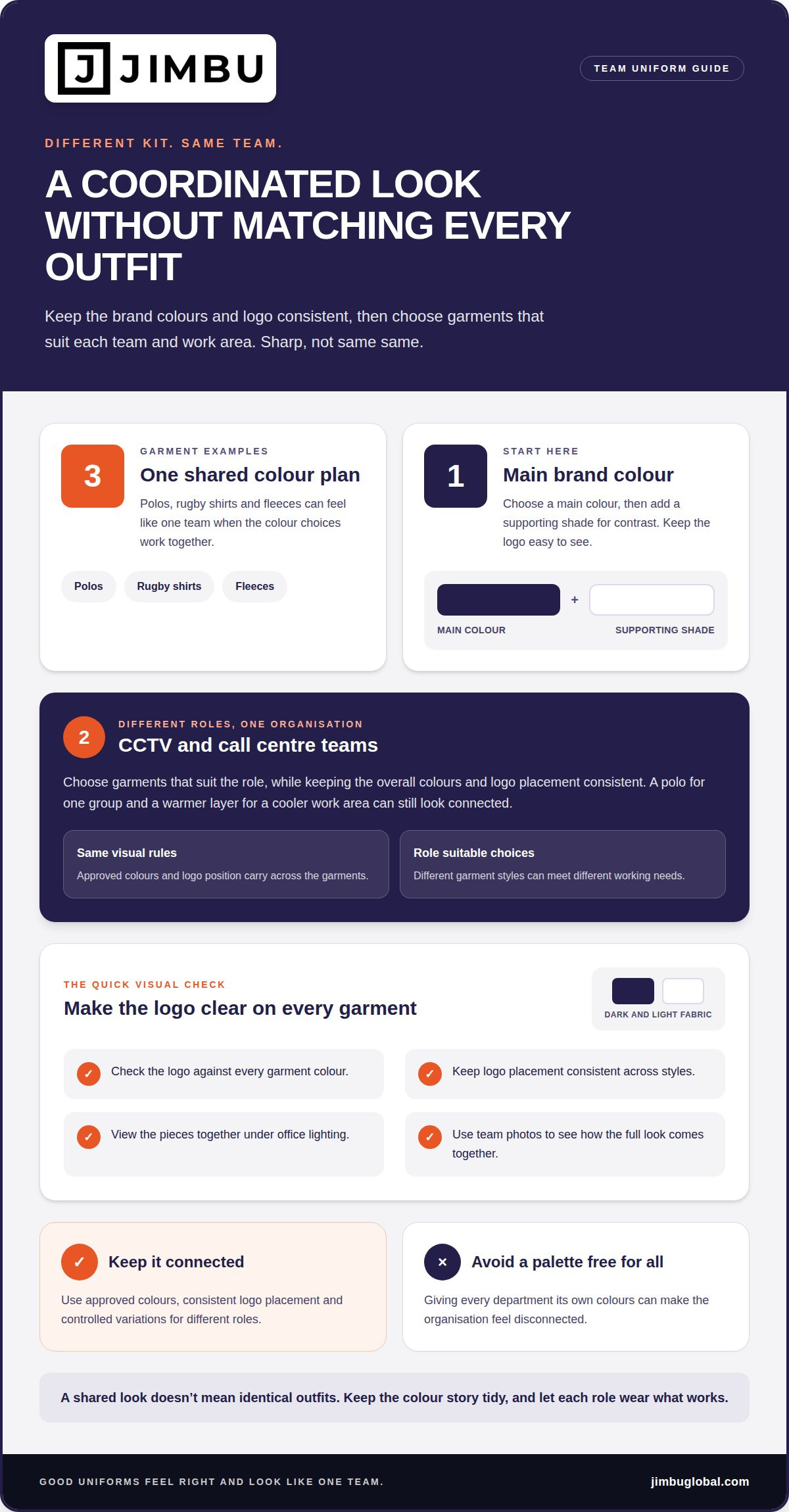
A team can look coordinated without wearing identical outfits. Start with a main brand colour, then choose a supporting shade for contrast. For example, a dark polo with a lighter logo can look clear and tidy. Check the logo against each garment colour before settling on the combination. Aim for visible branding that doesn’t overwhelm the garment.
Different roles can wear different styles and still look like one team. British Gas introduced branded polo shirts, rugby shirts and fleeces for staff. That mix shows how a shared colour plan can bring varied garments together. You could choose polos for desk teams and a warmer layer for cooler work areas, then keep logo placement consistent. The result can feel cohesive without making every outfit identical.
Make the visual rules easy to follow. Note the approved colours, logo position and any role-based variations, then apply them to each garment order. If one team needs a distinct look, use a controlled change, such as a different garment style or a small accent colour. Avoid giving every department its own palette, which can make the organisation feel disconnected.
Keep seniority out of the colour plan. At Dixons, staff across roles, from sales agents to senior managers, follow the same dress code. A shared base colour can carry across polos, shirts and fleeces without requiring everyone to dress alike. If you add role markers, keep them clear and discreet so the team still feels connected.
Before choosing, compare colour samples beside the logo on every garment type. Check that it stays readable on both light and dark fabric, then view the pieces together under office lighting. Team photos can help show how the full look comes together. If you’re shaping coordinated branded details, keep the colour and logo choices consistent across each item.
Smart business dress codes at contact centres
A dress code helps your team understand what’s suitable for work. Branded uniforms keep the look consistent, while business casual gives staff more choice. Uniforms make the standard clear. With business casual, clear guidance on tops, trousers and footwear helps prevent guesswork.
British Gas introduced uniform options when it moved to a new contact centre 18 months earlier. A representative described the dress code as a turning point for the company over the previous 3 years. Clothing can be part of a workplace change, not just a branding decision. That example’s a good reminder to explain why you’re introducing a new dress standard.
Dixons offers an example of straightforward guidance for everyone. Its contact centre dress code expects men to wear collared shirts and smart trousers. Blouses with skirts or trousers are described as the norm for women. Specific guidance like this can set a professional standard while allowing different garment choices.
Branded clothing may suit your team if you want a recognisable, consistent look. Business casual may suit a workplace where staff prefer more personal choice. Either way, spell out acceptable garments, footwear, cleanliness and any role-based differences. “Dress smartly” can mean something different to each person. A clear example, such as a collared shirt with smart trousers, gives everyone a better guide.
Keep the rules professional, practical and easy to follow. One contributor recommends dressing more professionally to encourage more professional behaviour. Clean clothes help staff look presentable to colleagues, while flip-flops are best left out of the dress code. Put expectations in writing, explain them during onboarding and apply them consistently. Make it clear how employees can raise comfort or cultural needs, so everyone understands what’s expected.
At Dixons’ Sheffield contact centre, blouses with skirts or trousers are described as the norm for women. One answer advises leaving flip-flops at home; another recommends clean clothes that keep workers presentable to colleagues.
Garment quality and durability
A garment can look smart on day one but wear poorly after regular washing. Assess quality by checking fabric feel, seams, fastenings and shape retention. For a polo, inspect the collar, shoulder seams and side seams before approving the style.
For warm South African conditions, lightweight, breathable fabrics are a sensible starting point. Cotton and cotton-rich blends can feel comfortable, but the right choice also depends on garment construction and care needs. Compare fabric samples in the actual style, since a shirt and a fleece serve different purposes.
Inspect stress points before choosing a garment. Check whether buttons feel secure, seams lie flat and hems are neatly finished. For printed or embroidered branding, look at the edges and placement. These details help you assess whether the finish suits frequent workplace wear. If reviewing a sample, try normal movements such as sitting at a desk and reaching for equipment.
Follow the garment’s care label when washing it. Sort similar colours, use the recommended settings and avoid methods the label rules out. A dark branded polo, for example, may need different care from a light shirt. Clear instructions help staff care for garments consistently and avoid preventable damage.
Include maintenance guidance with each uniform issue. Explain how to treat stains promptly, dry garments as directed and store them cleanly between shifts. Check collars, cuffs, seams and branding during routine replacement reviews. If one area repeatedly wears first, use that observation to refine your next garment specification. Practical checks are more useful than choosing by appearance alone.
Durability also depends on matching the garment to its use. A CCTV operator’s daily clothing needs may differ from a team member moving between desks. Set the intended role, working conditions and care routine before selecting styles. Plan durable staff garments around the way your team works.
JIMBU: Uniform programmes for large workforces (just-in-time, stockholding, 1-hour delivery)
JIMBU helps you manage uniforms for large teams through uniform programmes with just-in-time supply, stockholding and 1-hour delivery. That’s useful when call centre or CCTV teams need consistent garments and a clear way to manage uniform supply.
JIMBU provides uniforms for call centre and security teams through its Company Uniforms and Apparel offering. Bring garment choices and brand requirements together in one programme to help keep team clothing consistent as needs change.
If you’re planning a new uniform programme or reviewing an existing one, talk to JIMBU about your team’s needs.
Give your team’s look room to grow
A uniform plan can do more than dress today’s team. It can help new starters feel part of the organisation and keep the brand recognisable as roles change. Treat uniforms as a working part of the staff experience, not just another item on the order list.
JIMBU offers Company Uniforms and Apparel, Branded Products and Brand Stores to support how your team presents itself. Whether you’re planning call centre uniforms for a new team or refreshing an existing look, bring your ideas and practical needs together with JIMBU to shape an approach that fits your people and brand.
Contact JIMBU about your uniform needs, and let’s get the conversation started. Sharp and simple.
Got questions?
Frequently Asked Questions


Ready when you are
Let's build something worth talking about.
One partner. End-to-end execution. From the first sketch to the last shipped box.