
JIMBU Guide
B-BBEE Skills Development Textile Learnerships for Clothing
Plan a B-BBEE skills development textile learnership that builds workplace skills. See how scorecard targets, accreditation and SETA training fit together.
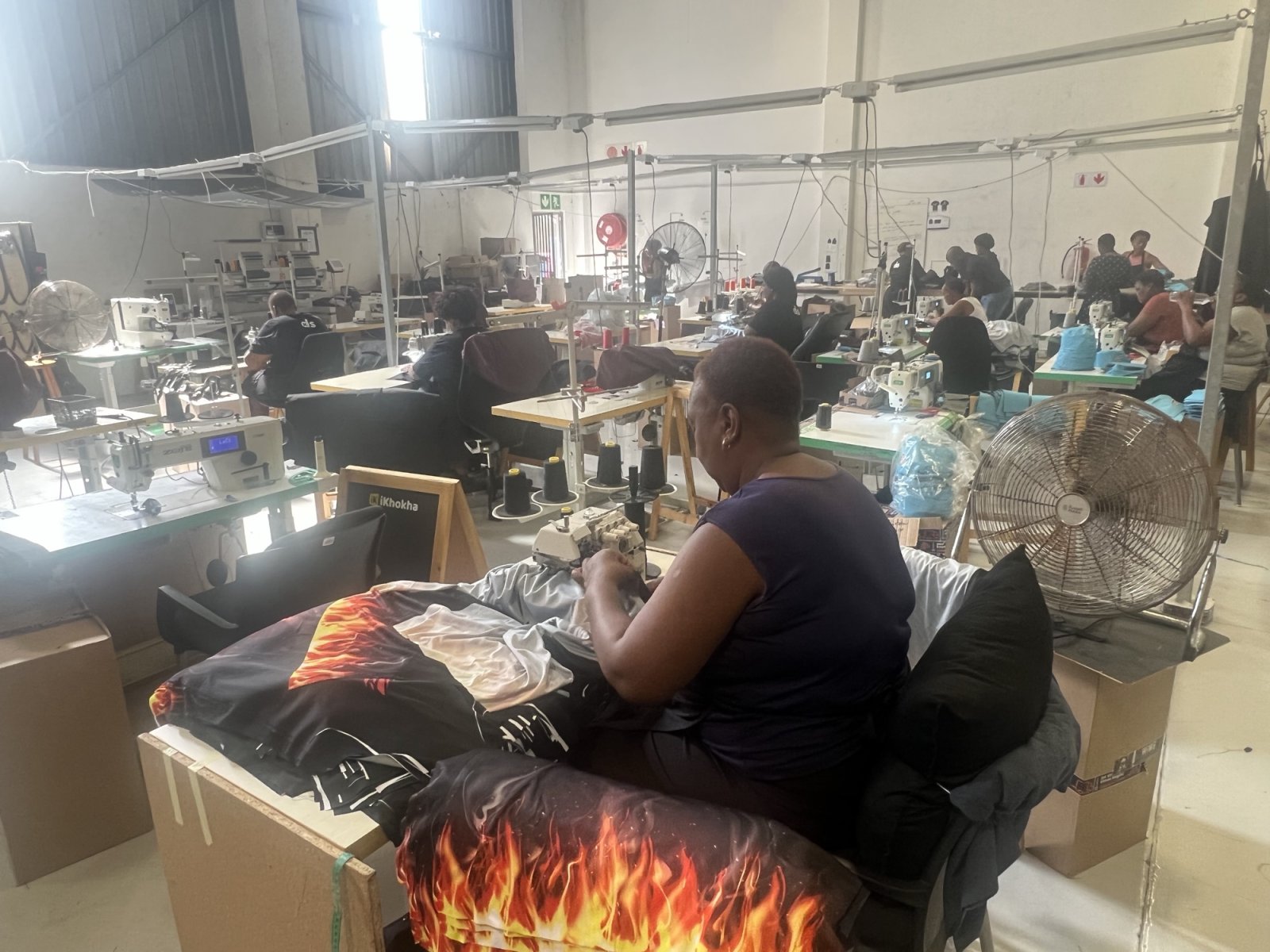
Need to build practical skills and support your B-BBEE planning? A textile learnership could help, as long as the training meets real workforce needs.
There’s more to it than signing learners up, boet. Programme structure, learner participation and accreditation all matter when you’re planning for the scorecard.
Here’s what to consider before you start, how textile learnerships may fit and why accreditation matters. A few practical pointers to help you plan.
The key bits
- See how learner participation can earn you scorecard points, including the 4 point target when Black learners make up 2.5% of your total employees.
- Find out why Skills Development is a priority element and what that means when you’re planning your scorecard targets.
- See how accreditation and the relevant SETA link textile training to recognised learning outcomes.
- Explore how a 12 month textile manufacturing learnership can support your skills development plans.
Do learnerships count towards the B-BBEE scorecard?
Yes, they can. The scorecard looks at learner participation and programme spending, so signing people up isn’t enough.
Points you can earn through learnerships
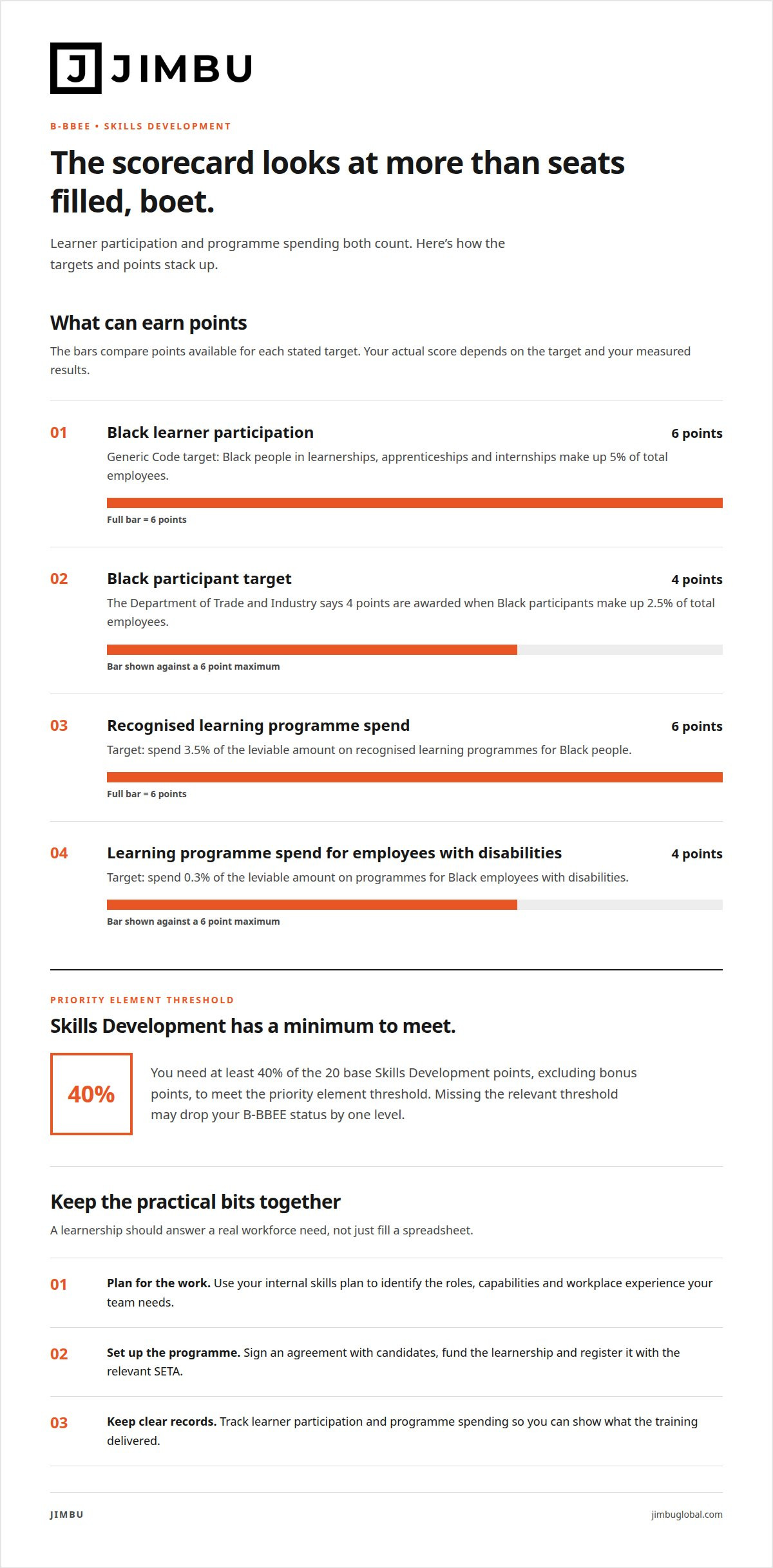
Under the Generic Code, Black people in learnerships, apprenticeships and internships can earn 6 points when they make up 5% of total employees. The Department of Trade and Industry says the scorecard awards 4 points when Black participants make up 2.5% of total employees. So, how many points can you earn? It depends on the target and your measured results.
What employers need to do
For a B-BBEE-funded learnership, you’ll sign an agreement with candidates, fund the programme and register it with the relevant Sector Education and Training Authority (SETA). Add these steps to your internal skills plan. Keep your participation and spending records together so you can show what the programme delivered and back up your claim.
The Generic Code also sets spending targets. For recognised learning programmes for Black people, the target is 3.5% of leviable amount, worth 6 points. For programmes for Black employees with disabilities, it’s 0.3%, worth 4 points. You also need at least 40% of the 20 base Skills Development points, excluding bonus points, to meet the priority element threshold.
If you’re in retail, plan against the scorecard that applies to your measured entity. Start with your skills plan, then line up learner numbers, programme spending and internal records with its targets. That way, textile training answers a real workforce need instead of just becoming another spreadsheet entry.
Skills Development as a B-BBEE priority element
South Africa’s B-BBEE scorecard covers five elements: Ownership, Management Control, Skills Development, Enterprise and Supplier Development, and Socio-Economic Development. Skills Development carries extra weight in your overall score. Miss the relevant priority-element threshold and your B-BBEE status may drop by one level. So build training into your plan instead of waiting for scorecard reporting.
A learnership mixes classroom learning with hands-on workplace experience and leads to a qualification registered on the National Qualifications Framework. In a clothing operation, the learning can connect to the production work people do every day. Use your internal skills plan to work out which roles, capabilities and workplace experience your team needs.
There may also be a tax angle. Section 12H of the Income Tax Act provides allowances for qualifying registered learnership agreements, subject to the rules that apply. SARS Interpretation Note 20 (Issue 9), dated 10 April 2025, covers qualifying agreements entered into before 1 April 2027. The stated allowance is R40 000 when you register a learnership, with another R40 000 when it’s successfully completed. Keep the stages and records clear.
Start by matching the training to a real workplace need, then keep the learning records together. That way, it’s easier to show what the programme aimed to do and what learners completed. For a practical look at textile workplace skills planning, keep the learning tied to roles your operation needs.
Accredited clothing and textile learnerships
Accreditation links structured industry training to recognised learning outcomes in South Africa. It also matters when you’re checking how a programme fits the Skills Development scorecard.
Accreditation and SETA Oversight
A clothing or textile skills programme follows the relevant SETA registration and NQF-based accreditation route. An accredited provider delivers the training, and you’ll receive a Statement of Results after completing the course. Before you accept an offer, check the named programme, provider and relevant SETA registration. That helps you tell structured training apart from a general workplace course.
Learnerships Compared With Other Pathways
In South Africa, a learnership combines theoretical knowledge with industry-specific workplace experience and leads to an NQF-registered qualification. Apprenticeships and internships also appear on the B-BBEE Skills Development scorecard, but their structures and outcomes can differ. Compare the learning plan, workplace component and completion outcome to see which pathway suits the role and your workforce development needs.
Applicant Eligibility
Each textile learnership intake sets its own age and education criteria, so follow the programme advert. Use its application steps and prepare only the documents it asks for. Requirements may include identity and education records, but the intake instructions specify the exact list. The advert should also identify the role, training provider and relevant SETA so you can check the details before submitting personal information.
Stipends and Fees
Stipend amounts and fee terms depend on the specific programme. Read the written offer before you accept and check that it explains any stipend, charges and payment conditions. To reduce scam risks, verify the provider’s accreditation, the programme’s relevant SETA and whether the offer matches the published intake details. Be cautious about unexpected payment requests or requests for personal documents outside the stated application process.
Which SETA oversees textile and clothing learnerships in South Africa?
For clothing and textile manufacturing, the relevant authority is the Fibre Processing and Manufacturing Sector Education and Training Authority, known as FP&M SETA. Its sector covers fibre processing and manufacturing, including textile and clothing activities. The programme’s qualification and workplace training should fit that focus.
SETA oversight is more than a logo on an advert. South African learnerships are usually registered with the relevant Sector Education and Training Authority and run for a set period. The authority looks after the programme and qualification, so a textile course should name its relevant SETA and registered learning pathway.
Here’s how to check the oversight behind a learnership opportunity:
- Identify the qualification or learning programme named in the advert.
- Check that the provider is accredited for the stated training.
- Match the programme’s textile or clothing content to FP&M SETA’s sector scope.
- Look for the learner’s expected outcome, including a Statement of Results after training.
This gives employers a clearer way to record the programme and its learning outcomes. It also helps applicants tell structured training apart from a general workplace course. For example, a clothing production programme should link its content to textile or garment manufacturing, not just use a broad industry label.
For B-BBEE Skills Development, everything needs to line up: the programme, provider, learner participation and supporting records should tell the same story. Keep registration and completion evidence with the relevant skills plan. That makes it easier to show how a textile learnership connects to workplace training and scorecard reporting. Clear records also help avoid a last-minute scramble.
JIMBU: SETA-accredited 12-month textile manufacturing learnership
If your organisation needs textile manufacturing training that fits your workforce, JIMBU’s SETA-accredited 12-month learnership is one option to consider alongside your Skills Development priorities.
Start with the work your team needs done. Look at where textile manufacturing skills fit, then consider whether a B-BBEE Skills Development textile learnership could support those roles and your wider skills plan. It’s a training option, not an automatic scorecard result. You’ll still need to assess learner participation, qualifying expenditure and supporting records against the applicable targets.
That keeps your planning grounded. A B-BBEE Skills Development textile learnership may suit an organisation building manufacturing skills. It might be less relevant if your priority is unrelated training or a different workforce need.
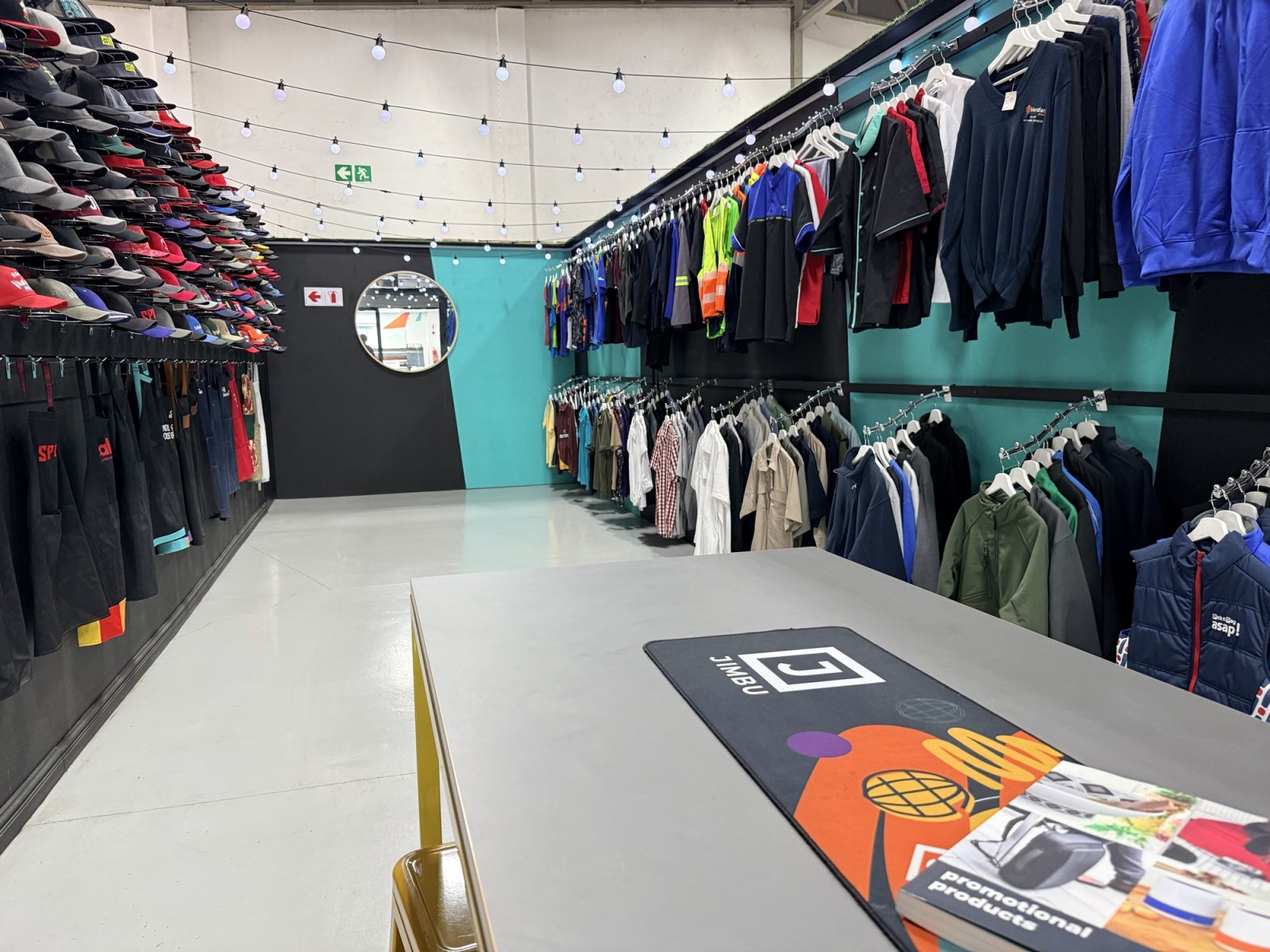
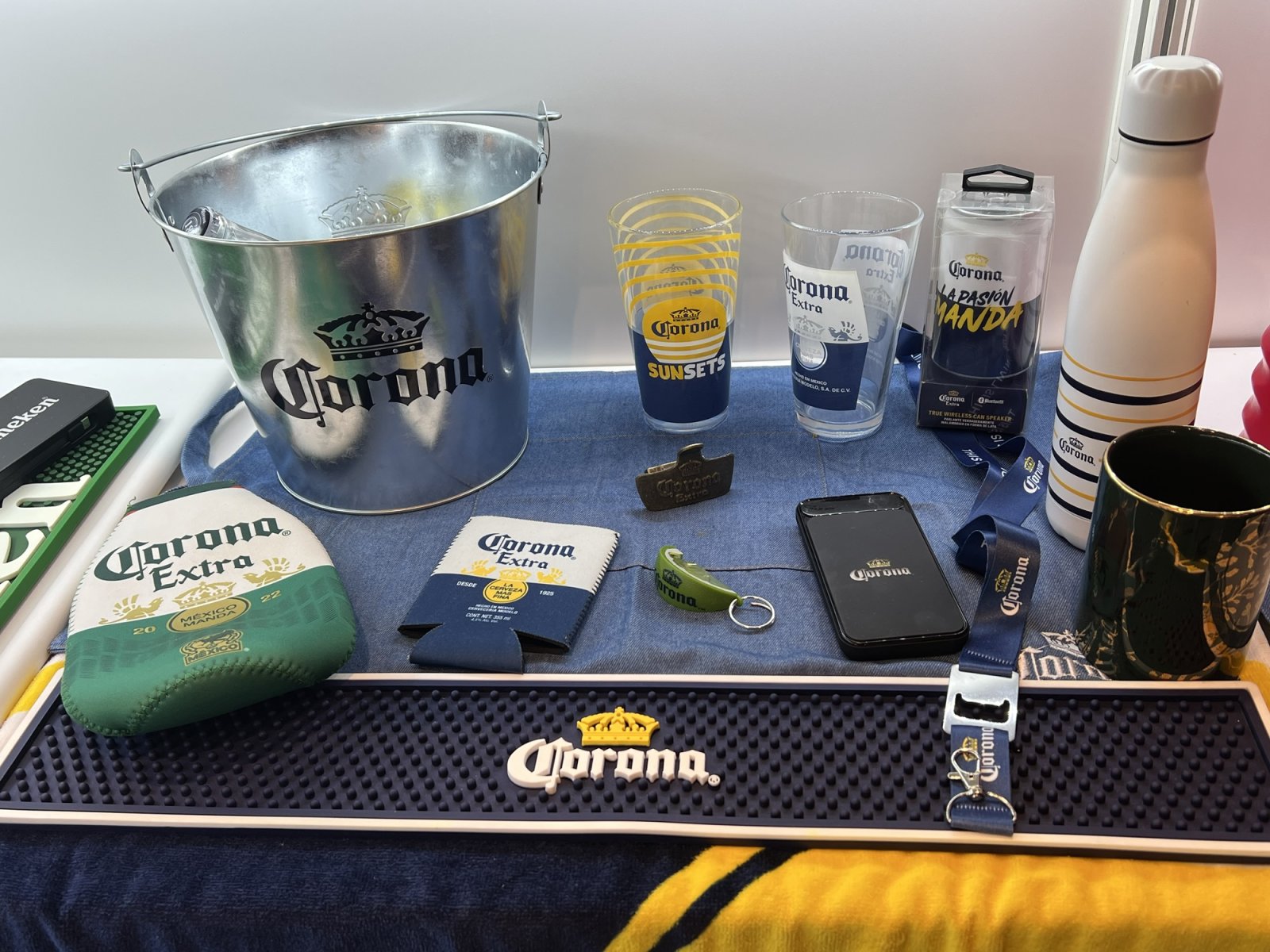
JIMBU offers company uniforms and apparel, plus branded products, alongside its textile manufacturing learnership. Uniforms and branded products help your team look the part at work, while the learnership focuses on manufacturing training. Each has its own purpose.
Bring your workforce needs and skills priorities to JIMBU. We can chat about the textile manufacturing learnership and whether it might fit your organisation’s plans and clothing or textile operations. We won’t promise a scorecard outcome, but we can help you assess whether the training’s a good fit. Get in touch for a chat about your skills priorities.
Make the next move count
Connect the training idea to a real operational need. Start with the roles where stronger textile manufacturing skills could make a practical difference. Then consider how learning fits your staffing plans, production demands and longer-term workforce development.
A B-BBEE Skills Development textile learnership can support your plan when the programme aligns with workplace needs. Scorecard reporting still requires careful internal tracking, but the value begins with useful training and a clear purpose. Focus on what learners will learn and where they can apply those skills.
Discuss the programme before putting it into motion. JIMBU offers a textile manufacturing learnership that your organisation can consider against its skills priorities. You can also discuss related apparel needs for your team and operations while keeping the purpose of the training clear.
Contact JIMBU about textile learnerships when you’re ready. Shout if you’d like to chat through the options.
Got questions?
Frequently Asked Questions
Ready when you are
Let's build something worth talking about.
One partner. End-to-end execution. From the first sketch to the last shipped box.