
JIMBU Guide
DTF vs Screen Printing: Which Is Best for Apparel?
Compare DTF vs screen printing for your apparel order. See how design detail, run size, fabric, setup and wash performance can help you choose the right fit.
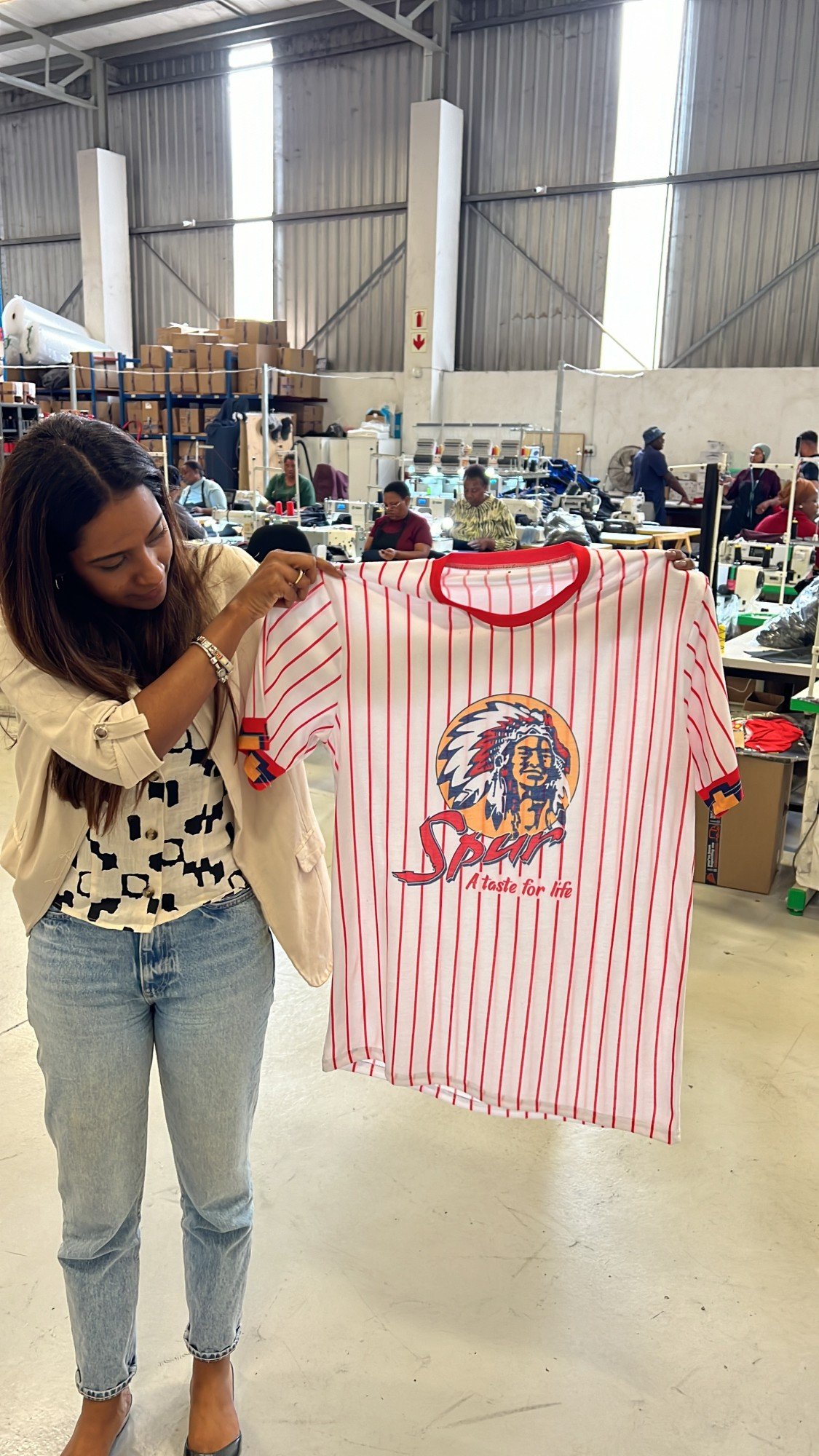
Got a colourful design and wondering if it’ll be a mission to print? DTF printing transfers a design from film to a garment using heat. Screen printing pushes ink through prepared mesh screens, with a separate screen for each colour.
When you’re comparing DTF and screen printing, think about the design, order size and fabric. You’ll want a method that suits the garment and how it’ll be worn and washed, without extra setup you don’t need. Small batches and detailed artwork often suit DTF. Screen printing can make more sense for large runs of simpler designs.
This comparison covers wash performance, fabric compatibility, setup and colour count, so you can weigh up the trade-offs before production. There’s no single best method for every garment. It comes down to the job at hand.
Key Takeaways
- Match the print method to your order size and artwork before deciding how to get the job done.
- Check wash resistance on the actual print and garment, not just a headline wash-count claim.
- See how your fabric affects the feel of the print and which method will work best before placing a run.
- Weigh screen preparation and colour count against your design, then choose branded apparel that suits your team.
DTF printing vs screen printing: Which method fits your brand?
Need a small run with detailed artwork? DTF could be the easier fit. Screen printing can suit bigger repeat orders with simpler designs. If you’re choosing branded apparel, the artwork and order pattern help you decide. DTF uses prepared transfers, while screen printing needs screens and colour registration. Sharp, that’s a solid place to start.
If you’re choosing for a brand, picture the actual job. A one-off shirt with a detailed illustration may suit DTF. A run of hundreds of shirts carrying the same simple logo can suit screen printing. Both methods can work on cotton, polyester and blends when the process is appropriate, so match the method to the garment too.
Both workflows have environmental and health considerations. DTF uses single-use PET film and adhesive powder, which add material waste. Screen printing can involve press-cleaning solvents. The National Institute for Occupational Safety and Health (NIOSH) notes that some solvents in these solutions are carcinogens, and many can be absorbed through the skin.
| Option | Order fit | Design fit | Workflow focus |
|---|---|---|---|
| DTF | Small quantities | Complex, multi colour artwork | Prepare transfers, then apply them with heat |
| Screen printing | Large repeat runs | Simple designs with one to three colours | Prepare a separate screen for each colour |
Choose DTF for short runs or detailed artwork. Consider screen printing for repeat quantities and simpler designs.
DTF is often suitable for small batches and complex designs, while screen printing often suits large runs of simpler designs.
Durability and wash resistance
A print can look great on day one, then tell a different story after a wash. To compare DTF and screen printing fairly, check the finished print on the garment you’ll actually use.
Print Quality and Durability
DTF transfers can keep detailed artwork and images looking sharp, while screen printing pushes ink through mesh. Neither method automatically wins on durability. Both can last for years when applied and cured properly. The garment, application and curing all play a part, so don’t judge a print by its first look alone.
Durability and Wash Testing
You might hear claims of 30 washes for DTG or 45 washes for DTF, but those figures don’t tell you much unless the testing’s comparable. The transfer or ink, garment, application and wash routine all affect the result. Want a fair comparison? Test samples made with the actual print and garment combination. Wash them the same way, then check for fading, cracking or lifting.
Keep the wash routine consistent, too. Turn printed garments inside out, use cold water and avoid high dryer heat to help the print last. A detailed image may behave differently on different fabrics, so test the garment you plan to issue or sell. That way, you’ll see how the print holds up in real life.
Fabric compatibility
Start with the garment, not just the artwork. DTF can work on cotton, polyester, blends, nylon and other synthetic fabrics. Screen printing can also suit cotton, polyester and blends when the ink and curing match the material. Both methods offer options, but the fabric still matters.
Considering a polyester uniform? Either method may work with the right process. DTF transfers use adhesive powder and a heat press to apply the design. Screen printing pushes ink through a prepared mesh screen. Plastisol ink, a common screen-printing option, is PVC-based and sits on top of the fabric, which affects how it feels against the skin.
Print feel depends partly on how much of the garment the design covers. A large, solid graphic puts more print material across the fabric than a small chest logo. Wash performance depends on the fabric, ink or transfer, application and curing. A cotton tee and a polyester top won’t necessarily behave the same, so compare samples on the apparel you plan to use.
Production costs depend on the workflow and the number of sellable garments. Screen-printing costs reflect setup, screens, colour count, labour, curing and cleanup. Each colour needs its own screen, so a more complex design adds preparation. DTF uses PET film and adhesive powder, which add material use. To compare the two methods, divide the total production cost by the expected number of sellable garments. That gives you the cost per garment, instead of letting setup costs tell only half the story.
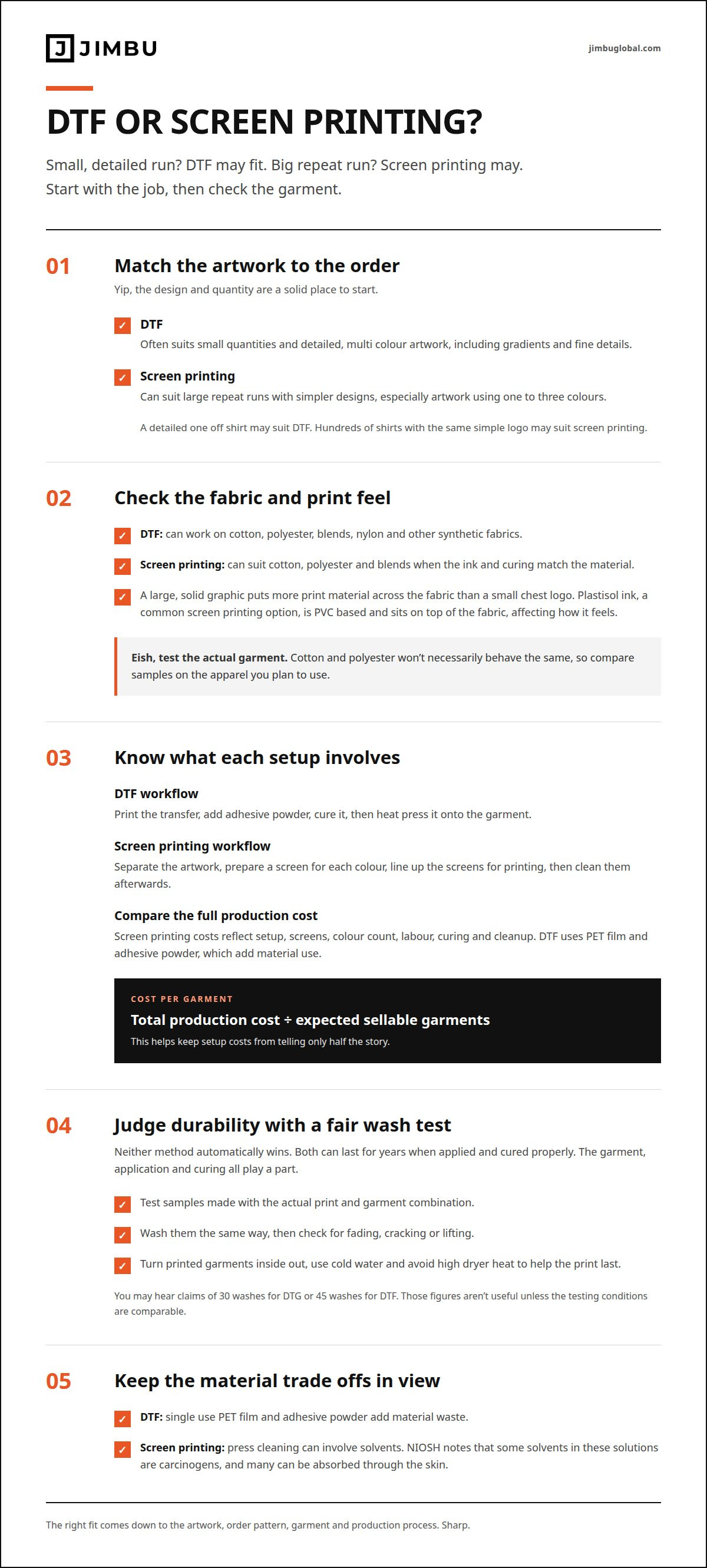
Screen-printing setup, screens and colour count
With DTF, we print the transfers, add adhesive powder, cure them and heat press them onto the garments. Screen printing has a different setup. We separate the artwork, expose the screens, line them up for printing and clean them afterwards.
Design Complexity and Colour Options
Screen printing works well for repeat orders with simpler artwork, especially designs using one to three colours. Each colour needs its own screen, so more colours mean more prep. DTF handles detailed, full-colour designs without needing a screen for every colour. For a logo on cotton shirts, screen printing may suit a repeat batch. For artwork with lots of colours or fine detail, DTF may be a more direct route.
Colour Reproduction and Artwork Detail
Screen printing pushes ink through mesh, so the colours need to line up where they meet. Clean artwork separations help keep a logo’s edges and colour areas clear across a batch. With DTF, we print detailed images onto transfers before pressing them onto garments. That can work well for gradients, small details and artwork with several colours. On cotton or blends, the garment’s base colour and where the print sits also affect how the finished design looks.
Setup Requirements and Turnaround
For DTF, we print the transfer, add powder, cure it and heat press it onto the garment. For screen printing, we separate the artwork, expose one screen for each colour and line up the screens for printing. There’s no one fixed turnaround time for either method. The workflow, order quantities, artwork readiness and production stages all affect how long it takes from setup to finished apparel.
For a branded apparel run, talk through your print plan with us.
JIMBU
When your print choice needs to work with more than one shirt, JIMBU can help you think through the bigger picture. If you’re weighing DTF against screen printing for uniforms, promotional apparel or a branded range, start with the design, fabric, quantities and how people will wear the garment. That gives us a good brief before production.
Company Uniforms and Apparel can help you find garments that suit your team, your brand and how they’ll be used. Branded Products let you carry that identity beyond clothing, onto the things your staff or customers use. Talk through the print method early, especially if your artwork, fabric and order size bring different things to consider.
A Brand Store gives your branded range a dedicated online home, while Barware can bring your identity to staff events or client gatherings. The right mix depends on what your brand needs, not just the print technique. A detailed uniform graphic and a simple repeat logo may need different production approaches.
Bring the key details together: garment type, fabric, artwork, quantities, where the item will be worn, and whether your range needs to include more than apparel. That gives us a clear place to start, whether you’re looking at Company Uniforms and Apparel, Branded Products, Brand Stores or Barware. We can shape the approach around your project instead of squeezing every job into the same template.
Shout to us if you’d like to chat through your ideas.
Make your next print run count
The best choice for DTF vs screen printing is the one that serves your brand beyond the first batch. Consider how the garment fits into your wider range, how often you’ll reorder it, and whether the design needs to stay consistent across different items. That broader view can turn a single print decision into a more considered brand plan.
Before your next run, bring together the artwork, garment choice, quantities and intended use. A clear brief is a stronger starting point for discussing the production approach and keeping the finished items aligned with your brand. You don’t need every detail perfectly polished. JIMBU can help shape the conversation around what you have.
JIMBU can help connect branded apparel with the wider products and brand experience you’re building. Talk to JIMBU about your print needs and bounce around the options. Sharp, simple, and no pressure.
Got questions?
Frequently Asked Questions
Ready when you are
Let's build something worth talking about.
One partner. End-to-end execution. From the first sketch to the last shipped box.