
JIMBU Guide
How to host a workplace textile learnership in South Africa
Hosting a workplace textile learnership in South Africa? Learn how to plan mentoring, training and NQF credits so learners gain practical, job-ready skills.
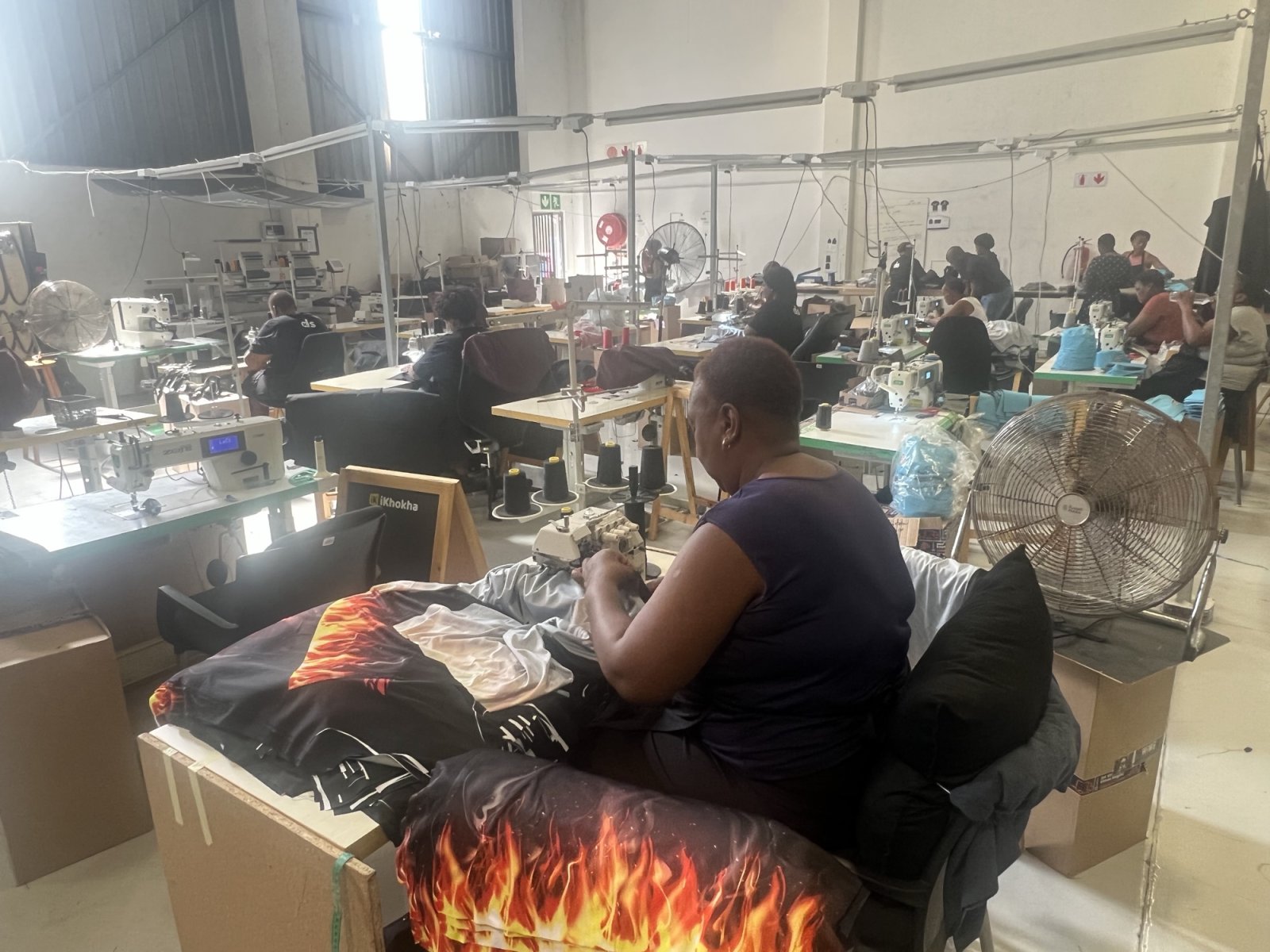
The real classroom is the workplace. South African learnerships combine theoretical training with practical experience, with 30% of the programme in theory and 70% in workplace learning. For employers, hosting a workplace textile learnership in South Africa means making room for learners to put their training into practice.
Yip, that takes more than a desk and a timetable. Learners need useful work experience, support from people on the floor and time to attend training. A textile manufacturing learnership can run for 12 months, giving participants time to build skills through structured learning and hands-on work.
This guide explains how learnerships work, what hosting involves and how NQF levels and credits connect training with recognised skills. You’ll also learn how a textile learnership can support skills development and prepare people for employment. Here are the practical details.
Key Takeaways
- Set clear responsibilities for the sponsor, host, training provider and learner before the programme begins.
- Plan workplace mentoring and training time so learners can put classroom learning into practice.
- Use NQF levels, credits and assessments to understand what skills the qualification recognises.
- See how textile learnerships can build practical skills, support employment and contribute to workplace development goals.
Learnerships as a combination of theoretical training and workplace experience
It’s classroom learning plus real work on the floor. Plan both around what learners need to do.
-
Establish the Training Purpose
Start with the skills your CTFL workplace needs. Clothing, textile, footwear and leather manufacturing training connects learning to practical production work. Textile learnership pathways last 12 months, split between 30% theory and 70% workplace learning. According to the South African Revenue Service, the Employment Tax Incentive is available for a maximum of 24 months.
-
Partner with an Accredited Provider
Choose an accredited training provider and agree on how training and assessments will work. The CTFL SETA is the sector body for clothing, textile, footwear and leather learnerships. Employers with a submitted WSP can apply for programmes advertised by a SETA, subject to its requirements. Before the programme starts, the sponsor, host and provider should sign a Service Level Agreement.
-
Clarify Learnership Responsibilities
Clarify each party’s responsibilities from the outset. The sponsor employs learners and covers stipends, recruitment, host fees and training fees. The host provides a suitable, equipped workplace and relevant experience. The provider delivers training and assessments. Learners attend training and follow workplace procedures. Costs depend on the agreed programme and employment arrangements.
For safety, give learners a proper induction, explain workplace procedures and provide a safe environment for their assigned tasks.
-
Arrange Workplace Learning and Mentoring
Choose a mentor and connect daily tasks to the programme outcomes. For example, introduce learners to relevant production steps with guidance before they take on tasks independently. Release them for training, then discuss their progress with the provider. A clear plan for hosting a workplace textile learnership in South Africa helps connect classroom learning with practical work. Careful planning makes that connection easier to manage.
What are learnerships in South Africa?
- A learnership mixes structured learning with real work experience and leads to an NQF-registered qualification. An internship gives someone workplace experience, while an apprenticeship focuses on practical occupational training. Before you choose, check that the qualification and outcomes match the skills you need.
- Use the programme to build skills your business needs. Learners get training they can put to work, and you can grow skills in your team or prepare people for future roles. Hosts support hands-on learning, while sponsors can develop a pipeline of job-ready talent. For example, a textile business could link learning to tasks in its production operation.
Learnerships can also add skills development points to your B-BBEE scorecard. Keep clear records showing how the training fits your skills priorities.
- To check if you’re eligible as an employer, start with the relevant SETA’s programme requirements. If you’ve submitted a workplace skills plan, you can apply for learnership programmes advertised by a SETA, as long as you meet its requirements. Funding may include SETA grants or tax incentives, depending on the programme and your eligibility. Keep these options in mind when you plan, but don’t count on them to cover every cost.
- Make time for learners to learn, not just fill a gap on a busy shift. Production pressures can leave little time for mentoring, and vague tasks can make learning feel disconnected from the job. Set suitable tasks, choose a mentor and make time for training. Regular chats about progress help supervisors see where learners need more guidance. Better for everyone.
NQF qualification levels and credits
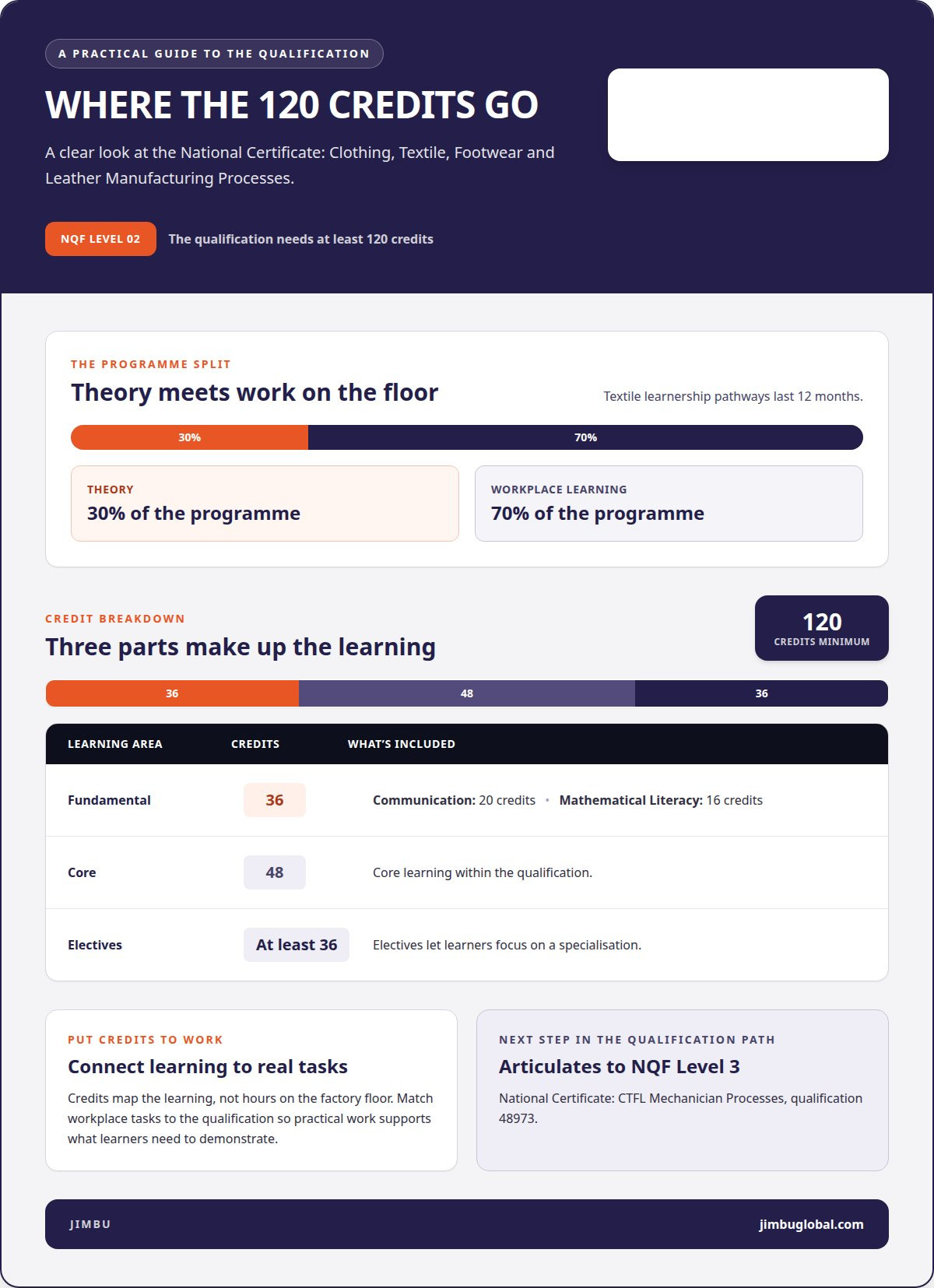
- Start with the qualification that fits the work learners will do. The National Certificate: Clothing, Textile, Footwear and Leather Manufacturing Processes sits at NQF Level 02 and needs at least 120 credits. Think of the credits as a map of the learning, not a tally of hours on the factory floor. Match workplace tasks to the qualification so the learning has somewhere useful to land.
- Have a look at how those 120 credits are split. There are 36 credits for fundamental learning, 48 for core learning and 36 for electives. The fundamentals include 20 credits in Communication and 16 in Mathematical Literacy. Electives let learners focus on a specialisation, with at least 36 elective credits required. That gives you a handy way to connect a learner’s focus with relevant workplace tasks.
- Use the exit-level outcomes to understand what learners need to demonstrate by the end. For example, a textile production task can provide evidence alongside theory and assessment activities. The training provider assesses learning, while the host provides relevant workplace experience. Track how practical tasks support the outcomes so that completed work contributes to learning, not just the production list.
- Get the working arrangements down in a Service Level Agreement before the programme starts. The sponsor, host and training provider should meet and sign the agreement. Set out who handles training, assessment, learner support, workplace experience and reporting. It gives everyone a shared reference when plans need coordinating. The qualification also articulates to the National Certificate: CTFL Mechanician Processes at NQF Level 3, qualification 48973.
How learnerships can build skills and open doors
- Start with a skills gap your workplace can help fill. In clothing and textile manufacturing, that might mean getting better at production tasks, quality checks or using equipment safely. Link each learning activity to a real role and a clear outcome at work. If you’re hosting a workplace textile learnership in South Africa, that connection helps learners build useful skills and get hands-on experience.
- Look at what learners can do, not just what they’ve completed. In its 2008/09 reporting period, the CTFL SETA reported that 245 employed learners completed learnerships and received certificates. It also reported that 459 unemployed learners completed learnerships and received certificates. So, learners from both groups took part and earned certificates. A certificate doesn’t guarantee a job, though. Focus on skills learners can show in the workplace.
- Use workplace tasks to help learners get job-ready, not just to boost production. The CTFL SETA registered 377 unemployed learners on learnerships in 2008/09. Give each learner suitable tasks, guidance and feedback. They can practise their skills in real work situations, while supervisors can spot where a bit more coaching is needed before they work independently.
- Keep track of work skills as well as training progress. Note completed activities, assessment progress and skills learners have shown on the job. South African Government skills development initiatives describe structured programmes such as learnerships as important for employability and economic participation. A workplace textile learnership in South Africa works best when it meets a real skills need and gives learners relevant experience. Use what you learn from their progress to plan workforce development and future roles.
With a hosted learnership, the sponsor agrees by contract to employ learners for a set period. Host employers should provide workplace mentors who check in regularly and help learners put what they’ve learned into practice.
JIMBU: SETA-accredited 12-month textile manufacturing learnership
If your South African workplace is ready to support textile manufacturing skills, JIMBU’s SETA-accredited 12-month learnership could be a good fit. It connects training with experience in a real working environment. It’s worth considering if you have relevant workplace tasks and people who can guide learners.
Start by identifying the skills your team needs to develop. For example, learners might get experience with textile manufacturing processes relevant to your operation. A clear purpose helps connect the learnership to meaningful workplace activity, rather than making it a separate project. It also gives your team a good starting point for talking about whether the programme fits.
Before the programme begins, think about the practical details: suitable work experience, learner support, training time and how the workplace can contribute to the learning outcomes. These are useful things to talk through with JIMBU. A bit of planning makes your team’s role clear and helps link what learners study to the work they do.
A learnership may suit employers looking to build textile manufacturing skills through a programme, rather than relying only on informal on-the-job training. The right fit depends on how closely workplace activities connect to the programme’s purpose. Focus on the skills learners can practise, the support your team can provide and the experience the workplace can offer.
Want to talk through the learnership? Contact JIMBU for a friendly chat.
Got questions?
Frequently Asked Questions


Ready when you are
Let's build something worth talking about.
One partner. End-to-end execution. From the first sketch to the last shipped box.