
JIMBU Guide
Embroidery vs Printing on Uniforms: A Practical Guide
Compare embroidery vs printing on uniforms, from wash durability to large designs, and find the right finish for school crests, PE shirts, polos and workwear.
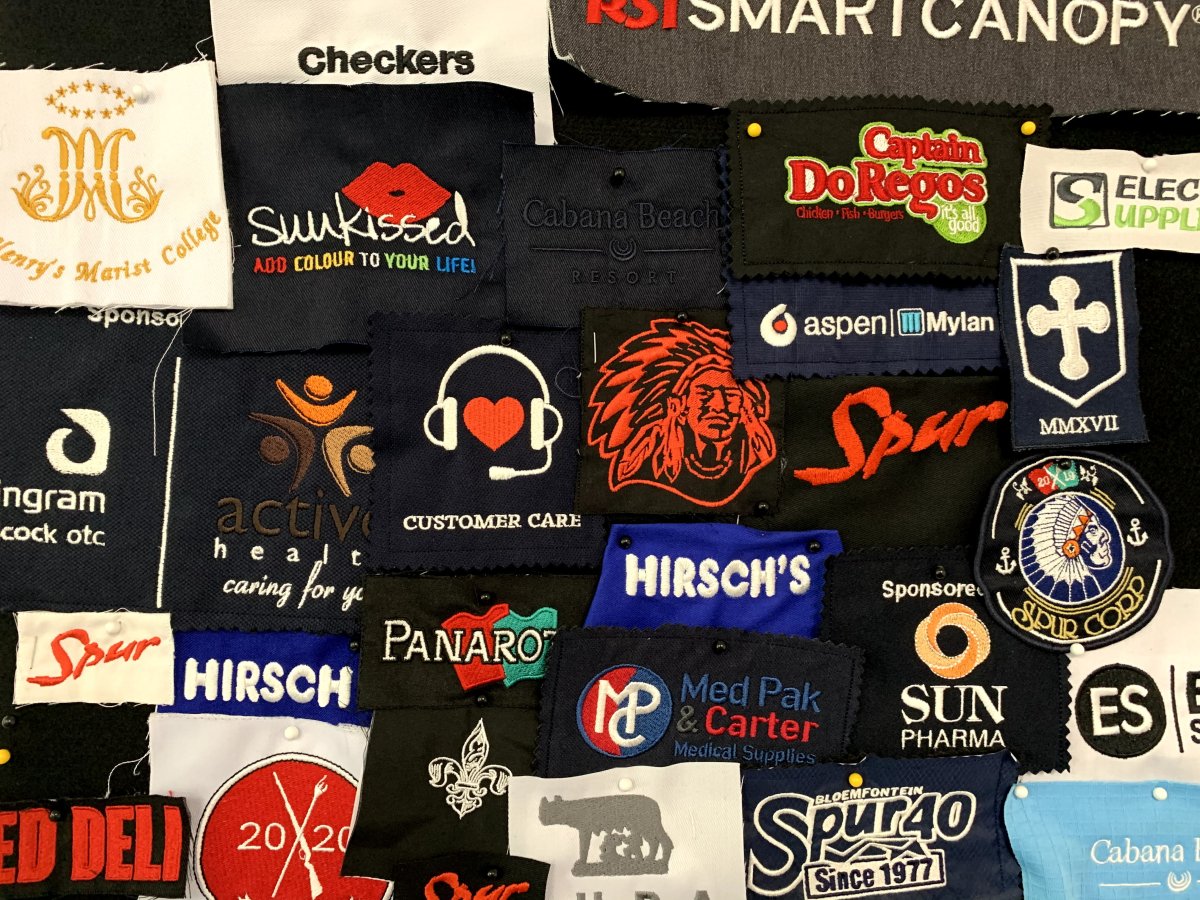
School uniforms take a proper beating in the wash, hey? Embroidery often holds up well to frequent washing, while printing can be a better fit for large, colourful designs. It comes down to the garment and how you’ll wear it.
Durability matters, especially when school uniforms are getting washed again and again. But PE shirts and house-colour tops have their own needs. A big design should be comfortable, clear and practical to produce.
Here’s how each method handles wear and washing, and when printing might suit a larger design. Use it to compare options for crests, PE shirts, polos and everyday workwear.
Key Takeaways
- Match the decoration to the logo’s size and detail, plus how often the garment gets worn and washed.
- Consider how laundering affects the finish, especially for uniforms that see frequent or industrial washing.
- Large designs and simple colour blocks can call for a different approach from compact chest logos.
- Big team? JIMBU’s uniform programmes offer just-in-time supply and stockholding.
Embroidery or printing for school uniforms: which one lasts?
If a crest gets worn daily and washed often, embroidery can be a durable choice. The right option also depends on your artwork, garment and the finish you’re after.
Embroidery for Uniform Crests
Embroidery stitches thread into the garment, giving blazer, pinafore and shirt crests a raised finish. It can work well for a compact school badge that needs to keep its shape through regular washing. Fine text and tightly packed details may lose clarity, though. A small logo with five colours, for example, may not stitch as crisply as a simpler design.
Printing for Uniform Crests
Printing puts the design on the fabric surface, so it can suit full-colour crests and intricate artwork. Colour blends and fine details can stay clearer than they would in thick thread. On a PE shirt or house-colour top, printing can also keep a large, simple design from feeling bulky. Printed designs may crack or fade over time, particularly with frequent washing.
Garment and Fabric Suitability
Match the method to the fabric, not just the badge. A compact chest logo may suit a polo, jacket or sturdy work shirt, while dense stitching can pull lightweight T-shirt fabric out of shape. Printing keeps the surface flat and can suit large designs on PE shirts. Think about how often each garment will be worn and washed before choosing between embroidery and printing on uniforms.
Send us the original logo artwork and brand colours. We’ll prepare the artwork for your chosen method, adapting details for stitching or arranging colours for print.
| Option | Best fit | Finish | Key consideration |
|---|---|---|---|
| Embroidery | Small crests on blazers, pinafores and shirts | Raised thread | Durable for regular laundering; fine detail may soften |
| Printing | Large PE designs or detailed, multicoloured crests | Flat surface | Clear detail; can crack or fade over time |
Choose embroidery for a compact crest that gets worn often. Consider printing for larger designs or artwork with fine detail.
Wash durability and industrial laundering
School shirts, workwear and aprons can end up in the wash pretty often. How well the decoration holds up depends on the method and the washing routine.
Embroidery Durability on School Uniforms
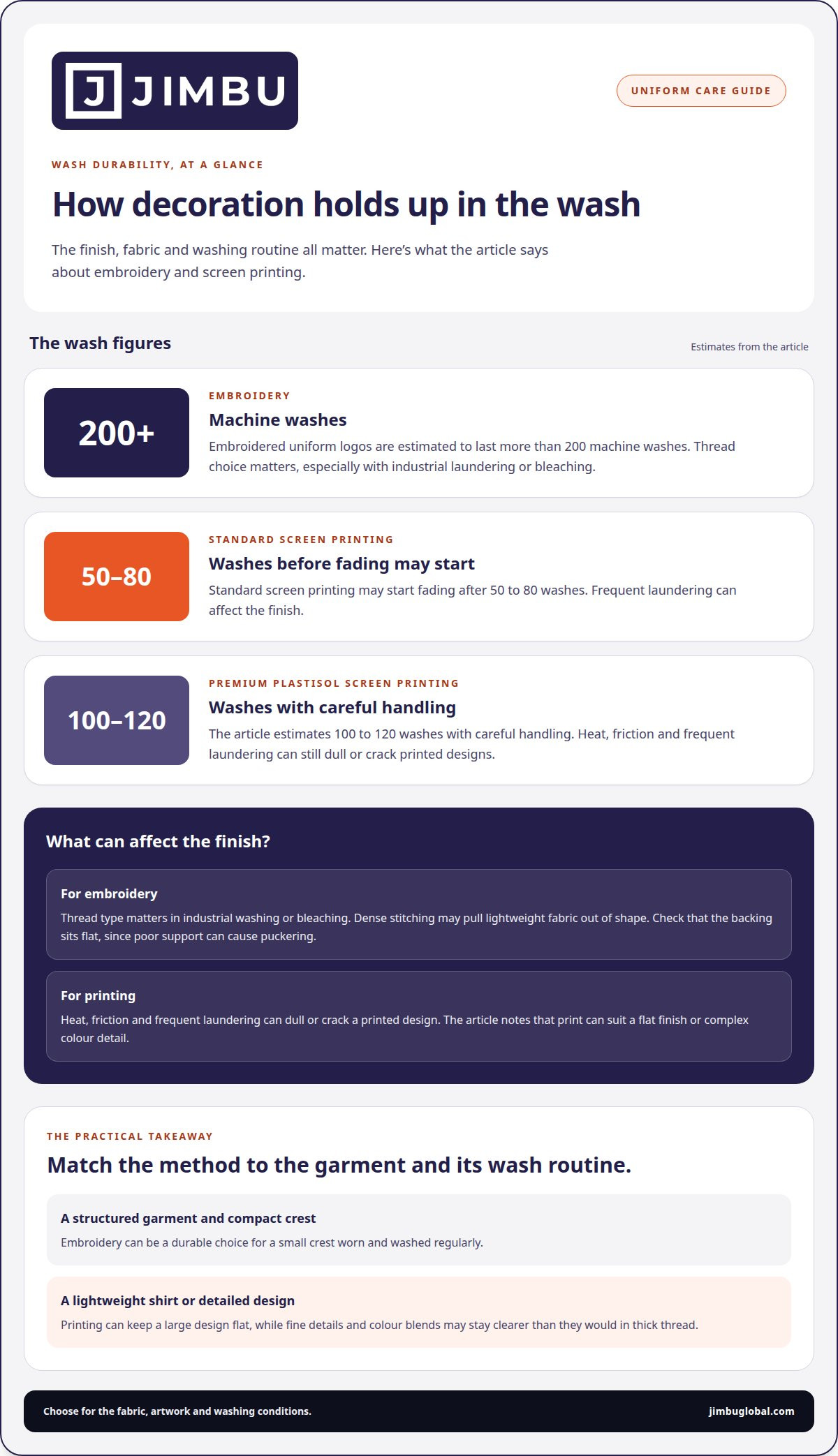
An embroidered crest uses thread stitched into the fabric, rather than ink sitting on top. Embroidered uniform logos are estimated to last more than 200 machine washes, so they can work well on school garments worn and washed regularly. Thread type matters, especially with industrial laundering or bleaching. Some embroidery threads handle those conditions better than printed designs.
Stitching can help a school crest hold its shape through regular wear. But a dense design may pull lightweight fabric, so the garment needs enough structure to support it. Worth keeping in mind for a thin shirt.
Appearance and Finish After Washing
Embroidery creates a raised, textured finish. After washing, check that the backing sits flat against the fabric. If it’s not well supported, it can cause puckering and affect how a school shirt looks and hangs. A flat, well-supported finish also helps the decoration sit properly on the garment.
Standard screen printing may start fading after 50 to 80 washes. Premium plastisol screen printing can last 100 to 120 washes with careful handling. Heat, friction and frequent laundering can still dull or crack printed designs.
For workwear that goes through industrial laundering, pick a method that suits the washing conditions and daily use. Embroidery may work well for garments that need a durable, structured finish. Printing can be a better fit when you need a flat surface or complex colour detail. Match the decoration to the garment and its washing routine before you start production, and you’ll help keep a school crest or workwear logo looking right after repeated washes.
Printing speed and suitability for large designs
Large graphics work well with printing. A wide house-colour design on a PE shirt can sit flat on the fabric without adding dense stitching. That’s handy on lightweight garments, where a heavy stitched area can pull the material and change how it hangs.
Screen printing presses ink through a mesh stencil, one colour at a time. Each colour needs its own screen, so a simple two-colour design is easier to set up than artwork with lots of colours. Once the screens are ready, we can print the same design across a production run, helping your team get matching shirts.
Embroidery adds raised texture, but a large stitched design needs more stitches and backing to hold its shape. That extra structure can feel bulky on a thin T-shirt. A compact logo on a sturdy work shirt is a different story. The fabric can support the stitching more comfortably.
For uniform production in South Africa, screen printing is estimated to take 2 to 5 days. Embroidery is estimated at 3 to 7 days after digitising. That gives you a handy comparison, but the artwork, method and order all affect the production schedule.
Choose printing for broad colour blocks, large graphics or artwork with fine detail. Choose embroidery when a small logo suits the garment and you’re after a raised texture. For example, print a large event design on lightweight tees and stitch a compact mark on structured work shirts. Match the method to each garment and you’ll get a more practical finish.
Which fabrics and uniform types are suitable for embroidery versus printing?
Start with the fabric, then consider the design and how the uniform moves. For embroidery vs printing on uniforms, weight and stretch matter as much as the artwork. A stable piqué polo can support a small stitched chest mark. A lightweight, stretchy polo may need a different stitch layout, suitable backing or print instead.
Sturdy fabrics such as denim, canvas and fleece can support embroidery well. Structured caps can also suit stitched logos because their shape supports the decoration. On a chef jacket or work shirt, a compact logo can create a clear, textured finish without covering a large area.
Printing can suit T-shirts when the design needs broad colour or photographic detail. Some printing methods work on cotton, polyester, nylon, silk and leather. Textured or heavy fabric can make print adhesion harder, so the surface matters. A large graphic on a smooth event tee is different from a logo on textured fleece.
Consider garment construction too. Dense embroidery can pull thin T-shirt fabric and alter its drape. Ties and badges need to hold their shape, so embroidery or woven designs may suit them. Waterproof or water-resistant clothing needs extra care: stitching goes through the fabric and can affect its protective properties.
A practical embroidery vs printing on uniforms decision matches the fabric, decoration and intended use. Compare a small stitched logo on a structured cap with a large printed graphic on a lightweight shirt. The right choice follows the garment’s shape and the design’s detail, rather than applying one method to everything.
Textured or heavy fabrics can hinder print adhesion, while complex photographic images on very thin T-shirts may favour printing. Custom headwear can use either method, depending on the material and design.
JIMBU: Uniform programmes for large workforces
JIMBU helps you choose uniforms and plan supply for large workforces. If your team spans branches, shifts or job roles, a consistent uniform setup can keep garments and branding aligned. Choose embroidery or printing to suit each garment and design, then use that approach across the range.
JIMBU’s uniform services include just-in-time supply and stockholding. Stockholding helps make planned uniform items available, while just-in-time supply helps get what teams need when they need it. These options can suit organisations managing uniforms across a sizeable workforce.
Start with the garments people wear for each role. A school, retail team or hospitality group may need different uniform types while keeping a consistent identity. JIMBU’s Company Uniforms & Apparel can help cover those needs. Branded Products and Brand Stores can add a wider branded range where it fits.
The next step is to map the roles, garments and decoration choices across your workforce. Note where a compact embroidered mark suits the garment, and where a larger printed design makes more sense. That gives you a simple way to manage uniform needs, stock and delivery without treating every team as a separate project.
Contact JIMBU if you’d like to chat about uniforms for your workforce.
Got questions?
Frequently Asked Questions
Ready when you are
Let's build something worth talking about.
One partner. End-to-end execution. From the first sketch to the last shipped box.