
JIMBU Guide
Promotional Products Kitting & Fulfilment Guide
See how promotional products kitting and fulfilment work together, manage stock and SKUs, and choose the right kit approach for your campaign with less hassle.
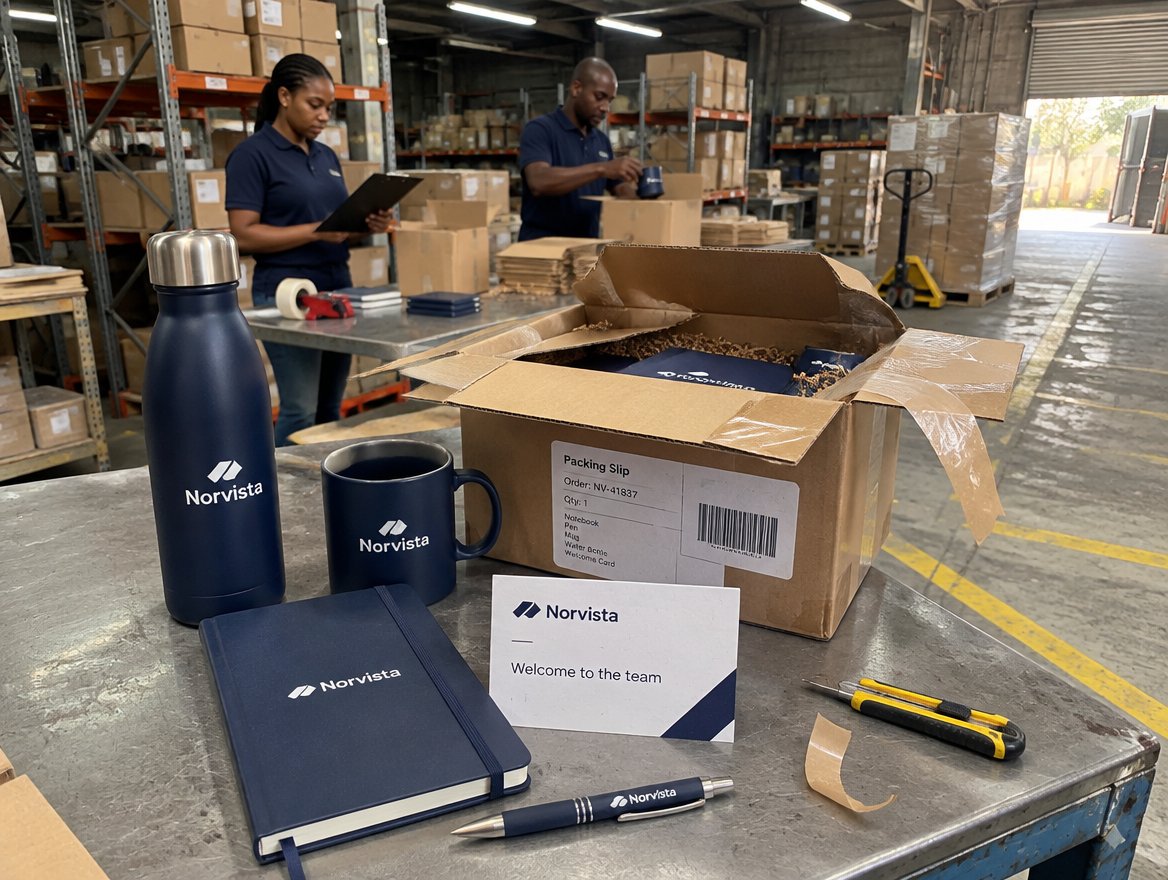
Got a pile of branded goodies and no plan for getting them out the door? Kitting brings selected products together in a ready-to-send package. Fulfilment takes care of the rest, from storing stock to picking, packing and dispatching orders.
They work together, but they’re not the same. Kitting decides how items are grouped and tracked. Fulfilment gets those kits to their destinations. A clear setup helps you track components, completed kits and incoming orders. If the processes get muddled, one missing item can hold up an entire pack. Eish.
This guide breaks promotional products kitting and fulfilment down in plain English. You’ll see how kits affect SKU and inventory management, when pre-building makes sense, and when to assemble a kit after an order arrives. You’ll also learn how kitting fits into fulfilment, so you can pick an approach that suits your campaign and stock.
What to keep in mind
- Track each kit’s parts and stock separately from the finished pack. It’ll make your inventory easier to manage.
- Pick a launch bundle and pricing approach that suit your stock, campaign timing and online shop setup.
- Pre-build kits when demand’s predictable, or assemble them to order when you need more flexibility.
- Keep assembly and fulfilment in sync so your promotional packs are ready, packed and sent when planned.
How does kitting affect my SKU count and inventory management?
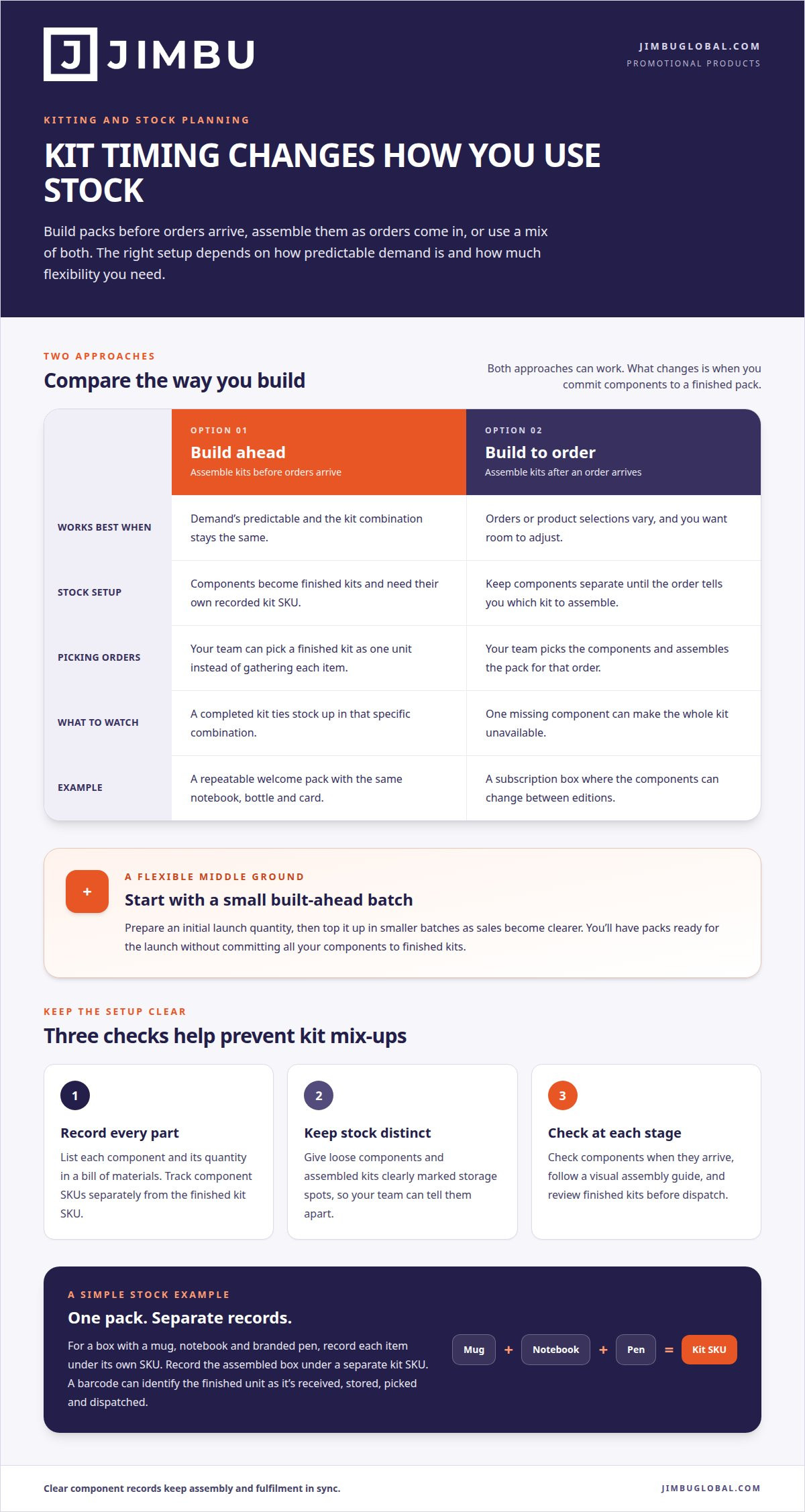
Kitting means grouping separate components into a finished pack. You’ll record a kit SKU alongside the component SKUs, so keep both clear in your stock records.
Warehouse Storage and Organisation
Give components and assembled kits their own clearly marked storage spots. That way, your pickers can find the right items quickly and tell components apart from finished kits before packing orders.
Say your subscription box has a mug, notebook and branded pen. Track each item under its own SKU, then record assembled boxes under a separate kit SKU. A barcode can identify the finished unit as it’s received, stored, picked and dispatched. Clear labels help stop loose components being mistaken for ready-to-send kits.
Kitting can turn several item picks into one pick of an assembled unit. In one warehouse example, an order took five minutes to pick and pack, even though it should’ve taken one. The improvement depends on having the right components assembled and recorded. Pairing promotional products customers often order together can also encourage larger purchases and increase average order value. A planned offer may help move excess or slow-moving inventory.
Assembly and Forecasting Challenges
Assembly and forecasting get tricky when component stock, demand and planned kit quantities don’t line up. One missing item can make an otherwise complete kit unavailable. Eish.
Use a bill of materials to list every component and its quantity, then line up assembly plans with demand forecasts. Build ahead when demand’s predictable, or keep components separate and assemble kits once orders come in. A buffer of completed kits can help you handle changes in demand, but it ties up stock in that specific combination. Track component use and kit sales to spot slow-moving items before they take up valuable storage space.
There’s no standard lead time or minimum order quantity for promotional product fulfilment. Stock availability, branding, assembly requirements and delivery destinations all affect the work involved. Risks include inaccurate inventory, missing components, inconsistent packaging, damage and dispatch delays. A bill of materials, checks on received components, a visual assembly guide and finished-kit audits help you catch errors before dispatch.
Can kitting help speed up product launches?
Yes. Get your campaign packs ready before the orders roll in, and your launch stock’s good to go. Promotional products kitting and fulfilment link pack prep with getting orders out the door.
Launching Promotional Packs
Kitting means putting a gift set or promo pack together before anyone orders, so every package looks the same. For a retail launch, you could pack a branded mug, notebook and welcome card together, ready to send. That way, every customer gets the same experience. Not sure how much you’ll need? Start with an initial launch quantity, then top up in smaller batches as sales become clearer.
Kitting, Bundling and Sub-Assembly
Bundling means offering a few products together. Kitting means assembling them before fulfilment. With a virtual bundle, the products are grouped in an online listing but stay separate until they’re picked. A multi-pack usually has several of the same item. Sub-assembly gets part of a product or pack ready, with the rest assembled later. Choose what suits you best, whether that’s a polished presentation, flexible stock or an assembly sequence you can repeat.
For an online launch, promotional pack planning should include a clear product listing and a list of each bundle’s components linked to stock. Decide whether stock gets deducted as individual items sell or when you assemble a finished kit. Set your bundle price with component prices, packaging and the campaign offer in mind. Keep the product page, stock records and fulfilment instructions in sync. That’s how promotional products kitting and fulfilment connects your online offer to the pack you’re getting ready.
In South Africa, VAT and customs treatment can depend on the transaction and whether products are imported. Your consumer protection responsibilities can also depend on how you present and sell the offer. Get these details clear before you publish the campaign terms.
Choose a fulfilment partner who keeps clear component records, checks each assembly, handles orders accurately and reports on deliveries. That can help cut down on missing items and launch delays.
Pre-built kits versus assemble-to-order kits
With pre-built kits, we assemble everything before orders arrive. With assemble-to-order kits, we put them together after you get an order. The right choice depends on demand, product combinations and how much stock you want to commit. If you’ve got predictable demand for a branded welcome pack with the same notebook, bottle and card, pre-building makes sense. If orders vary, keeping the components separate gives you more room to adjust.
Subscription boxes often have a repeatable combination, though the contents can change between editions. Pre-assembly gives your packing team a finished box to pick. If selections change, assemble-to-order lets you keep each component available until an order arrives. You can also take a hybrid approach, preparing an initial launch quantity, then topping it up in smaller batches as demand becomes clearer.
Some kits need to be assembled in a set order, with each component added one by one. Set up a workstation where you can arrange the components in sequence, follow a visual assembly guide and pack the finished kit. That gives your team a consistent way to handle planned volumes. For ecommerce orders, you can pick the assembled kit as one unit instead of gathering each item separately.
Accuracy comes down to checks at the right points. Check components when they arrive, follow the assembly guide, then give finished kits a once-over before dispatch. A missing insert or incorrect product can spoil the whole pack. Record approved substitutions in the kit instructions, so your team isn’t left guessing if a component changes. Pre-built stock suits steady demand. Assemble-to-order suits variable combinations or uncertain sales. Choose what fits your campaign, then set up your workstation steps. Need a hand? Give us a shout.
Kitting compared with fulfillment
Kitting and fulfilment need to follow the same plan. Assembly instructions, order details and delivery requirements need to line up so each pack reaches the right person in the right form. When the packing and delivery steps work together, you’re looking after the whole experience, not just the products.
Think of a staff welcome pack with a branded notebook, water bottle and information card. The campaign plan sets what goes in the pack and how it looks. The order process tells you where each pack needs to go and how to get it there. Together, these steps shape the experience from first impression to parcel arrival.
Good planning saves time. A recurring promotional pack can be ready before orders come in, while a one off combination can be assembled when someone places an order. Either way, the assembly instructions need to match the order and delivery process. That helps kitting and fulfilment work together, with fewer chances for mix ups when packs go out.
Some fulfilment orders don’t need assembly, like a single ready made product. A prepared kit still needs a plan for handling orders and getting packs to people. It depends on the campaign. Packs for staff, event guests or customers may each need different recipient details and delivery instructions.
For your brand, good planning helps keep the pack consistent, from what’s inside to how it looks on the outside. Decide where packs will be assembled, check the order details, sort out the packaging and plan delivery. Kitting and fulfilment should support the experience you want people to have. Want a hand planning it? Talk through your kit fulfilment plan.
JIMBU: Promotional Products
Got a campaign that needs products and packs planned together? Bring your promotional products, assembly and fulfilment needs into one conversation, instead of juggling each piece separately.
Start with what the pack needs to do. A staff welcome, event giveaway or customer promotion might call for different products and presentation. We can help you choose what goes inside, from practical everyday items to thoughtful gift sets.
Want to get people involved? Promo in a Box brings promotional products together with QR-code gamified campaigns. So you’ve got a pack and a campaign idea to build around, not just a box of nice-looking stuff.
Then there’s the behind-the-scenes work. We offer kitting, warehousing and fulfilment, so pack assembly and stock handling can be part of the plan. It can suit a campaign where individual products need to arrive together in a prepared kit. The contents, packaging and delivery plan help us work out what’s needed.
Need a product developed or imported for your campaign? We also offer custom product import and development from China. It can be handy when off-the-shelf promotional items don’t fit the brief. Think about what the product needs to do, how it fits the pack and when your campaign’s running.
To get started, bring your campaign goal, preferred products, pack contents and delivery plan. We can chat through how it all fits together and what kind of assembly suits your project. You don’t need every detail tied in a bow before we talk.
Shout if you’d like to chat about planning your promotional pack.
Make your next campaign easier to manage
Your next campaign is a chance to make every branded touchpoint feel connected. A well-planned approach to promotional products kitting and fulfilment can bring your campaign packs in line with how your business presents itself, from staff gear to customer gifts.
That bigger picture can include Branded Products, Company Uniforms & Apparel and Brand Stores. Each serves a different purpose, but together they can help keep your brand feeling consistent. Start with the outcome you want, then shape the products and presentation around the people receiving them.
You don’t need every detail sorted before you start. A campaign goal, a rough idea of the pack and a sense of who it’s for are enough to get the conversation going. From there, the right mix of products and prep can take shape without turning your Friday afternoon into a spreadsheet marathon.
Ready to turn your idea into a practical plan? Get in touch with JIMBU and let’s chat it through. Sharp, simple and no pressure.
Got questions?
Frequently Asked Questions

Ready when you are
Let's build something worth talking about.
One partner. End-to-end execution. From the first sketch to the last shipped box.