
JIMBU Guide
PP vs PS Barware: Choose Between Clarity and Flexibility
Choosing PP vs PS plastic barware? Compare clarity, flexibility, heat resistance and durability to find the right cups for your venue, event or drinks service.

Choosing PP vs PS plastic barware comes down to how it will be used. PS offers a clearer, glossier finish, while PP is tougher and more flexible. For disposable service with cool drinks and gentle handling, PS may suit. For cups that need to withstand knocks, flexing or repeated use, PP is generally the more practical choice.
A clear PS cup has real appeal when the drink itself is part of the presentation. PP’s more translucent appearance may look less polished, but its flexibility and better heat resistance can be useful when barware needs to withstand more handling.
The choice isn’t just about appearance. Compare the two plastics for clarity, strength, heat and chemical resistance, and durability to find a material that suits your service.
Consider when each material makes sense for disposable or reusable barware. A practical comparison helps you choose for your venue, event or drinks service.
Key Takeaways
- Choose PS when a clear, glossy look matters most and the barware won’t face rough handling.
- Choose PP when flexibility, impact resistance and better heat tolerance matter more than crystal-clear appearance.
- Match the material to the job: disposable service and repeated use place different demands on cups and other barware.
- Use the comparison criteria to weigh appearance, handling and cleaning needs before settling on a material.
PS and PP clarity, strength, heat resistance, and chemical resistance
For barware, PS prioritises visibility; PP prioritises flexibility and impact resistance. Neither resin is automatically safer by name alone. Choose a grade intended for food contact, and avoid PS for hot or oily applications because styrene migration is a concern.
PS Clarity, Strength, and Resistance
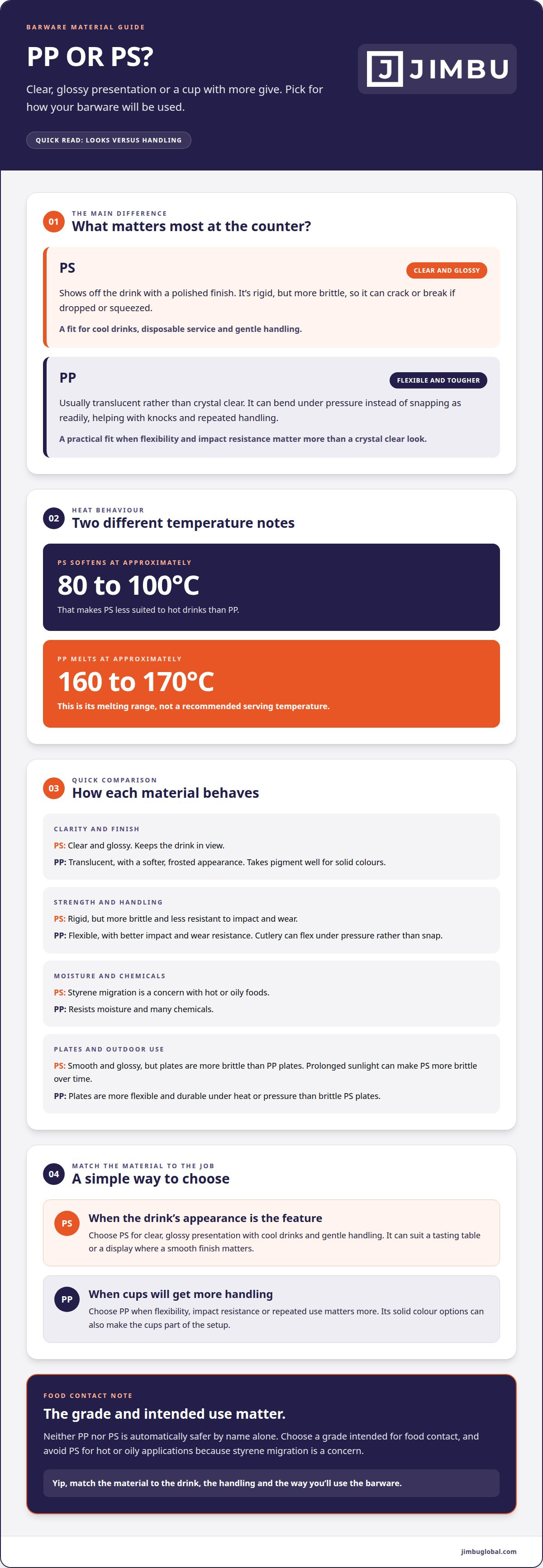
Polystyrene is widely used for disposable cups because it can deliver a clear, glossy finish. It’s rigid, but that stiffness comes with brittleness: a cup can crack or break if dropped or squeezed. PS softens at approximately 80-100°C, so it’s less suited to hot drinks than PP. It also offers less impact and wear resistance than PP.
PP Clarity, Strength, and Resistance
PP is usually translucent rather than crystal clear, with a softer, frosted appearance. Its strength comes from flexibility. A PP cup can bend under pressure instead of snapping as readily as PS, which helps with drops and repeated handling. PP resists moisture and many chemicals, and polypropylene melts at approximately 160-170°C. That figure is its melting range, not a recommended serving temperature.
| Material | Clarity | Strength and impact | Heat behaviour | Chemical resistance |
|---|---|---|---|---|
| PS | Clear and glossy | Rigid, more brittle | Softens at 80-100°C | Styrene migration is a concern with hot or oily foods |
| PP | Translucent | Flexible, better impact and wear resistance | Melts at approximately 160-170°C | Resists moisture and many chemicals |
Appearance isn’t the only consideration. AS offers greater clarity than PS, along with more rigidity and scratch resistance. For a clear cup that may face frequent knocks, PP’s flexibility can give it an advantage over both. Choose according to how the barware will be handled, not just how it looks on the counter.
Choose PS for clear disposable barware served with cool drinks and handled gently. Choose PP when flexibility and impact resistance matter more.
Durability of PS and PP cutlery and plates
Cutlery and plates face pressure during serving, stacking and clearing. Polypropylene tends to bend and recover, while polystyrene offers rigidity and a smooth finish.
PP Flexibility and Durability
Polypropylene cutlery can flex under pressure rather than snap, which can help when utensils are handled quickly or plates are stacked during service. PP plates are more flexible and durable under heat or pressure than brittle PS plates. That toughness also helps PP withstand impact and wear. With repeated handling, flexibility can matter more than a perfectly rigid feel.
PS Durability in Cutlery and Plates
Polystyrene cutlery feels rigid but can snap under pressure. PS plates have a smooth, glossy surface suited to crisp presentation, yet they’re more brittle than PP plates. Polystyrene can also become brittle over time, particularly with UV exposure. Prolonged sunlight can therefore make PS less dependable than polypropylene for outdoor service.
Cost and Durability Considerations
Weigh price and performance together. PP is described as the most affordable of three cup materials, while PS sits between PP and AS in price. That comparison doesn’t determine the cost of a specific plate or cutlery item. Shape, thickness and intended use all affect product choice. For a short service, PS’s glossy finish may be the priority. For frequent handling, PP’s toughness may matter more.
Consider the full use cycle: serving, stacking, clearing and disposal. At a busy event where cutlery may be squeezed or plates handled repeatedly, flexible PP is a practical choice. For a display where a smooth, glossy surface matters and handling is light, PS may suit. Match the material to the job, then consider the item’s finish.
If your event also needs supporting display solutions, bring the barware and presentation requirements together at the planning stage.
Clarity, toughness, and flexibility
A clear cup puts the drink on show; a coloured cup becomes part of the look. PS and PP differ in how they balance clarity, toughness and colour.
PP Clarity and Solid-Colour Options
PP is naturally translucent, so it won’t offer the glasslike clarity of uncoloured PS. Its strength is colour: PP takes pigment well, producing vibrant, solid shades. Imagine bright-coloured cups repeated across a match-day event. The cups become an intentional part of the setup, while the drinks are less visible through them.
Clarity and Finish
PS is a better fit when seeing the drink matters. Its clear surface shows the layers in a cocktail or the golden tone of a cold drink. PP’s softer, semi-opaque appearance diffuses that view. The choice isn’t simply “clear or cloudy”; it’s whether the cup should recede visually or contribute colour and a more muted finish.
Match the surface to the occasion. At a tasting table, a transparent PS cup keeps the drink visible and creates a glossy impression. For a coordinated set of solid-colour cups, PP offers more visual impact. The same principle applies across a drinks menu: clear material suits colourful serves, while an opaque shade can create a consistent look across different drinks.
Toughness also affects how a cup holds up in use. PP’s flexibility helps it bend rather than crack under pressure, while a rigid PS cup may be more vulnerable to knocks. That difference matters when guests carry drinks through a crowded function. Choose for the handling the cup will face, not just its first impression on a display table.
Use this quick test: if the drink’s appearance is the feature, prioritise PS clarity. If a strong solid colour and a flexible cup matter more, choose PP. Both can suit barware, but they create different visual and handling experiences.
PS and PP suitability for disposable and reusable barware
For food-contact barware, neither PP nor PS is automatically safer. Suitability depends on the grade and its intended use. PS can raise styrene migration concerns with hot or oily contents, making PP the more practical choice for those applications.
PS suits disposable service when transparency matters and conditions stay mild. A clear PS cup can present a cold cocktail or soft drink neatly at a catered function. But PS is brittle, so a cup may crack if squeezed or dropped. It’s also a poor choice for microwaving or packing hot food. Clear doesn’t mean suitable for every drink or serving condition.
PP is a better fit for reusable barware when cups face repeated handling. PP cups can be washed hundreds of times while retaining their shape. At an outdoor event, that flexibility can help as cups are carried, stacked and cleared throughout service. Use a PP product in a dishwasher or microwave only if it’s labelled suitable for that use. This helps match the material to the product’s intended conditions.
Think through the full service cycle before choosing. For a one-off drinks station serving cold beverages, disposable PS may provide the transparency and presentation you want. For a bar or catering setup where cups are returned for washing, PP is a stronger starting point. Food containers follow a similar distinction: PS favours clear, disposable use, while PP suits repeated handling. The final choice still depends on the specific product and its use instructions.
For outdoor events, bars and catering, PP is generally a better fit for reusable barware because it’s flexible and more durable under repeated handling. Choose PS for disposable service when a clear finish matters and the contents and conditions are appropriate.
Planning branded barware for a once-off event or ongoing service? Explore barware options and match the material to how your guests will use it.
JIMBU: Branded Products
JIMBU helps turn your material choice into branded barware suited to the occasion. Once you’ve weighed clarity against flexibility, match that decision to how guests will use the cups, whether for a one-off event or regular service.
Bring together the practical details: the drink, the setting, how the barware will be handled and the look you want your brand to carry. JIMBU offers Barware and Branded Products, helping you shape branded barware around your event or business needs. Once you’ve settled on the function, consider how the branded pieces will suit the setting.
Get in touch with JIMBU to discuss your branded barware needs.
Make your next barware choice count
Your material choice also shapes the experience people take away from an event. The PP vs PS plastic barware decision can help create that experience, alongside a clear plan for where the barware will be used and how it fits your wider brand presence.
JIMBU offers Branded Products, Company Uniforms & Apparel, and Brand Stores. These services can support a joined-up approach to branded merchandise and workplace identity, with barware as part of the picture. Start with the event, the people using the cups and the impression you want each item to make. That gives your next conversation a useful focus.
Ready to plan branded barware for your next event or business? Contact JIMBU about your barware. Sharp, you’re one step closer to choosing pieces that suit the occasion.
Got questions?
Frequently Asked Questions



Ready when you are
Let's build something worth talking about.
One partner. End-to-end execution. From the first sketch to the last shipped box.