
JIMBU Guide
Barware Materials Compared for Durability and Everyday Use
Compare glass, plastic and stainless steel in this barware materials comparison. See what lasts, how to care for it and which specs to check before you buy.
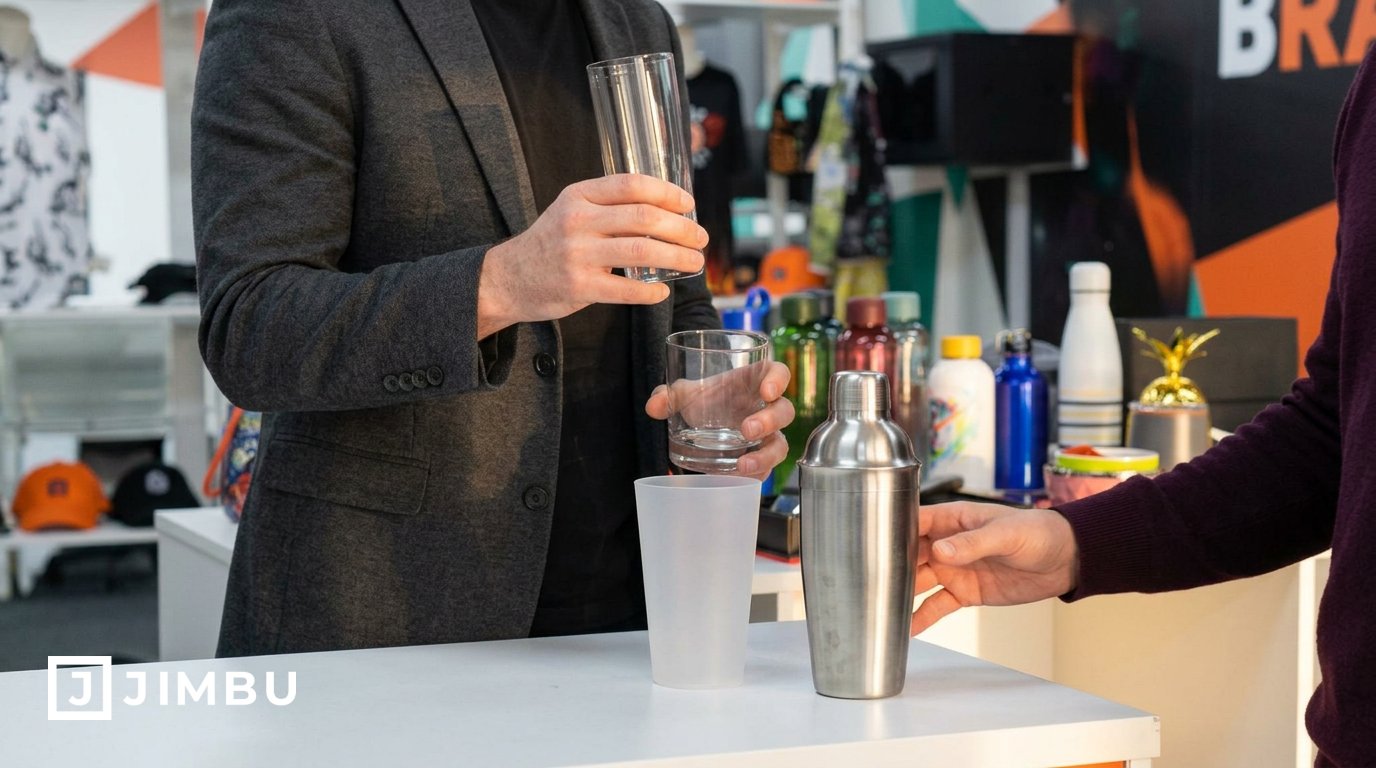
The clearest glass isn’t always the best choice for everyday use. Glass, plastic and stainless steel each have different strengths, so a useful barware materials comparison considers composition, durability, care and the product’s stated specifications, not just its shine.
The material affects how drinkware feels in your hand, how it handles busy use and how much care it needs. This guide compares common glass types, plastic and stainless steel, then highlights the specifications to consider when choosing drinkware for home, work or a get-together. Focus on the details that help you choose with confidence.
Key Takeaways
- Match glass type to how you’ll use it, especially when drinks or washing involve sudden temperature changes.
- See why lead-free crystal can suit busy serving settings while still calling for careful handling.
- Choose stainless steel for bar tools that need to stand up to regular use, and keep maintenance simple.
- Read material, capacity, pack quantity and care details together before you choose drinkware.
What Are the Main Types of Glassware Materials?
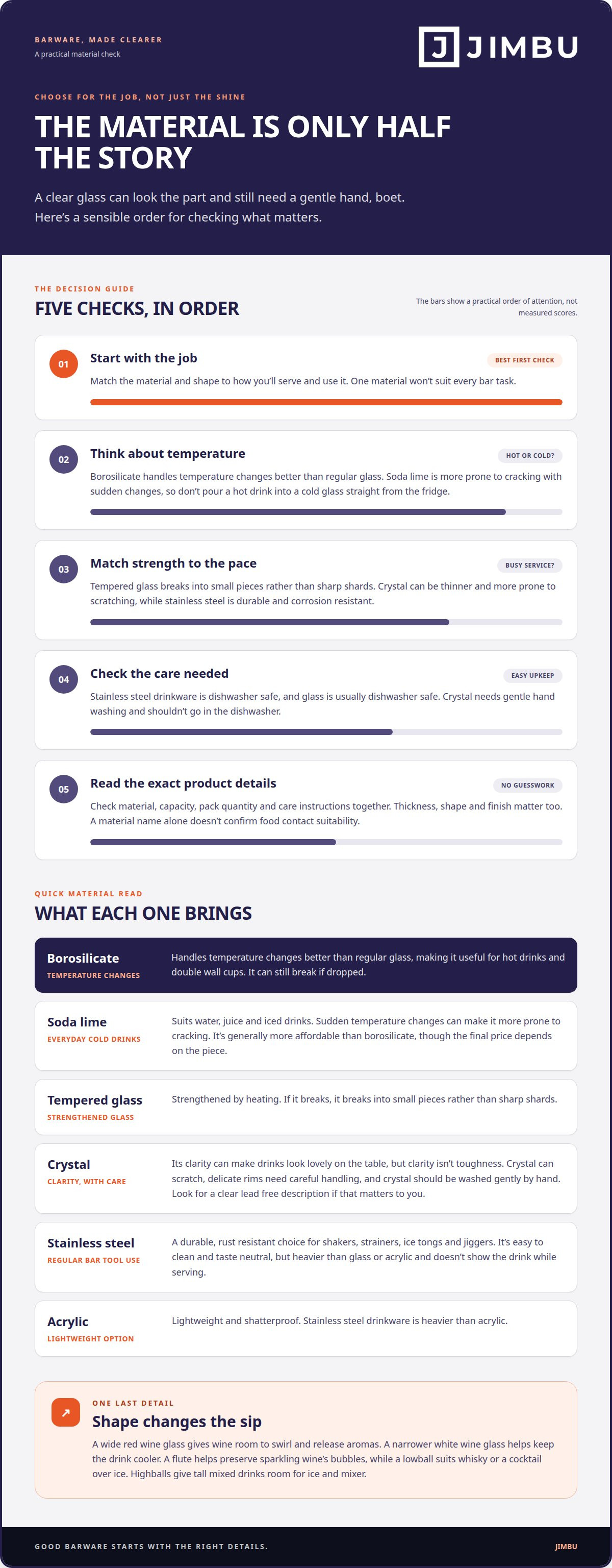
Borosilicate, soda-lime, tempered glass and crystal are common types of glassware, each with different strengths. Borosilicate glass contains silica and boron oxide. It handles temperature changes better than regular glass, making it useful for hot drinks and double-wall cups. It can still break if dropped, so thermal shock resistance isn’t the same as impact resistance.
Soda-lime glass, made with silica, sodium oxide and calcium oxide, suits water, juice and iced drinks. Sudden temperature changes can make it more prone to cracking, so don’t take a cold glass straight from the fridge and fill it with a hot drink. Tempered glass is strengthened by heating and breaks into small pieces rather than sharp shards. Crystal offers clarity and a refined finish, but needs gentler handling.
Shape matters too. A wide, rounded red wine glass gives the wine room to swirl and release aromas. A narrower white wine glass helps keep the drink cooler. A flute’s tall bowl helps preserve sparkling wine’s bubbles, while a short, sturdy lowball suits whisky or a cocktail over ice. Highballs give tall mixed drinks room for ice and mixer. The bowl, opening and stem all affect how you hold the glass, smell the drink and manage temperature.
Hand-cut crystal, Murano glass and mouth-blown pieces have distinctive finishes and forms. Those descriptions tell you about how a piece is made or finished, not necessarily how strong it is. For everyday use, check the exact piece’s thickness, shape and care instructions. Delicate edges and detailed designs call for more careful handling than a sturdy tumbler.
For safe serving in South Africa, choose glassware intended for drinks, keep it clean and follow its care instructions. A material name alone doesn’t show whether a particular piece is suitable for food contact.
Barware prices depend on the case and are provided after a quote request. Material, design, capacity, finish and pack quantity affect cost. Soda-lime glass is generally more affordable than borosilicate glass, but the final price depends on the piece.
How Does Glassware Composition Affect Durability?
Crystal’s brightness comes from its composition and how it refracts light. For wine glasses and tumblers, that clarity can suit a special occasion or a restaurant table, but it doesn’t mean every crystal piece will withstand daily wear equally well.
Lead-Free Crystal Composition
Lead-free crystal combines silica with minerals such as barium or zinc oxide, rather than relying on lead content. These minerals help create the bright appearance associated with crystal, making it an option for wine glasses, cocktail pieces and champagne service.
For a bar or restaurant, that appearance can enhance the presentation of served drinks. Lead-free crystal offers a crystal-like look without lead content. Choose pieces with their material clearly identified, since “crystal” alone doesn’t tell you whether a glass is lead-free.
Crystal Appearance and Durability
Crystal’s higher refractive index helps it bend light, giving wine and cocktails extra clarity on the table. That visual quality suits occasions where colour matters, from pale champagne to a layered cocktail.
Clarity and toughness aren’t the same thing. Crystal is often thinner than standard glass, and its softer composition can make it more prone to scratching. Some crystal drinkware is described as more durable than standard glass, but delicate rims still need careful handling.
For regular service, weigh appearance against the pace of use. Lead-free crystal can suit hospitality settings, while tempered or pressed glass is another option for busier tables. A crystal tumbler may feel substantial, but its finish and thin edges still affect how it stands up to knocks and cleaning.
Care matters. Crystal’s slight porosity makes it unsuitable for dishwashers and some detergents. Wash it gently by hand, avoid abrasive materials, and store wine glasses so their rims don’t knock against other pieces. A beautiful design won’t stay that way if glasses clatter together in a crowded cupboard.
Compare the material, rim thickness, finish and care instructions for the exact glassware design. This gives you a more useful measure of everyday strength than appearance alone, especially when the same set needs to go from a quiet dinner to busy service.
Stainless steel bar tool durability and maintenance
Stainless steel is a durable, corrosion-resistant choice for bar tools used regularly. Glass is more fragile than metal, crystal can scratch or break, and acrylic is lightweight and shatterproof.
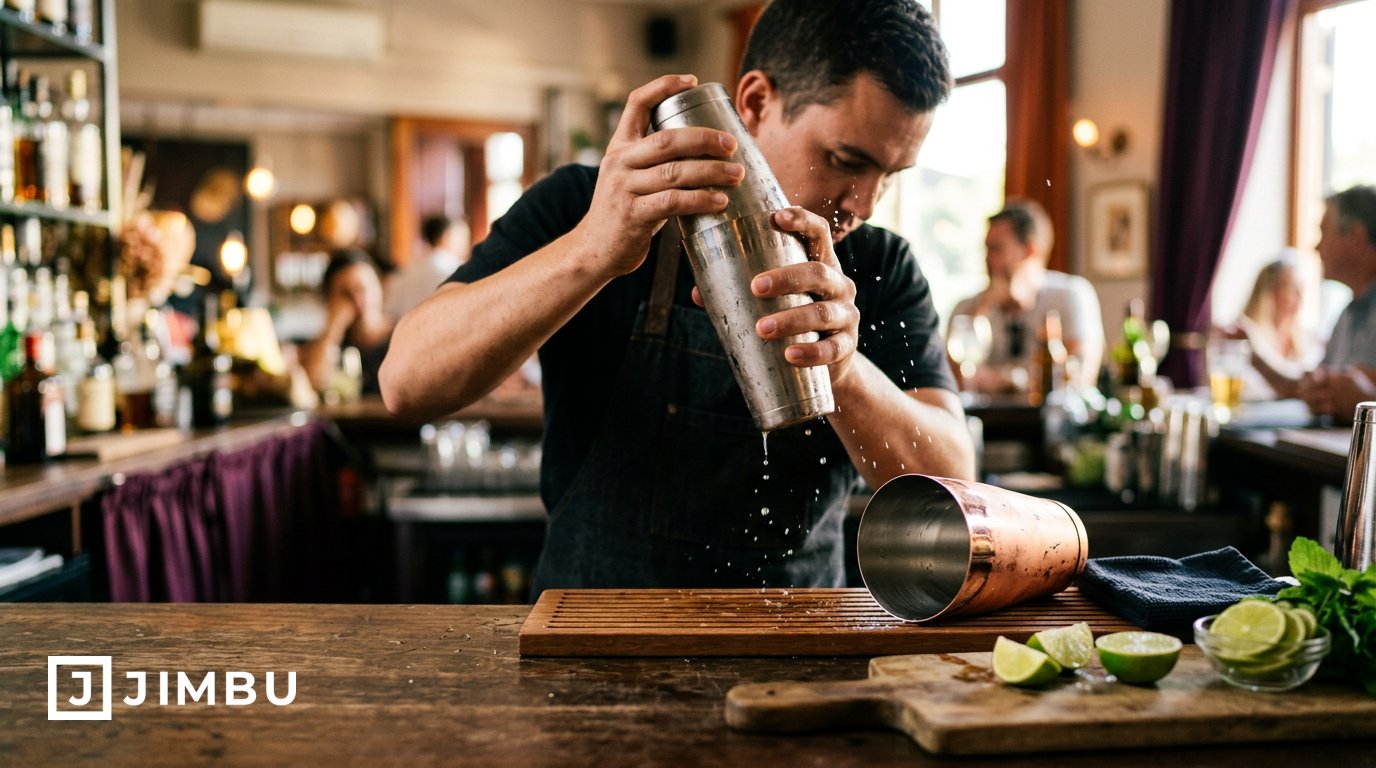
A stainless steel cocktail shaker is durable, rust-resistant and easy to clean without affecting flavour. One trade-off is weight: stainless steel is heavier than glass or acrylic.
Balancing Durability, Ergonomics, and Presentation
Good barware balances how a tool feels in your hand with its purpose and appearance. Stainless steel shakers, strainers, ice tongs and jiggers suit regular mixing and serving because they’re durable and easy to clean.
For the drinking experience, glass cocktail glasses show the drink’s colour and presentation. Stainless steel drinkware is heavier than glass or acrylic, so its weight can affect how a cup feels in use. Choose each piece for its job rather than expecting one material to suit every bar task.
Dishwasher Suitability and Material Durability
Dishwasher suitability depends on the material and the specific item. Stainless steel drinkware is dishwasher-safe, while bar tools need simple washing. Glass is usually dishwasher-safe, but crystal’s slight porosity makes it unsuitable for dishwashers and certain detergents.
That difference affects everyday upkeep. A stainless steel shaker can handle regular use and straightforward cleaning, while a crystal glass needs gentler care. Follow the instructions for each piece, especially when your set includes several materials.
Stainless Steel Shaker Pros and Cons
A stainless steel shaker’s main advantages are durability, rust resistance and easy cleaning. The material is food-safe and taste-neutral, so it won’t affect a cocktail’s flavour. Stainless steel tools also chill drinks without dilution and maintain consistent performance over time.
The trade-off is that steel isn’t as light as glass or acrylic. It also doesn’t offer a view of the drink while serving. For a bar focused on frequent mixing, steel is a practical choice. For presentation, pair it with glassware suited to the drink.
Upkeep stays simple: wash stainless steel tools after use, and handle glass carefully to avoid chips or breakage. Copper needs gentle polishing to help prevent tarnish, so its shine requires more attention. Match each material to how often the piece is used, how it’s cleaned and the presentation you want.
Checking drinkware material specifications
A clear cup might be glass, crystal or acrylic, and appearance alone won’t tell you which. A barware materials comparison starts with the exact product details, not the photo. Read them before choosing pieces for daily drinking, coffee service or outdoor use.
Start with the material name and composition. Soda-lime glass contains silica, sodium oxide and calcium oxide. Borosilicate glass contains silica and boron oxide, and handles temperature changes better. Acrylic is made from polymethyl methacrylate, or PMMA. Plastic drinkware can also use other synthetic polymers, including melamine. These details offer a more useful basis for comparison than appearance alone.
Next, match the material’s properties to the job. Acrylic is lightweight and shatterproof, making it suitable for outdoor use. Glass is nonporous and taste-neutral, while stainless steel is corrosion-resistant and commonly used for frequently handled bar tools. Silicone’s rubber-like texture can improve grip. Each material affects weight, handling and the drinking experience.
Then read the care instructions. Standard glass is usually dishwasher-safe, but crystal isn’t suited to dishwashers or certain detergents. Most silicone drinkware is dishwasher-safe, unless it’s paired with metal. Don’t assume a similar-looking cup has the same care needs. Follow the directions for the exact piece.
Compare capacity in millilitres, pack quantity and dimensions. A tall glass for juice or a mixed drink needs a different capacity from a small coffee cup. Check the base and overall size if pieces need to stack or fit a serving tray. Uniform thickness, smooth edges and a finish free from visible bubbles can help you assess glass quality.
For a useful barware materials comparison, weigh material, capacity, pack quantity and care instructions against the same purpose. For a coordinated collection, explore barware options for teams and events. Clear specifications make choosing pieces for your setting much easier.
JIMBU: Branded Products
JIMBU offers Barware and Branded Products for teams, events and hospitality settings. Once you’ve chosen a material for the way the pieces will be used, branded drinkware can make that choice part of a considered gift or workplace set.
Start with the practical details you’ve compared: material, capacity, care instructions and serving purpose. Then consider how the barware fits the occasion and the wider selection of branded products. An everyday tumbler and a special-event glass have different jobs, so choose pieces that make sense for your people and setting.
Need barware for a team or event? Talk to JIMBU about what you have in mind.
Make your barware choice part of the bigger picture
A barware materials comparison gives you a useful starting point. Now consider the experience you want people to remember. A team gathering, client event and staff gift each have their own feel. Think about who’ll use the pieces, where they’ll be used and what you want them to say about the occasion.
That bigger picture can guide the style, finish and presentation you choose. A considered gift can feel personal, while drinkware for a shared event can bring people together around the table. Keep the intended audience in mind as you shape the project, so the final choice feels purposeful rather than random.
Ready to talk through an idea for your next project? Contact JIMBU about barware. Sharp, you’ve got a solid place to start.
Got questions?
Frequently Asked Questions
Ready when you are
Let's build something worth talking about.
One partner. End-to-end execution. From the first sketch to the last shipped box.