
JIMBU Guide
Security Workwear Supplier in SA: Buyer's Guide
Choosing a security workwear supplier South Africa? Compare bulk orders, corporate styles, garment options and costs to find gear your team can wear on shift.
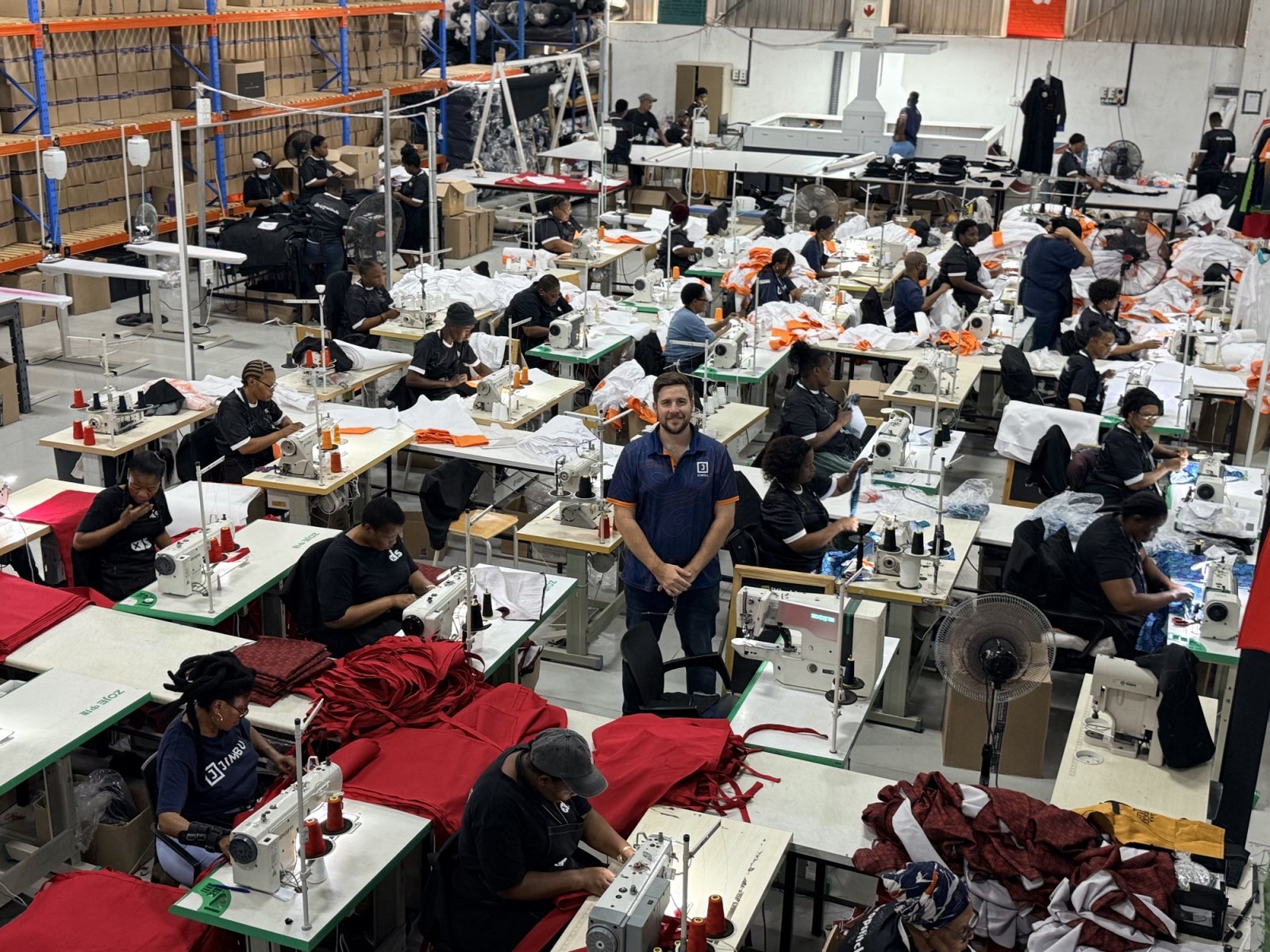
A uniform can look sharp on a hanger, then feel all wrong halfway through a long shift. When you’re choosing a security workwear supplier in South Africa, start with what your team actually does. Then pick garments that suit the job, the setting and the people wearing them. The details matter, boet.
Buying in bulk isn’t just ordering the same shirt in every size. Your team needs gear that looks consistent, suits the job and works across different roles and environments. Pick the wrong stuff, and you could end up with mismatched gear or garments that aren’t right for the shift.
We’ll help you compare security workwear products and choose options for bulk, corporate and industrial orders. We’ll cover the choices that make a difference, from garment type and fit to visibility, branding and keeping your team looking consistent. Sharp and practical, without the sales waffle.
Key Takeaways
- For bulk orders, think about team roles, size ranges and how often you’ll reorder, so everyone’s uniform stays consistent.
- Pick corporate workwear that looks professional but still feels comfortable and practical on shift.
- When choosing security garments, think about what the job calls for, from visibility to the level of protection.
- Set a realistic budget by weighing garment choices, branding and order requirements before asking for a quote.
Bulk and wholesale orders
One missing size can turn a straightforward uniform order into a scramble. Start with a role and size list for each site. For example, separate control room staff from guards working outdoors. Their clothing needs may differ, even under the same company badge. A clear breakdown gives your supplier what they need to get your order right and cuts down on last-minute changes.
For nationwide delivery in South Africa, look for suppliers who say they deliver bulk orders across the country and can work from a list of multiple sites. A supplier serving only one town won’t suit a workforce spread across several provinces. Plan delivery for each site, with a receiving contact and the order you need items delivered in. That helps branches get the right items without mixing up teams or locations.
A partner that handles both uniforms and branding can help keep a company order consistent. Set out the garments, logo placement and approved artwork for each item. For example, a navy shirt with a chest logo should use the same approved artwork and placement across relevant sizes and sites.
Before asking for a quote, get these order details ready:
- Roles and locations: List each team and delivery site separately.
- Size breakdown: Group garment sizes by role, not just by site.
- Branding: Supply the approved logo file and note where it belongs.
- Order changes: Flag expected staff changes or replacement needs.
- Receiving plan: Name each site contact and set out delivery priorities.
This makes it easier to compare quotes for the same order. Check that each one covers the same garments, size mix, branding and delivery sites. A lower total might mean a different item or a delivery plan that doesn’t cover everything, not better value. Keep a record of the approved garment and artwork choices. When new staff join, that reference helps maintain a consistent look without starting the order from scratch. Sharp planning saves the Friday afternoon scramble.
Corporate workwear
A front desk uniform and a patrol uniform do different jobs. Your workwear should help identify the team, suit their day and look consistent across sites. Start by grouping staff by role. Reception staff might need a polished look, while mobile staff need clothes they can move around in and wear outdoors.
Choose garments that fit the working day. List what each team does, where they go and what they carry. A shirt worn at reception has different demands from clothing worn on site inspections. Hot, humid weather or an air-conditioned control room can also affect what feels comfortable during a shift.
Branding works best when it’s clear and consistent. Decide where the company name or logo goes, then keep it in the same place on matching garments. Keep the approved artwork with your garment choices, so a replacement order doesn’t turn into a new design exercise. A small logo on a shirt looks different from a large print on the back, so pick a spot that suits the role and setting.
Here’s a simple way to choose:
- Separate roles: Group reception, control room and patrol staff by what they do each day.
- Choose garment types: Match shirts, trousers or outer layers to each team’s work.
- Set the visual standard: Write down the colours, logo placement and approved artwork.
- Plan replacements: Keep garment and branding choices together for repeat orders.
- Review the full outfit: Check that each piece works with the rest of the uniform.
That last check catches awkward combinations before they reach the team. A branded shirt, trousers and outer layer should look like one uniform, not three separate decisions. Having one visual standard also helps staff move between branches without looking out of place. If you’re weighing up options, compare corporate workwear choices with each role’s tasks and setting. Sharp and practical beats a uniform that only looks good in a catalogue.
Security workwear products
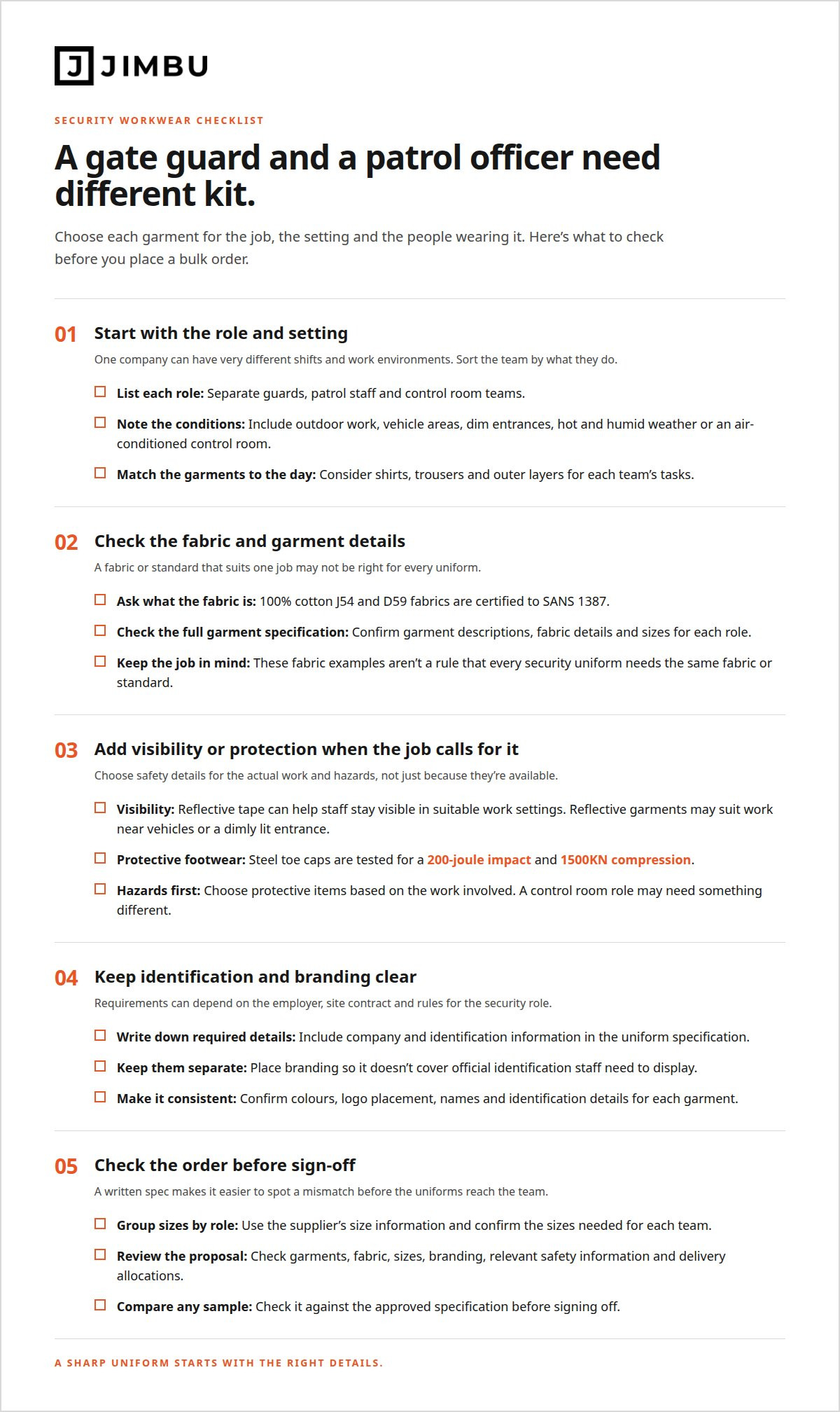
A guard at a gate and a patrol officer don’t need the same kit. Choose each item for the job, the setting and how visible staff need to be. For fabrics, 100% cotton J54 and D59 fabrics are certified to SANS 1387. High-visibility garments can use reflective tape to help staff stay visible in suitable work settings. These are examples, not a rule that every security uniform needs the same fabric or standard.
Safety details matter when the job calls for protective gear. Steel toe caps are tested for a 200-joule impact and 1500KN compression. Choose protective items based on the actual hazards and the work involved. Not every garment is protective wear. Reflective garments may suit work near vehicles or at a dimly lit entrance, while someone in a control room may need something different.
Uniform and identification requirements can depend on the employer, site contract and rules for the security role. Add the required company and identification details to your uniform specification, then follow the relevant instructions. Keep branding separate from official identification, so it doesn’t cover details staff need to display.
Sizes and customisation depend on the garment range and the order. Set out the sizes needed for each role, then note your chosen colours, logo placement and any names or identification details. For example, your team might need branded shirts, trousers and reflective outerwear, with the logo in the same spot on each type of garment. Use the supplier’s size information and approved branding proof to confirm the order details.
Before placing a bulk order, check the written specification against the proposal. Go through the garment descriptions, fabric details, sizes, branding, relevant safety information and delivery allocations. If you’re getting a sample, compare it with the approved specification before signing off. That way, you can catch any mismatches early.
- Fabric: Choose material that suits the job and working conditions.
- Protection: Pick protective items for the hazards involved.
- Identification: Keep required details clear and easy to see.
- Order checks: Make sure the quote, specification and branding proof all match.
How much does security workwear cost in South Africa?
The price depends on what you’re ordering. Garment types, fabric choices, quantities, branding and delivery all affect the quote. Shirts alone will cost differently from a full set with trousers, outerwear and protective items.
Start by listing what each role needs. A reception post might need branded shirts and trousers, while an outdoor patrol could call for extra layers or visibility garments. List each item separately so your quote reflects the team’s needs, not a rough estimate based on one garment.
Branding affects the price too. A small chest logo and a large back print need different placement and application. Keep the logo file, garment colours and placement instructions together. If teams need different branding, list those items separately.
Quantities and sizes matter as well. Share the numbers for each garment, size and team. Include separate delivery destinations if branches need individual allocations. That gives you a clear quote and makes it easier to compare proposals on the same scope.
Use this checklist before requesting a quote:
- Garments: List every item required for each security role.
- Fabric and function: Describe working conditions and relevant product needs.
- Branding: Provide artwork, placement and colour instructions.
- Sizes and quantities: Break down the order by item and team.
- Delivery: Set out each destination and allocation.
Compare proposals using the same specification. Check they cover the same garments, branding, size breakdown and delivery plan. A lower total might include fewer items or different branding. Need a quote based on your team’s needs? Request a workwear quote.
JIMBU: Security, hospitality, retail, call centre & school uniforms
JIMBU supplies security uniforms and workwear for businesses planning uniforms for their teams. Whether you’re placing a new order, replacing garments or bringing several roles under one look, JIMBU can help shape a uniform selection around your requirements.
Choose from security uniforms, workwear and protective wear, alongside Company Uniforms & Apparel and Branded Products. These offerings give you a practical starting point for matching garments to job roles and adding company branding. Begin with what each team does, which garments they need and how the order should be branded.
Planning a security uniform order? Contact JIMBU to discuss your team’s garment and branding requirements.
Set your team up for the next shift
A good uniform plan should work beyond the first order. Think about how new starters, replacements and changing roles will fit in. That’ll help you choose a security workwear supplier in South Africa with your organisation’s needs in mind, not just the order at hand.
JIMBU brings together Company Uniforms & Apparel, Branded Products and Brand Stores to help your team look consistent. Start with the garments your staff need, then work out the branding and ordering around how your organisation runs.
Ready to chat about your workwear needs? Contact JIMBU about your workwear needs. Shout if you need a hand working out the next step.
Got questions?
Frequently Asked Questions

Ready when you are
Let's build something worth talking about.
One partner. End-to-end execution. From the first sketch to the last shipped box.