
JIMBU Guide
Just-in-Time Uniform Suppliers in South Africa
A just in time uniform supplier South Africa can help manage bulk costs, stock and nationwide delivery. Compare garment, branding and supply options carefully.
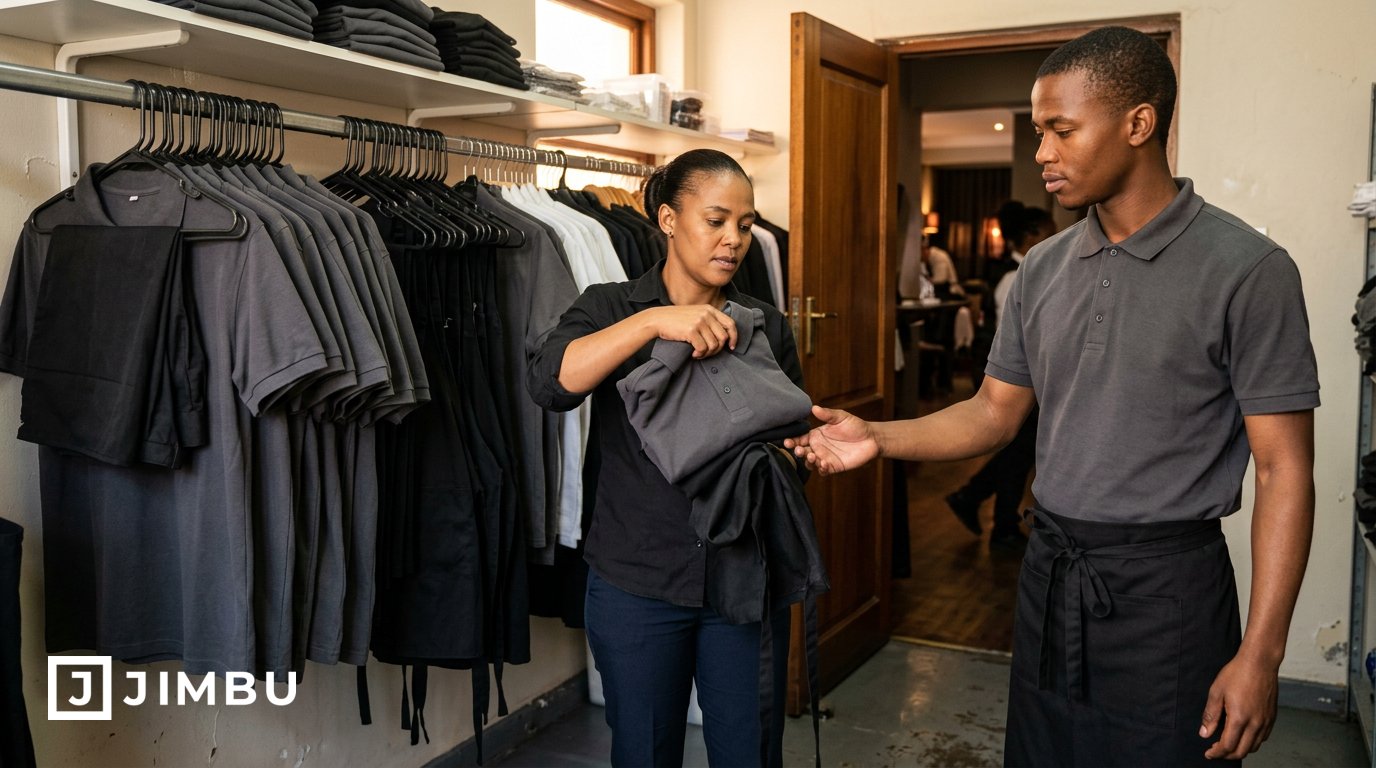
Bulk uniforms can look like a saving until the quote lands and you see all the details. A just-in-time uniform supplier in South Africa can price your order based on its volume, garment choices, branding, size mix and stockholding needs. Compare the whole supply arrangement, not just the cost per item.
A bigger order can bring the unit cost down, but it depends on what you order and how it gets supplied. Several garment types, branding details and delivery points make for a different job from one standard run.
This guide covers what affects bulk pricing and how to compare suppliers for industrial, safety and corporate workwear in South Africa. You’ll also find out about nationwide supply, just-in-time stock arrangements and what to weigh up before choosing a supplier. Focus on the details that’ll help you choose well.
Key Takeaways
- Bulk pricing comes down to your order volume, garment choices, branding and supply setup. See what to compare.
- Supplying uniforms nationwide takes planning across locations, stock needs and delivery points. Here’s what to consider for a more consistent rollout.
- The South African supplier directory shows how suppliers are spread across major cities. Use it to get a feel for the market.
- JIMBU offers uniform programmes for large workforces, including just-in-time supply, stockholding and 1-hour delivery. See if it suits your team’s uniform needs.
Industrial, safety and corporate workwear
Uniforms depend on the job, the workplace and the people wearing them. Work out what your team needs first, then build a supply plan that fits.
Workwear and Corporate Uniform Range
Industrial crews need workwear that suits the job, while office teams might need coordinated corporate apparel. Look at fabric, fit, construction and logo placement, not just how something looks in a product listing. Check that you can keep those details consistent with repeat orders, and agree on how you’ll handle branding changes.
Uniforms for Corporate and Hospitality Teams
Corporate and hospitality uniforms have different jobs to do. Your reception team might need a polished, coordinated look, while kitchen staff need chef jackets and aprons. Security, retail, call centre and school teams wear uniforms too. Match each group’s clothing to the work they do every day and the impression you want to make.
South African workplaces also need to follow employment and safety rules. Section 33A of the Basic Conditions of Employment Act prohibits employers from charging employees for employment or work allocation, or making them buy goods from the employer or a nominated business. For PPE, start with the hazards your people face on the job, then choose protection that fits those risks.
Stockholding and On-Demand Delivery
Stockholding and warehousing can help with regular uniform orders, while on-demand fulfilment can come in handy for new starters and replacement garments. Check which items you’re keeping in stock, how you’ll place orders and where each delivery needs to go. Keep accurate size and garment records to avoid mix-ups.
Manufacturing, construction, security, hospitality, retail, call centres and schools can all use just-in-time supply. Stockouts or delivery delays can leave new starters waiting or teams short of uniforms. To get a programme going, group garments by role, record sizes and branding, then plan stock and delivery points with your supplier. Sharp records make repeat orders less of a mission.
Nationwide supply in South Africa
A supplier’s address doesn’t tell you where uniforms can land. If your teams are spread across South Africa, map every branch and delivery point first. A business with staff in Johannesburg, Durban and Cape Town, for example, needs an easy way to direct each order. Keep the approved garments consistent, and make sure each site has clear delivery details.
Supplier directory numbers show where listings are based, not where orders can go. In September 2026, Johannesburg had 43 uniform supplier company records, Cape Town had 26, and Durban had 9. Handy context, sure. But those counts don’t tell you whether a supplier serves your branches or how they handle orders to different locations.
For a multi-site rollout, get the essentials together in one place: an approved garment list, shared branding instructions and consistent size records. Organise orders by delivery point so each team gets the right items. Clear records help keep things from getting muddled between sites.
Chat through how orders from different sites will work. Talk about stock allocation, order updates and who’ll receive each delivery. Warehousing can help with planned distribution, while on-demand fulfilment may suit staff changes or replacements. The right setup depends on your branches, how often teams need items and whether every site follows the same uniform rules.
Before rollout, write down the garment list, branding, staff sizes and delivery points. Pick who’ll approve changes at each site. Include an easy process for new starters and replacement items, too. If a Durban branch needs a replacement shirt, it should be easy to order and send it to the right place. Nationwide supply works best when everyone knows where orders are going and who’s handling them.
South African uniform supplier directory
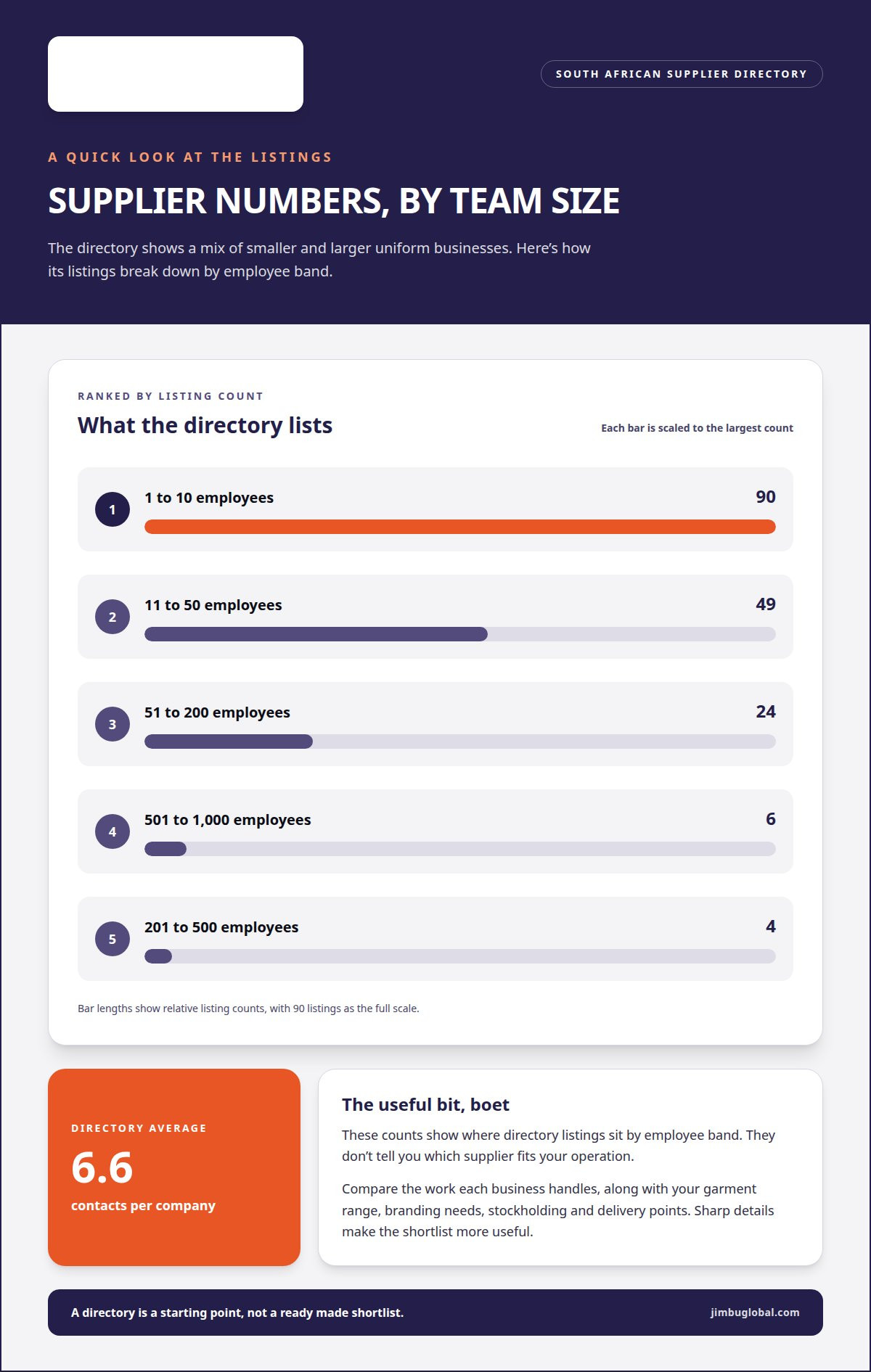
A supplier directory is a starting point, not a ready made shortlist. In South Africa, listings range from small operators to larger uniform businesses. The directory’s September 2026 data shows 90 suppliers in the 1 to 10 employee band and 49 in the 11 to 50 band. It also lists 24 in the 51 to 200 band, four in the 201 to 500 band, and six in the 501 to 1,000 band.
That spread matters when you’re searching. A smaller supplier may suit a focused order, while a broader workforce programme can call for more coordination across stock, branding and delivery. The directory’s supplier list averages 6.6 contacts per company as of September 22, 2026. Use the listings to spot possible fits, then compare what each business actually handles.
Build your shortlist around the work involved. Note whether you need industrial workwear, corporate apparel, protective wear or uniforms for security and hospitality teams. Add delivery locations, branding needs and replenishment patterns, then compare suppliers against the same requirements. This keeps the decision focused on your programme, not a polished listing or a nearby address.
For a uniform supply contract in South Africa, clarify the garment range, approved branding, order process, stockholding responsibilities and delivery arrangements. Agree how changes, replacements, quality issues and payment terms will be handled, so both sides know what happens after approval.
Directory numbers show a varied supplier market, but they don’t tell you which option fits your operation. Next, group suppliers by the work they support, then check their ordering and supply arrangements against your needs. If your teams span several branches, include every delivery point in that comparison. Sharp details make the shortlist more useful.
Which South African suppliers offer just-in-time uniform supply?
A directory can list uniform suppliers without showing which ones support just-in-time programmes. A supplier may provide uniforms without holding stock, warehousing it or fulfilling orders on demand. Check that the way they work suits your team’s ordering needs before you shortlist them.
South African directory data gives you a sense of the market. The supplier list averages 6.6 contacts per company, while Johannesburg represents 24.6% of the largest-city concentration. Those figures describe directory records, not each supplier’s capacity or delivery coverage. Use them as context, not proof that a supplier can do the job.
Look for suppliers whose work matches your uniform needs. Industrial workwear, protective wear, corporate apparel and hospitality uniforms can call for different garments and branding. Listings are more useful when they name these categories, rather than just a city or business name.
Here are a few practical things to check with each supplier:
- Programme scope: Does the service cover regular uniform orders and replenishment?
- Stock arrangements: Can the supplier hold agreed items for future orders?
- Order handling: Is there a clear process for sizes, branding and repeat requests?
- Delivery plan: Can orders go to the locations your teams use?
Compare the answers before you choose. A supplier that works for one office might not suit a workforce spread across sites. When you’re assessing a just-in-time uniform supplier in South Africa, look at how its ordering, stock and delivery plans fit together, not just what’s in its listing. Bring in the people approving orders and the teams receiving garments, too.
Need a programme for a large workforce? Plan your uniform supply programme around your team’s stock and ordering needs. Shout if you need a hand.
JIMBU: Uniform programmes for large workforces (just-in-time, stockholding, 1-hour delivery)
We support large workforces with uniform programmes that include just-in-time supply, stockholding and 1-hour delivery. It’s a practical fit when you need consistent uniforms and a clear way to manage ongoing requirements.
Our Company Uniforms and Apparel brings your team’s clothing needs together, while Branded Merch helps keep your branding consistent. With a Brand Store, your workforce has one place to order uniform items.
Tell us about your workforce requirements, garment choices and branding needs. We can chat about a uniform programme tailored to your team. Get in touch when you’re ready.
Make your next uniform order easier
Your uniform plan can grow with your team. Start by deciding how new starters, replacements and changing roles fit into the same ordering routine. That gives your next discussion a practical focus, rather than leaving uniform requests to pop up at the worst possible moment. Sharp planning now can make future orders simpler.
When choosing a just in time uniform supplier in South Africa, look beyond the first order. Consider how staff will access approved items and how your brand should appear across every team. JIMBU brings together Company Uniforms and Apparel, Branded Merch and Brand Stores to support this approach.
Got a workforce uniform plan taking shape? Talk with JIMBU about your uniform requirements. We’ll be glad to hear what you’re working on and help you explore the right next step. Sho, that’s a good place to start.
Got questions?
Frequently Asked Questions



Ready when you are
Let's build something worth talking about.
One partner. End-to-end execution. From the first sketch to the last shipped box.