
JIMBU Guide
Custom Branded Merchandise for Events and Fundraisers
Plan custom branded merchandise that people will actually use. Get practical tips on clear artwork, event-ready items and costs for your next fundraiser.
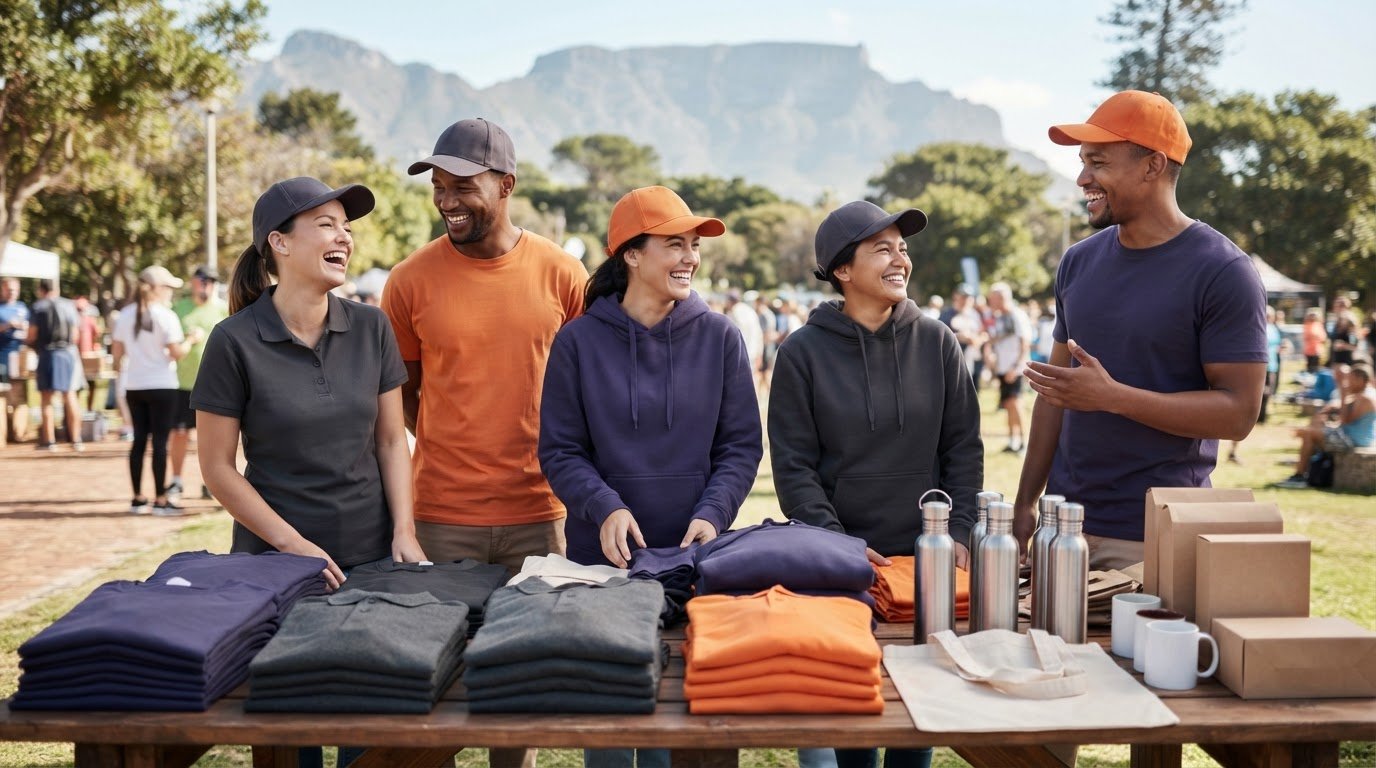
A logo isn’t a design strategy. Effective custom branded merchandise starts with a clear idea, artwork people can read at a glance and an item that suits your event or fundraiser. Keep the design simple, make the message easy to spot and leave enough space around each element.
A branded giveaway can make your event feel more considered. The challenge is designing it to suit the item, rather than squeezing in artwork at the last minute. A crowded logo is less likely to earn a place in someone’s everyday routine.
This guide explains how to adapt your logo and artwork for different merchandise, choose items that suit the occasion and plan details before production. It also covers factors that can affect costs and how JIMBU can help bring event or fundraiser merchandise together, with practical advice that doesn’t require a design degree.
Key Takeaways
- Match gifts and welcome kits to the people receiving them, and choose items they’ll find useful beyond the event.
- Explore merchandise categories such as stationery, apparel, display items and barware to find a fit for your occasion.
- Choose bottles, mugs, tumblers or flasks with the recipient and setting in mind, then plan the artwork to suit the item.
- Keep your logo clear, your message focused and the design easy to recognise at a glance.
How to use promotional items effectively?
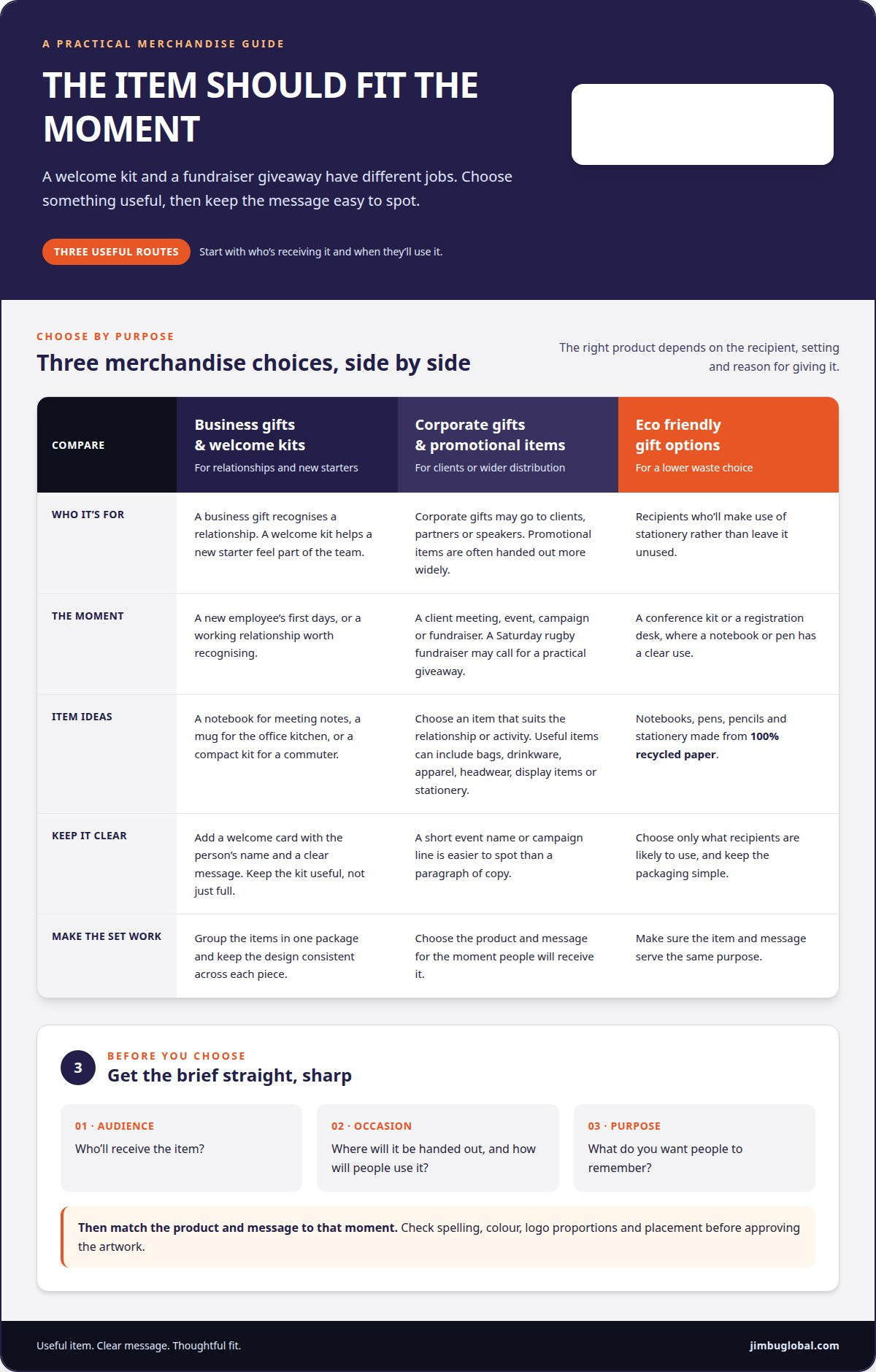
Start with the recipient and the moment they’ll use the item. A welcome kit for a new employee has different needs from a thank-you gift for a fundraiser supporter.
Business Gifts and Welcome Kits
A business gift recognises a relationship, while an employee welcome kit helps a new starter feel part of the team. Choose items that suit their working day, such as a notebook for meeting notes or a mug for the office kitchen. Add a welcome card with the person’s name and a clear message. Keep the kit useful, not just full.
For a South African team, think about where staff work and what they’ll carry. A compact kit suits a commuter, while desk essentials work well for office based roles. Group the items in one package and keep the design consistent across each piece.
Corporate Gifts and Promotional Items
Corporate gifts often go to clients, partners or speakers, so choose something considered that suits the relationship. Promotional items are generally distributed more widely at an event, campaign or fundraiser. For a Saturday rugby fundraiser, for example, a practical item with a readable event message may make more sense than a formal client gift.
Before choosing, decide who’ll receive the item, where it’ll be handed out and what you want people to remember. Then match the product and message to that moment. A short event name or campaign line is easier to spot than a paragraph of copy.
Eco Friendly Corporate Gifts
For a lower waste option, look at notebooks, pens, pencils and stationery made from 100% recycled paper. Choose only what recipients are likely to use, then keep the packaging simple. A recycled paper notebook can suit a conference kit, while a useful pen works for a registration desk. The item and message should fit the same purpose.
A tidy plan beats a box of random giveaways. Make a short list of recipients, the occasion and the purpose of each item. This gives you a clear brief for selecting products and designing the message.
What are promotional products?
Promotional products are useful items featuring a company, event or campaign identity. Choose something that suits the people receiving it and the occasion when they’ll use it.
Use logos and campaign artwork you have permission to reproduce. Keep giveaway terms clear so people understand who’s offering what.
Merchandise Categories and Examples
There’s more to choose from than pens. Categories include bags, drinkware, apparel, headwear, display items and stationery. A conference organiser could offer a badge button at registration, while a sports fundraiser might choose caps for volunteers. Start with the activity, then pick an item that’ll be useful there.
Keep the message clear, too. An event name and logo can do the job without a long slogan competing for space.
South African Supply and Gift Ideas
For an event anywhere in South Africa, think about how people will receive and use each item. Gifts for a seated dinner can differ from giveaways handed out at a busy registration table. Write down your audience, event setting and distribution plan before settling on products. That gives your supplier a much clearer brief.
Order quantities and timing depend on the product, order size, artwork approval and branding method. Factor these into your event plan early rather than leaving merchandise until the last minute.
Benefits of Branded Merchandise
A well-chosen item can stay in someone’s routine after the event. A branded tote, for instance, can carry everyday essentials long after the fundraiser ends. Consider what recipients will actually use, not only what looks good on display.
To assess whether a campaign met its goal, decide first which action matters. For a fundraiser, you could track follow-up donations or enquiries against your campaign goal.
Branding Methods
The right branding method depends on the product’s material, shape and artwork. A logo on fabric needs different treatment from one on a metal bottle or paper notebook. Check the available surface, then review the artwork at the size it will appear.
Before approval, check spelling, colour, logo proportions and placement. A clear creative brief helps keep those details together across your chosen products.
Do you have custom promotional giveaways with express shipping option?
When an event has a fixed date, product selection and artwork approval need to be part of the schedule. Choose an item that suits your audience, then plan how it will be branded and distributed.
Drinkware Options
Drinkware gives recipients a practical item for work, travel or events. Market listings include a 600 ml aluminium bottle, a 430 ml double wall plastic mug, and a 22 oz stainless steel wide mouth insulated bottle. These examples show why capacity and material matter.
Choose a bottle for people on the move, or a mug for desks and event spaces. For tumblers and flasks, consider how the shape, surface and logo placement work together. Review the design against the item before approving production.
Company Swag
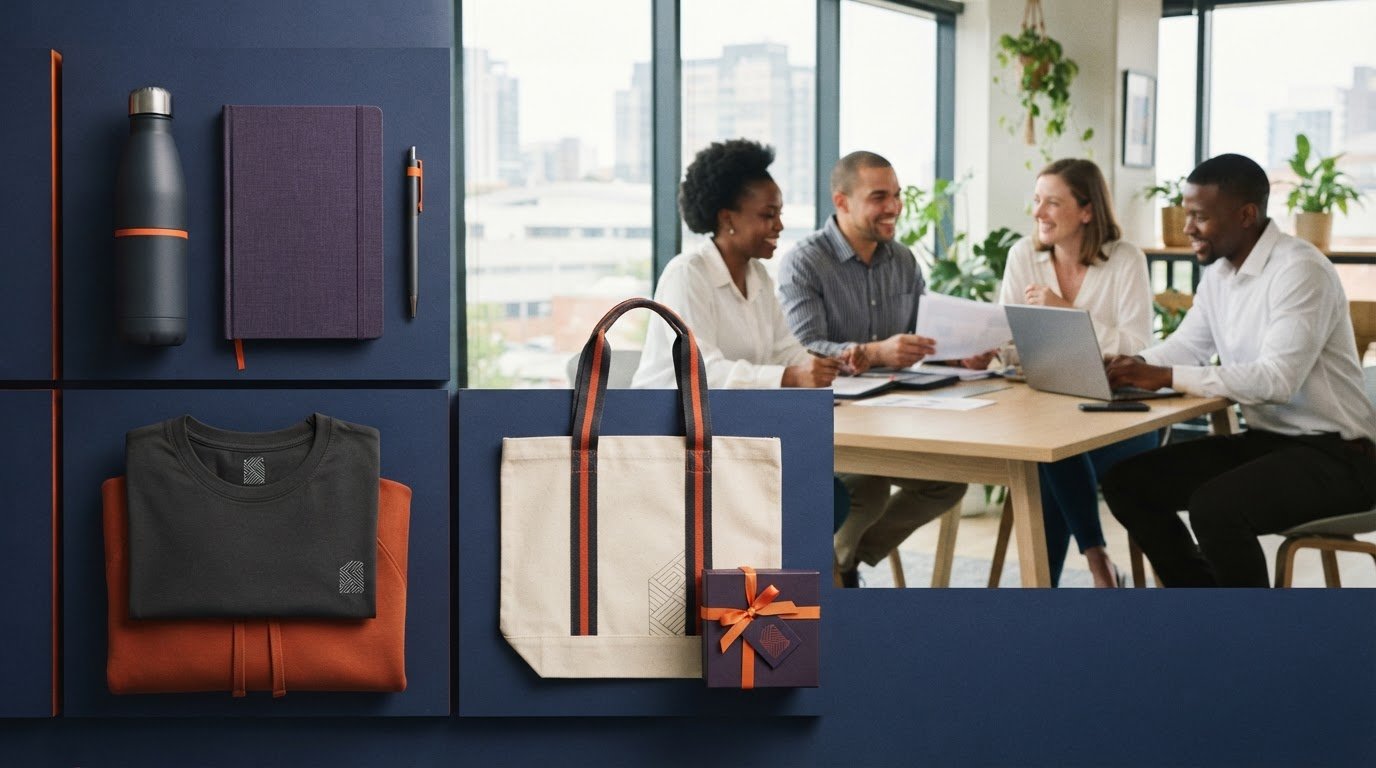
Company merchandise can bring an event identity into everyday use. Pair a drinkware item with a notebook or pen instead of adding unrelated giveaways. Keep the logo and message consistent across each piece so the set feels thoughtfully put together.
Set a simple return measure before distribution. Track items handed out, event enquiries or campaign responses, then compare the results with your goal. One market finding says 9 out of 10 people recall branding on promotional swag; another reports 82% have a more favourable impression after receiving a promotional item.
Customisable Pens
A pen suits registration tables, conference packs and fundraiser stalls because recipients can use it straight away. Keep the logo and wording brief, especially on a narrow barrel. A short event name is easier to read than a crowded slogan.
Choose the pen alongside your other items, then review its branding proof for legibility and placement. For a set, match its colour and message to the notebook or drinkware. This design check helps your giveaway look considered, not rushed.
Custom logos and branded designs
A logo can look sharp on screen but cramped on a bottle. Design the artwork for the item, not just the brand guide. A fundraiser tote, event cap and metal flask each offer different space for your logo.
Start with one clear focal point. Choose your logo, event name or campaign message, then decide which should lead. For a charity walk, the event name might take priority, with the organisation’s logo supporting it. Keep extra wording short so people can read it quickly.
Check how the design looks at different sizes. Thin lines and small text can disappear on curved drinkware or a narrow pen barrel. Simplify fine details before adapting the artwork, and keep important words away from seams, edges and other awkward areas.
Colour needs the same care. Strong contrast helps a logo stand out against the item, while too many competing colours can make the design feel busy. Compare the artwork with the product colour, then check that the most important detail remains easy to recognise.
Before production, review a proof for spelling, logo proportions, colours and placement. Look at the artwork on a product mock-up, not only as a flat image. A logo centred on a notebook may need a different position on a curved bottle. Ask the design team to resolve each change in the approved proof.
Keep the core design consistent across your event range. Adapt the layout for a tote, cap or water bottle while keeping the logo, colours and message aligned. This gives the merchandise a shared identity without forcing every item into the same layout. For custom branded merchandise, make the message clear first, then add decorative details.
JIMBU: Branded Products
JIMBU provides branded products for events and fundraisers, shaped around a clear identity. Bring your logo, event details and audience into the planning, then choose items that suit how people will use them.
For a staff event, company uniforms and apparel can help your team look like part of the occasion. Barware may suit a sponsor gift or fundraiser, while a Brand Store can bring your branded range together in one place. Choose what fits the event rather than adding extras for their own sake.
Have a design direction and event date in mind? Share the details with JIMBU to explore the right fit for your event. Chat to the team or visit jimbuglobal.com.
Make your next event feel like yours
The best next step is a short brief that gives your merchandise a clear purpose. Note who’ll receive it, what you want them to remember and where the items will be used. Add your event date, preferred products, logo files and the person who’ll approve the final design. This gives your team a shared starting point and keeps decisions focused.
Think beyond the event day, too. A fundraiser gift might thank supporters, while staff merchandise can help your team feel connected to the occasion. Keep the goal clear, and your custom branded merchandise can feel like part of the experience rather than an afterthought.
JIMBU can help you shape the brief into branded products for your event or fundraiser. Bring your first idea, even if it’s still a bit rough around the edges. Talk to JIMBU about your merchandise and take the next step when you’re ready. Sharp, you’ve got a good place to start.
Got questions?
Frequently Asked Questions
Ready when you are
Let's build something worth talking about.
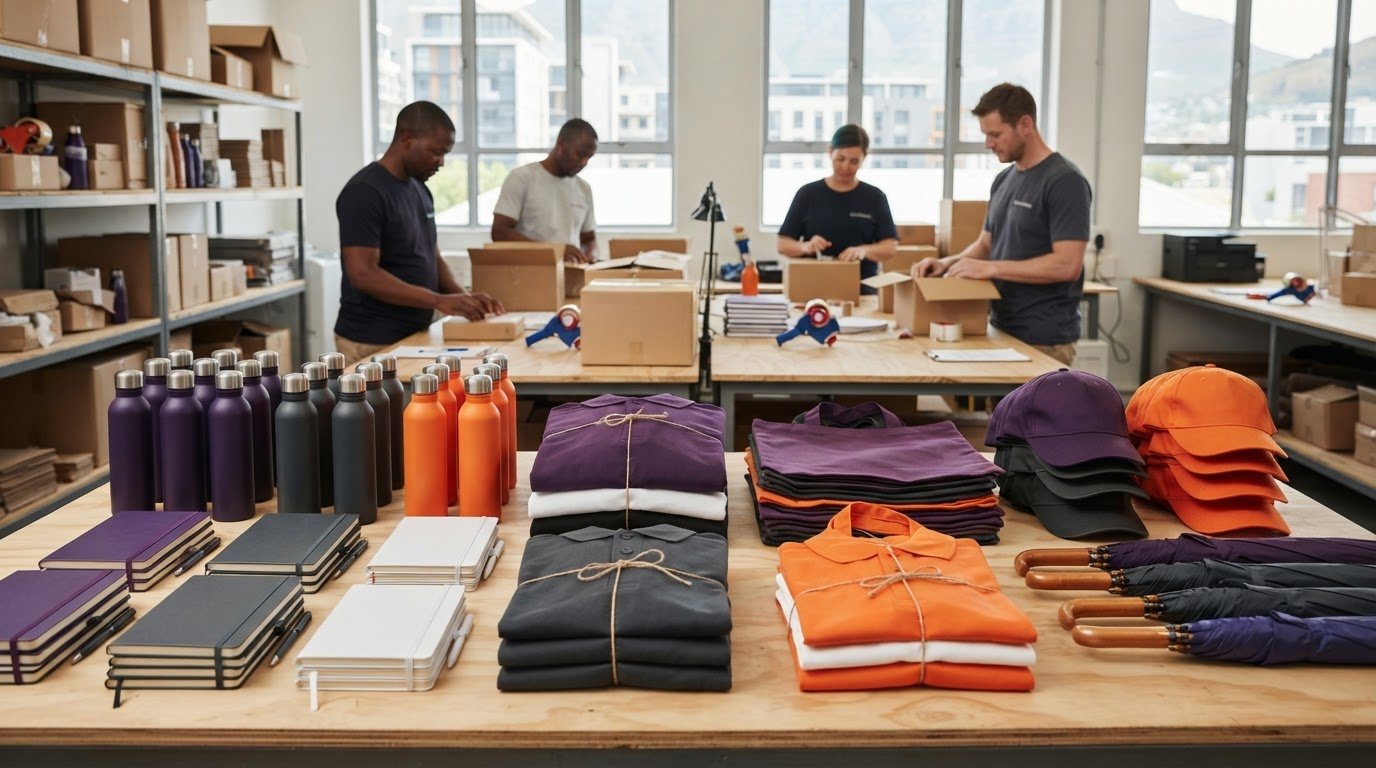
One partner. End-to-end execution. From the first sketch to the last shipped box.