
JIMBU Guide
Branded Barware for Serving, Opening, Mixing and Branding
Use this branded barware selection checklist to choose glasses, openers and shakers that work in service, suit your drinks and keep your logo clear. Sharp tips.
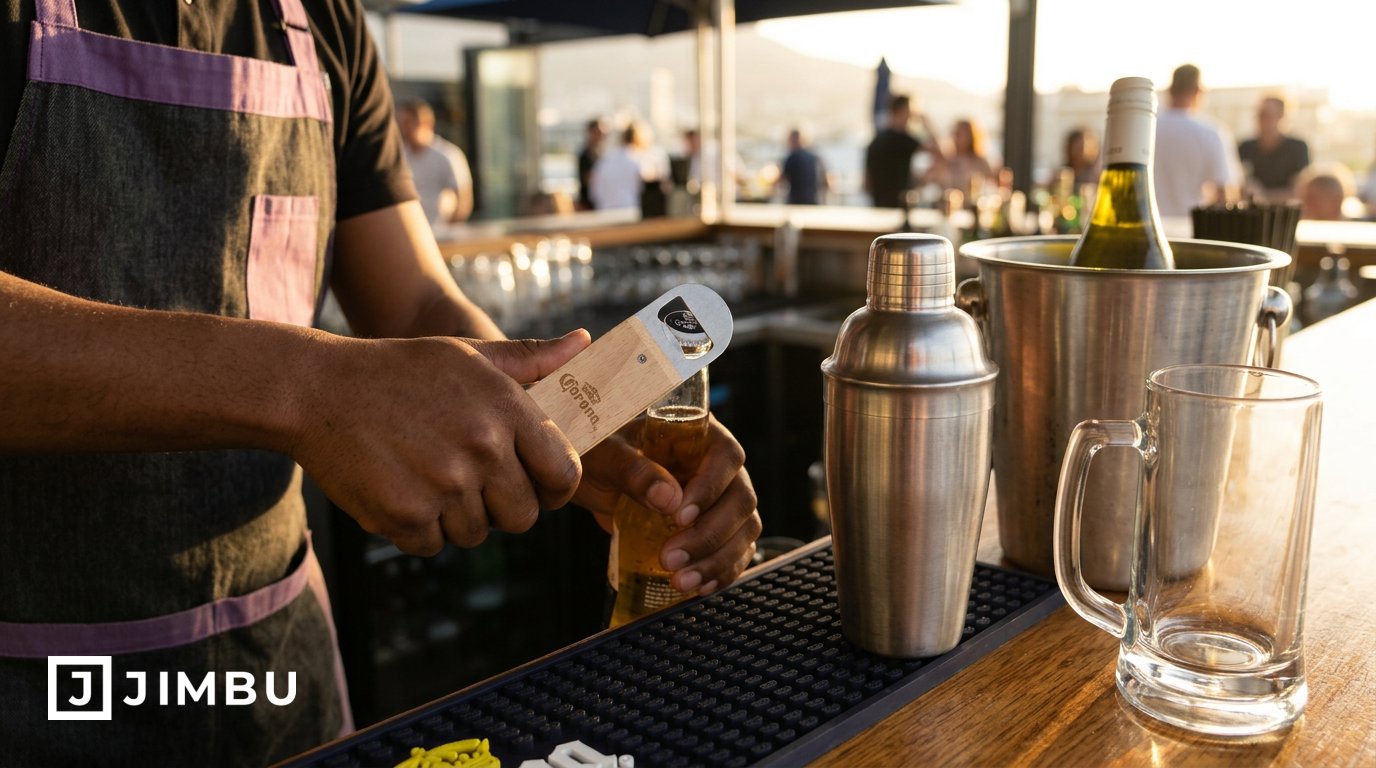
The logo isn’t the hard part. A useful branded barware selection checklist starts with what the bar needs to do: serve drinks, open bottles and mix cocktails while showing your brand clearly. Choose serving pieces for the drinks on offer, opening tools for the bottles you handle, and mixing tools suited to the cocktails you make. Then match the branding to each item’s material, finish and available space.
It’s easy to be drawn to a striking shape or shiny finish. It should look good, but barware also needs to feel right in the hand, work smoothly during service and suit its intended use. A bold logo can lose impact if a handle hides it or the finish changes how it looks under bar lighting.
This guide walks through the choices, from glasses, beer mugs and ice buckets to openers, shakers and branding details. Use it to choose pieces that do their job and make your brand feel at home behind the bar.
Key Takeaways
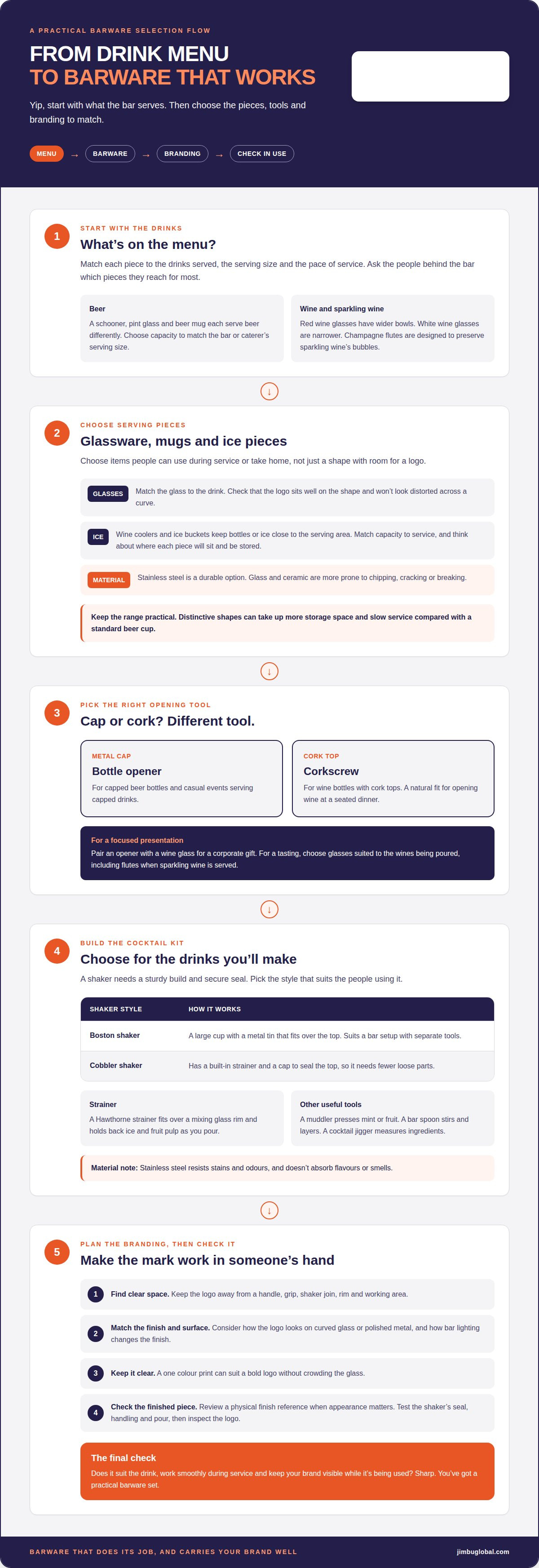
- Match glassware, beer mugs and ice buckets to the drinks you serve and the pace of service.
- Choose bottle openers for metal caps and corkscrews for wine bottles with cork tops.
- For cocktail shakers, prioritise a sturdy build and a secure seal to help prevent spills.
- Plan logo placement around the barware’s shape, grip and finish so your brand stays visible in use.
1. Wine coolers, beer mugs and ice buckets
A bar’s serving pieces should match its menu, from Friday afternoon beers to wine at a seated dinner. Branded barware for promotions and corporate gifts can include beer glasses, wine glasses, beer mugs, wine coolers and ice buckets. Choose items people can use during service or take home, rather than choosing a shape for its logo space alone.
Start with the drink and serving size. A schooner, pint glass and beer mug each offer a different way to serve beer, so match capacity to the serving size used by the bar or caterer. For wine, select glasses suited to the types served. Red wine glasses have wider bowls, while white wine glasses are narrower. Champagne flutes are designed to preserve sparkling wine’s bubbles.
Custom branded beer and wine glasses put your mark on items guests hold throughout a meal or event. Compare the usable branding area with the glass shape. A logo across a curved surface can look distorted, while a handle or the way someone grips a beer mug can hide it. A one-colour print can suit a bold logo without crowding the glass.
Wine coolers and ice buckets serve a different purpose from glasses. They keep bottles or ice close to the serving area, making them useful for tables, bars and catered events. Match their capacity to how drinks are served, then consider where they’ll sit and how they’ll be stored between events. Stainless steel offers a durable barware option; glass and ceramic are more prone to chipping, cracking or breaking.
Keep the range practical. Distinctive shapes can take up more storage space and slow service compared with a standard beer cup. Ask the people serving drinks which pieces they reach for most, then prioritise those. A strainer belongs with cocktail tools, not serving glasses. Start with glasses and ice pieces that suit your menu, service style and storage space.
2. Bottle openers and wine accessories
A metal cap and a cork need different tools. Choose a bottle opener for capped beer bottles and a corkscrew for wine bottles with cork tops. This simple distinction helps you build a useful set for a bar, tasting event or hospitality gift. A refined finish matters, but the tool should also feel straightforward to use.
Wine glasses shape the serving experience. Red wine glasses have wider bowls, while narrower white wine glasses help preserve crispness. Champagne flutes are designed to preserve sparkling wine’s bubbles. For tastings, choose glasses suited to the wines being poured, then consider whether guests need a full serving glass or a smaller tasting glass.
Match each accessory to the occasion. A corkscrew suits a seated dinner where wine is opened at the table. A bottle opener fits a casual event serving capped drinks. For a corporate gift, pairing an opener with a wine glass creates a focused presentation. A tasting event might call for flutes alongside wine glasses, depending on the drinks served.
Plan the logo around the way each item is held and used. On an opener, keep the mark clear of the hand’s grip and working area. On a wine glass, consider how the logo looks against the bowl and stem. The finish should suit the glass and the event’s style, from an elegant client dinner to a lively tasting. For branded barware for hospitality projects, choose accessories that suit your service.
Before production, decide on the item, finish, logo position and presentation together. A design that looks sharp on screen may appear different on curved glass or polished metal. Review a physical finish reference when appearance is central to the project. This gives your team a clearer basis for approving the final look and helps each accessory feel like part of a considered set.
Wine service may call for glasses in different sizes and shapes, depending on the types served. Consider the wines on the menu when choosing an assortment, so the set suits the service instead of forcing one shape to work for every pour. This also gives planners a practical way to align glass selection with the occasion.
3. Cocktail shakers and leak-proof seals
A cocktail shaker earns its place by keeping the mix inside while you shake. For a home bar or event kit, choose a sturdy build and a secure, leak-proof seal. A poor fit can spill the drink, make mixing messy and leave a sticky counter, not ideal during busy service.
Choose a shaker style to suit the people who’ll use it. A Boston shaker has a large cup and a metal tin that fits over the top. It suits a bar setup with separate tools. A Cobbler shaker has a built-in strainer and a cap to seal the top, so it needs fewer loose parts. Both can mix cocktails, but their parts and handling differ.
Strainers help control what reaches the glass. A Hawthorne strainer has a spring-loaded metal band that fits over a mixing glass rim. It holds back ice and fruit pulp as the cocktail is poured. If your shaker already includes a strainer, consider whether the drinks served also call for a separate one.
Build a useful tool set around the drinks you plan to make. A beginner’s set can include a bottle opener, corkscrew, strainer and measuring tools. Add a muddler to press mint or fruit and release its flavours. A bar spoon handles stirring and layering. A cocktail jigger helps measure ingredients for balanced drinks.
Stainless steel is a practical choice for mixing tools. It resists stains and odours, and doesn’t absorb flavours or smells. Before approving branded pieces, check that the logo is clear of the grip, rim and shaker join. A mark hidden beneath a hand won’t do much work. Test the shaker’s seal, handling and pour, then inspect the logo on the finished item. Judge branding alongside function, not just by how it looks on screen.
A strainer keeps ice and fruit pulp out of a finished drink, helping control what reaches the glass. Poorly designed or low-quality barware can cause spills, uneven mixing, excessive dilution or frequent breakage. Checking the seal, handling and pour helps you assess whether a shaker suits the intended service.
4. Brand-specific barware features
The most practical pieces to brand are those guests and staff handle during service. Glasses offer visible space, while shakers and bottle openers put your mark on frequently used tools. Check the usual viewing angle first. A grip, handle or shaker join can hide a logo, and curved shapes can distort it. Prioritise useful function over an unusual shape.
Match the marking method to the material, finish and usable area. Laser etching can give simple artwork a refined, permanent-looking finish. A one-colour print can make a bold logo stand out. Screen printing and other methods suit different surfaces, so choose the process once the item and finish are set. For national campaigns, Pantone colour matching can help keep brand colours consistent.
Prepare clean, high-quality logo artwork, then approve a digital proof for spelling, dates, phone numbers, logo versions and colours. Keep the design clear at the item’s actual marking size. Functional markings should remain visible during use, match the intended volume and stay legible under agreed cleaning conditions. A screen image can’t reliably show gloss, brushed direction or metallic depth under bar lighting.
For barware used with drinks, food-contact construction and testing should suit the product’s destination and use. In South Africa, confirm the relevant testing for that use before production. A logo proof is not evidence of product suitability. Record the material, finish, logo process and position, packaging, inspection points and approved sample version.
Assess a sample by handling and using it, inspecting its finish and logo, and checking its packaging. Set the quantity around the event and how the pieces will be used. Custom moulds, colours and complex finishes can affect minimum order quantities, tooling and lead times. A coordinated collection can repeat a finish, logo treatment or packaging colour across different shapes. Plan your branded barware project around the use, artwork and approved sample.
JIMBU: Branded Products
JIMBU brings branded barware and other branded products together for corporate gifts, hospitality events and team occasions. Share your serving needs, preferred items and logo artwork in one conversation. This gives the project a clear starting point, from choosing glasses or openers to shaping a coordinated set.
Turn to JIMBU when you’re ready to move from a shortlist to branded pieces suited to your event or business. Barware can sit alongside other branded products, while a Brand Store can support a wider merchandise programme. The right mix depends on who’ll use the items and where they’ll be served.
Have a barware project in mind? Contact JIMBU to discuss what you’re planning.
Make your next barware project a good fit
Give the project one clear purpose. A launch gift, an event keepsake and everyday hospitality use each call for a different feel. Start with the occasion you want the item to suit, then shape the brief around it.
Bring your ideas together before choosing the final direction. A clear brief keeps decisions focused and gives the finished set a sense of purpose, rather than making it feel like a collection of unrelated items.
Ready to put your ideas into motion? Discuss branded barware with JIMBU. Shout if you’d like a hand getting started.
Got questions?
Frequently Asked Questions
Ready when you are
Let's build something worth talking about.
One partner. End-to-end execution. From the first sketch to the last shipped box.